The site is working in test mode!
12 August, 2026   |   29 Ṣafar, 1448

Tashkent city
Fajr
03:59
Sunrise
05:29
Dhuhr
12:28
Asr
17:23
Maghrib
19:31
Isha
20:58
Bismillah
12 August, 2026, 29 Ṣafar, 1448

Tashkent

20.05.2020   78183   3 min.
Tashkent

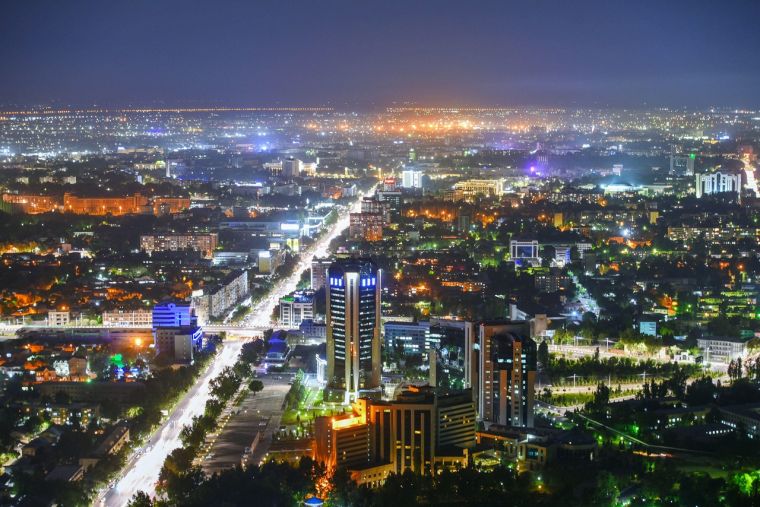
Tashkent - Capital of Uzbekistan General information about Tashkent Tashkent is the capital of Uzbekistan and is a metropolis of over 2.5 million people. The city is set out as a grid of straight, wide streets and avenues, interspersed with many green areas (parks, squares, and gardens) and fountains. This marvelous city embodies the modern elegance of many other capitals of the world; at the same time, as an eastern city, Tashkent has its own unique flavour. It tastefully combines medieval buildings that look like they're from the pages of ancient oriental tales, with elegant European architecture from the time of the Turkestan governorship, concrete 'blocks' from the Soviet era and, finally, sparkling high-rise commercial buildings made of glass and concrete that represent a new era of independent Uzbekistan. Tashkent, Uzbekistan – Picture

  Amir Temur Museum More pictures of Tashkent, Uzbekistan History of Tashkent Tashkent is one of the oldest cities on the Great Silk Road between China and Europe. The earliest references to Tashkent as a city settlement appeared in written sources in the 2nd century BC. In the Chinese annals the city is called Yueni or Shi; in the records of the Persian king, Shampur, it appears as Chach; and in other Arabic sources, Shash. The name Tashkent first appeared in Turkish documents of the 9th to 12th centuries. From ancient times, a favourable geographical position and mild climate made Tashkent one of the main Silk Road cities. In the 14-15th centuries it was the part of the Timurid Empire, and in the 16th century it was under the control of the Sheibanids dynasty. In 1865, after the conquest of Mikhail Chernyaev, Russian military leader, the city became under the rule of the Russian Empire and Russian government was established here. In 1930 Tashkent was declared the capital of Uzbekistan, former Uzbek SSR. Tashkent 

 What to do in Tashkent Tashkent sights Many of Tashkent's tourist sights are concentrated in the Old City, which is one of the few districts that has preserved its traditional culture in the rapidly-changing metropolis. The spirit of old Tashkent lives here, in the cozy courtyards of the hospitable mahallahs, the bustling Chorsu Bazaar, and the blue domes of the Khast Imam complex. In this part of the city there are artisans, teahouses, and bakeries. Other Tashkent sights worth visiting include the Tashkent TV Tower, the German Church, the Polish Church, Amir Temur Square with the famous Tashkent astronomical clock, Independence Square, and the former residence of Prince Romanov, which was designed by architects

   Prepeared by Imam Bukhari Tashkent Islamic Institute , Department of languages , English teacher     Kadirov Farrukh


Other posts
News

“Colombo Times”: Implementation of the Third Renaissance Idea becomes a state policy of Uzbekistan

12.08.2026   15313   3 min.
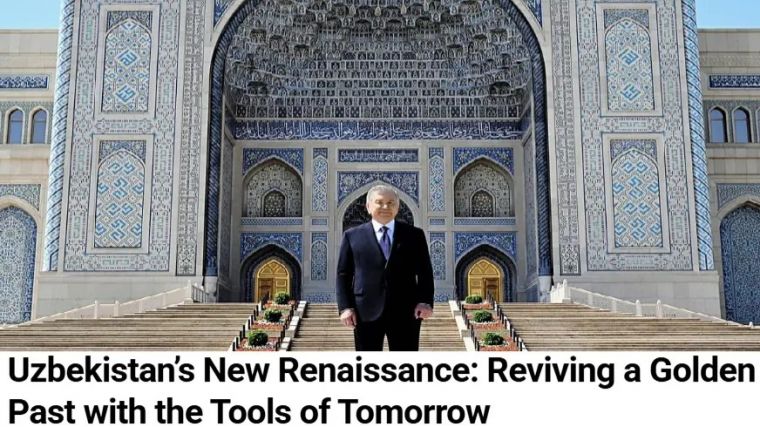
 “Colombo Times”: Implementation of the Third Renaissance Idea becomes a state policy of Uzbekistan

The Sri Lankan online publication Colombo Times has published an analytical article titled “Uzbekistan’s New Renaissance: Reviving a Golden Past with the Tools of Tomorrow”, reports Dunyo IA.

Publication, prepared by renowned Sri Lankan journalist Fazan Nawaz, focuses on the reforms carried out in Uzbekistan over the past decade under the leadership of President Shavkat Mirziyoyev, aimed at building the New Uzbekistan and implementing the idea of the Third Renaissance, as well as their significant outcomes.

“At the very heart of Central Asia, a quiet yet far-reaching revolution in its significance is taking place. This struggle is being waged not with weapons, but through manuscripts, museums and microchips. Under the leadership of President Shavkat Mirziyoyev, Uzbekistan is seeking to revive the glory of the medieval “Golden Age”, when such cities as Samarkand and Bukhara were leading centers of global science, poetry, and philosophy, author writes. - The distinctive feature of this process lies in the fact that Uzbekistan is actively using artificial intelligence and digital technologies to preserve, restore, and promote cultural heritage spanning more than a thousand years of history”.

Publication also highlights Uzbekistan’s rich cultural and historical heritage and the reforms being implemented to preserve it. It notes that this land has been the cradle of many outstanding scholars and thinkers throughout human history.

 “Leader of Uzbekistan frequently refers to this historical heritage, emphasizing that Mirzo Ulugbek was not only a great scholar but also a statesman for whom science was the highest value. The current process of renewal is referred to by the Head of State as the ‘Third Renaissance’, viewing it as a nationwide project aimed at restoring Uzbekistan’s role as a center of science, education, and culture. According to historians, this term denotes a new stage of revival following two great periods of flourishing that had previously existed in the region”, article notes.

Article emphasizes that an important feature of Uzbekistan’s approach, distinguishing it from other countries, is the use of artificial intelligence not only as a tool for economic development but also as a means of protecting cultural heritage.

Fazan Nawaz concludes his article by stating that only time will show whether the “Third Renaissance” will be able to fully achieve its objectives. However, it is already clear today which path Uzbekistan is pursuing.