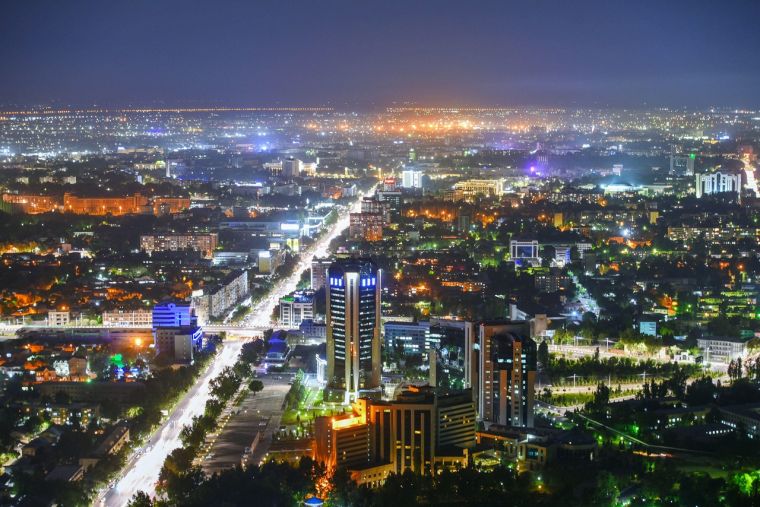
Chairman of the Caucasus Muslims Board, Sheikh-ul-Islam Allahshukur Pashazade, on the eve of the 35th anniversary of Uzbekistan’s independence, sent sincere congratulations and best wishes to the people of Uzbekistan through Dunyo IA:
— In the name of Allah, the Most Gracious, the Most Merciful.
From the bottom of my heart, I sincerely congratulate the brotherly people and state of Uzbekistan on Independence Day and offer prayers to Almighty Allah for peace, prosperity and new successes. Over the years of independence, Uzbekistan has travelled a glorious historical path and, thanks to the firm will of the courageous and noble Uzbek people, has achieved great results. Today, we are witnessing significant progress of independent Uzbekistan in the political, economic, social and spiritual spheres.
As a person who considers Uzbekistan his second Homeland and always keeps it in his heart and thoughts, I sincerely rejoice in the achievements of the brotherly Uzbek people. I would particularly like to note and highly appreciate the tireless work of the President of Uzbekistan, Shavkat Mirziyoyev, a devoted leader who is making every effort and using all his capabilities for the happiness and well-being of independent Uzbekistan and its dear people.
Under the leadership of His Excellency, over the past ten years Uzbekistan has been experiencing a period of the Third Renaissance.
Uzbekistan, which even during the years when atheism prevailed did not allow the light of Islamic enlightenment to be extinguished, today, thanks to the profound political thinking and unprecedented efforts of the head of state, has transformed into a cultural and spiritual center radiating a bright light in the Islamic world at the international level. The Center for Islamic Civilization, which is a vivid result of these tremendous efforts, can without exaggeration be called an invaluable gift from His Excellency to all Muslims of the world. The broad promotion at the international level of the rich scientific and spiritual heritage of Uzbek thinkers once again confirms the status of the Uzbek land as a center of enlightenment and spiritual knowledge that has been formed here over the centuries.
I consider every meeting and conversation with His Excellency an important and significant event for me and express my boundless gratitude for the great attention shown to me. I am proud that recently the President of Uzbekistan personally presented me with the “El-yurt hurmati” Order.
As in all spheres of our lives, further deepening of the historically established cultural and spiritual-moral ties with independent Uzbekistan is of particular importance for our peoples. The strong fraternal relations established between the President of Azerbaijan, respected Ilham Aliyev, and respected Shavkat Mirziyoyev, as well as the sincere meetings held in Azerbaijan and on Uzbek soil, are of particular value and give us spiritual and moral strength. Thanks to the efforts and wise steps of our strong state leaders, the deepening of Azerbaijani-Uzbek relations in all spheres and the elevation of our brotherhood to the level of allied relations are a source of great pride for us.
Uzbekistan occupies a special place in my heart. I rejoice immensely at every achievement of this country and always pray that it will conquer new heights. As a person who received higher religious education in Uzbekistan and was subsequently honored with the high spiritual title of Sheikh-ul-Islam in Azerbaijan and the Caucasus, I highly appreciate the attention and importance that the respected state leaders of Azerbaijan and Uzbekistan attach to our traditional national and spiritual values, as well as our historical heritage.
In this difficult period, when spiritual values are experiencing a crisis in the world, our brotherly peoples, under the leadership of wise leaders and relying on their historical and spiritual heritage, are confidently moving along the path of building a worthy future and effectively cooperating within the framework of the Organization of Turkic States. This is the mercy and benevolence of Almighty Allah manifested to us.
We express our sincere gratitude to the people and state of Uzbekistan, who were the first among the Turkic states to make their noble contribution to the restoration and revival of religious and spiritual heritage that had been subjected to vandalism, as well as to the construction and restoration work being carried out in the territories of Azerbaijan liberated from occupation.
Once again, with great pride and joy, I sincerely congratulate the brotherly Uzbek people on the 35th anniversary of the independence of Uzbekistan and wish them all the very best.
May Almighty Allah never deprive our brotherly peoples and states of His great mercy and blessings, and may He grant all of us the fulfillment of all good dreams, wishes and noble goals.
Amen!



 Iman
Iman  Prayer
  Fasting
  Zakat
Zakat  Haj
Haj  Qur`an
  Lessons of Islam
  Contact