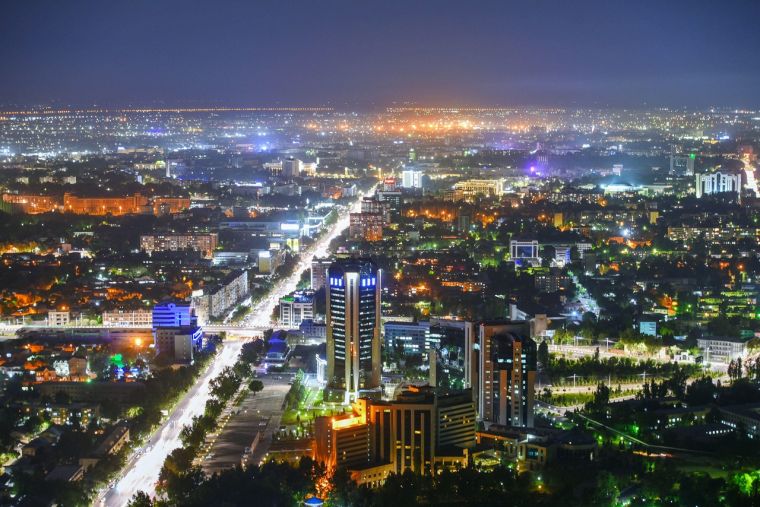
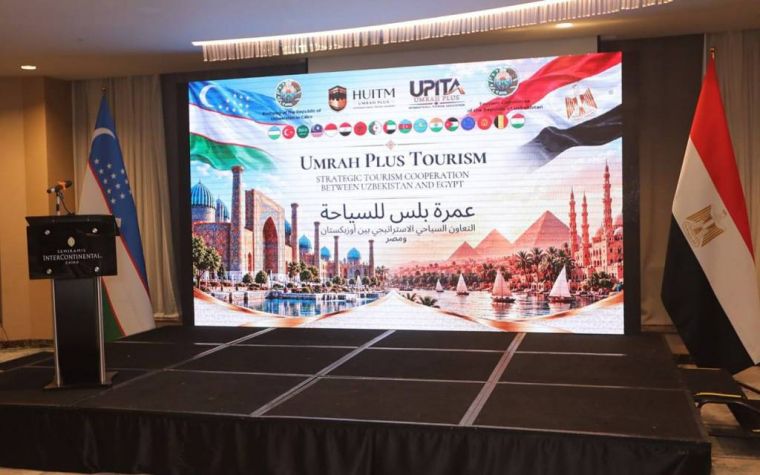
An event entitled “Umrah Plus Tourism: Strategic Tourism Cooperation between Uzbekistan and Egypt” was held in Cairo, the capital of the Arab Republic of Egypt.
The event was organised by the International Tourism Association “Umrah Plus” (UPITA), in cooperation with the Tourism Committee of the Republic of Uzbekistan and the Embassy of Uzbekistan in Egypt. Participants included representatives of Egyptian government bodies, tour operators, travel agencies and the media.
The main objective was to promote Uzbekistan among Egyptian travellers not only as a pilgrimage destination but also as an attractive country offering a wide range of opportunities for nature-based recreation, winter tourism, agritourism and gastronomic travel. Particular emphasis was placed on establishing direct partnerships between tour operators in the two countries, developing joint tourism products and identifying practical measures to ensure sustainable growth in tourist arrivals from Egypt to Uzbekistan.
As part of the event, a presentation entitled “Uzbekistan: Mountains, Snow and Flavours” showcased tourism opportunities that remain relatively unfamiliar to Egyptian travellers. These included winter recreation and skiing, Zaamin National Park, the Aydar-Arnasay lake system, the rich natural heritage of Kashkadarya and Surkhandarya regions, as well as Uzbek national cuisine and traditional handicrafts.
Participants also received detailed information about the country’s key tourist attractions, highlighting Uzbekistan’s potential as a destination for family holidays.
Two sample itineraries were presented to Egyptian tour operators: the eight-day “Mountains, Flavours and Heritage” tour, covering Tashkent, Chimgan–Charvak, the Fergana Valley and Samarkand, and the seven-day “Nature and Flavours” tour along the Amirsoy–Zaamin–Aydarkul–Samarkand route.
Following the event, proposals were put forward to organise familiarisation trips for Egyptian tour operators and journalists, conduct joint marketing activities, arrange B2B meetings with inbound tour operators from Uzbekistan, and provide partners with promotional and informational materials in Arabic.
In addition, a Memorandum of Understanding aimed at attracting tourists from Egypt to Uzbekistan was signed by the Egyptian Tourism Federation, Dahab Group, Best Control and the International Tourism Association “Umrah Plus”.
These initiatives are important for attracting Egyptian visitors during the winter and spring seasons. Integrating pilgrimage tourism with nature-based, winter and gastronomic experiences will help broaden Uzbekistan’s tourism offerings and steadily increase the flow of travellers from Egypt throughout the year.



 Iman
Iman  Prayer
  Fasting
  Zakat
Zakat  Haj
Haj  Qur`an
  Lessons of Islam
  Contact