The site is working in test mode!
31 August, 2026   |   18 Rabī‘ al-awwal, 1448

Tashkent city
Fajr
04:25
Sunrise
05:48
Dhuhr
12:23
Asr
17:03
Maghrib
19:02
Isha
20:21
Bismillah
31 August, 2026, 18 Rabī‘ al-awwal, 1448

Uzbek literature

15.05.2020   76545   2 min.
Uzbek literature

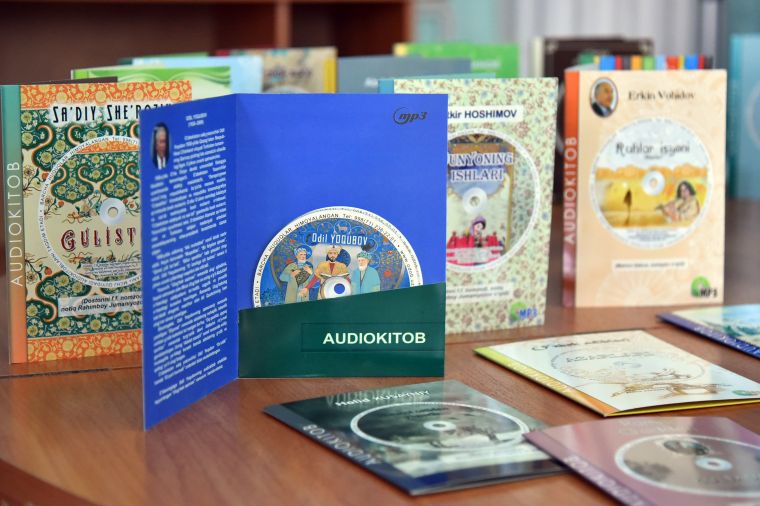
 Uzbek literature Literature and art of Uzbekistan is called one of the bright and wonderful pages of the history of the world artistic culture. Along with Egypt and Mesopotamia, Greece and Rome, India and China, Central Asia laid the foundations of human civilization. The emergence of a cultural phenomenon in Uzbekistan is mainly due to its geographical Mesopotamia, where agricultural centers have been location in the Central Asian formed since ancient times. Uzbek literature history The most ancient Uzbek oral literary works are over 200 epic poems, many legends, epic songs performed by folk poets - bakhshi. Heroes of folklore struggle with hostile forces evil spirits, dragons. The oldest cycle of epic poems Ker-ogly and the poem Alpamysh were written around the 10th century. Alpamysh went in the folklore of all the peoples of Central Asia. It talks about the courage of folk heroes, courage and hatred of enemies; it contains many witty aphorisms, vivid metaphors, colorful descriptions. Another popular work from the cycle Ker-ogly is a poem about the transforming power of love of Ravshan-Hon. Many times later it was processed by folk poets. The satirical novels of Nasreddin Afandi, in which the khans and bais are derided, are popular. In the oral Uzbek literature, people of different nationalities - Chinese, Iranian, Turkmen, Negro, etc., female images are devoid of sentimentality. In the XI century, many works are created, based on religious norms of Islamic morality. These are the instructive poems "Kugadau Bilig" ("Knowledge of Grace" or "Science of Happiness") by Yusuf Khas Hadjib Balasaguni, the poem "Khibat al-Khakaik" ("Gift of Truths") by Ahmad Yugnaki.

Prepeared by Imam Bukhari Tashkent Islamic Institute , Department of languages , English teacher     Kadirov Farrukh


Other posts

8 Facts About Bilal Ibn Rabah (RA)

14.10.2025   45705   2 min.
8 Facts About Bilal Ibn Rabah (RA)

1. Bilal Ibn Rabah (RA) was kept as slave

An Abyssinian, Bilal (RA) was kept as slave in Makkah. He (RA) was a slave of Ummayah bin Khalaf.

2 His master was a virulent enemy of Islam

Ummayah couldn’t tolerate the fact that Islam was being spread. Yet, Bilal (RA) his Ethiopian slave, converted into a Muslim.

Ummayah bin Khalaf was planning either to kill Him or to make him change his religion. But believe of Bilal (RA) on Allah didn’t let him fear from His master. He got succeeded in his plannings and sent Him for a punishment.

3. The inhuman punishment

In the Arabian Desert, Bilal (RA) was laid under the sparkling sun on the hot sand. Then, heavyweight hot rocks were placed on his body to make the situation worse.

He was burning due to the hot sand from the back of His body whereas, the upper body was burnt by the hot pieces of rocks. Also, He wasn’t able to move due to the weight of rocks.

4. The nights of lashes:

His believe made His master angrier. Bin Khalaf started lashing Him every night. He was tortured alternatively by Ummayah bin Khalaf and Abu Jahl.

5. Abu Bakr (RA)

Bilal (RA)’s punishment ended and He started living a free life as Abu Bakr (RA) bought him from Ummayah.

6. Bilal RA was the first Muezzin of Islam

Allah Almighty rewarded Him for His patience and He was made the Muazzin for the Mosque of Prophet (PBUH).

7. The death of Prophet Muhammad (PBUH):

After the death of Prophet (PBUH), Bilal (RA) wasn’t able to continue living in Madinah. He left Madina but returned after few days when He saw Prophet (PBUH) in a Dream demanding Him to pay a visit.

8. The request of Hasan and Hussain (RA):

When Bilal (RA) moved back in Madina, Hussain and Hasan (RA) requested Him to give Azan. After few years, Bilal (RA) finally left Madinah forever.

He died in Damascus in 20 AH. His tomb is located in Bab al Saghir, a graveyard in Damascus.