News
“The Diplomatic Insight”: Achievements of Independent Uzbekistan draw International Attention
24.09.2026
58771
1 min.
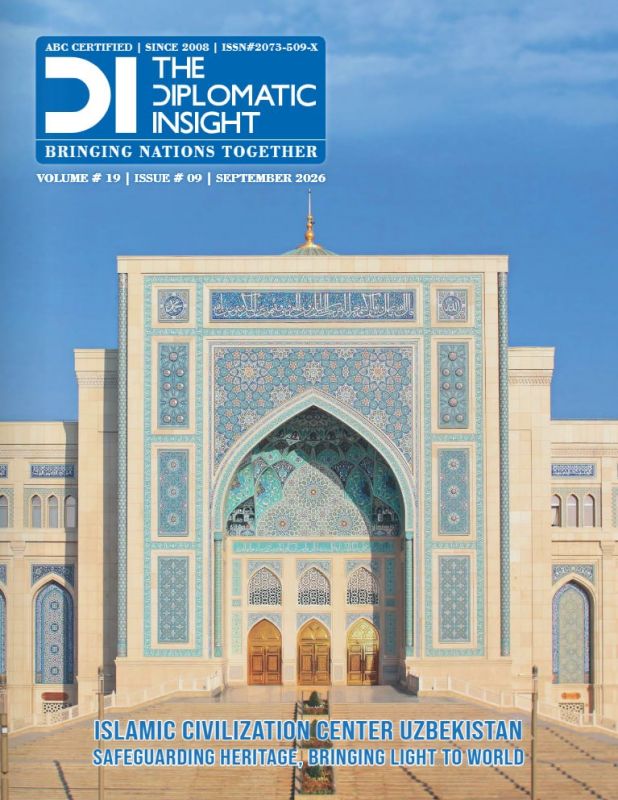
Articles dedicated to the contemporary development, international standing and rich historical and cultural heritage of Uzbekistan have been published in the authoritative Pakistani magazine “The Diplomatic Insight”, reports Dunyo IA.
The main focus of the publications was the keynote speech delivered by President Shavkat Mirziyoyev at the celebrations marking the 35th Anniversary of the State Independence of Uzbekistan, as well as large-scale anniversary events held in New Tashkent.
Publications highlight the country’s key achievements during the years of independence, strategic development priorities and the concept of building New Tashkent as an innovative and comfortable megacity.
Particular attention is devoted to articles by the publication’s Editor-in-Chief, Asif Noor, who participated in the international media forum “Islamic Civilization: A New Look – New Discoveries”, held in Tashkent and Samarkand on August 25–29th. Publications emphasize the role of media diplomacy in promoting the scientific and spiritual heritage of the great thinkers of the East, while highlighting Uzbekistan’s contribution to the development of global cultural and humanitarian cooperation.
Publication concludes that objective coverage of Uzbekistan’s development model and spiritual heritage in international media contributes to strengthening mutual understanding among peoples and shaping a peaceful and open image of the country on the international stage.
SHARE INFORMATION ON SOCIAL NETWORKS



 Iman
Iman  Prayer
  Fasting
  Zakat
Zakat  Haj
Haj  Qur`an
  Lessons of Islam
  Contact