The site is working in test mode!
08 August, 2026   |   25 Ṣafar, 1448

Tashkent city
Fajr
03:53
Sunrise
05:25
Dhuhr
12:34
Asr
17:27
Maghrib
19:37
Isha
21:06
Bismillah
08 August, 2026, 25 Ṣafar, 1448

Uzbek literature

15.05.2020   74408   2 min.
Uzbek literature

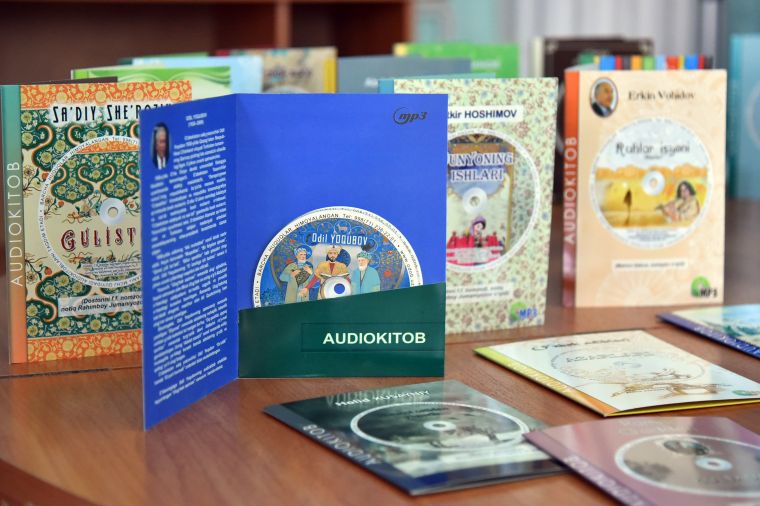
 Uzbek literature Literature and art of Uzbekistan is called one of the bright and wonderful pages of the history of the world artistic culture. Along with Egypt and Mesopotamia, Greece and Rome, India and China, Central Asia laid the foundations of human civilization. The emergence of a cultural phenomenon in Uzbekistan is mainly due to its geographical Mesopotamia, where agricultural centers have been location in the Central Asian formed since ancient times. Uzbek literature history The most ancient Uzbek oral literary works are over 200 epic poems, many legends, epic songs performed by folk poets - bakhshi. Heroes of folklore struggle with hostile forces evil spirits, dragons. The oldest cycle of epic poems Ker-ogly and the poem Alpamysh were written around the 10th century. Alpamysh went in the folklore of all the peoples of Central Asia. It talks about the courage of folk heroes, courage and hatred of enemies; it contains many witty aphorisms, vivid metaphors, colorful descriptions. Another popular work from the cycle Ker-ogly is a poem about the transforming power of love of Ravshan-Hon. Many times later it was processed by folk poets. The satirical novels of Nasreddin Afandi, in which the khans and bais are derided, are popular. In the oral Uzbek literature, people of different nationalities - Chinese, Iranian, Turkmen, Negro, etc., female images are devoid of sentimentality. In the XI century, many works are created, based on religious norms of Islamic morality. These are the instructive poems "Kugadau Bilig" ("Knowledge of Grace" or "Science of Happiness") by Yusuf Khas Hadjib Balasaguni, the poem "Khibat al-Khakaik" ("Gift of Truths") by Ahmad Yugnaki.

Prepeared by Imam Bukhari Tashkent Islamic Institute , Department of languages , English teacher     Kadirov Farrukh


Other posts
News

The Islamic Civilization Center in Uzbekistan held an educational event and practical seminar for nearly 100 imams and khatibs

27.07.2026   28871   5 min.
The Islamic Civilization Center in Uzbekistan held an educational event and practical seminar for nearly 100 imams and khatibs

The Islamic Civilization Center in Uzbekistan, in cooperation with the Imam Maturidi International Scientific Research Center, organized an educational event and practical seminar for nearly 100 imams and khatibs from Tashkent and the Namangan region, reports iccu.uz.

The participants began their visit by touring the museum exhibitions of the Islamic Civilization Center in Uzbekistan, established at the initiative of the President of the Republic of Uzbekistan, Shavkat Mirziyoyev.

During the tour, the guests were introduced to the outstanding contributions of eminent hadith scholars, thinkers, jurists, scientists, and statesmen featured in the Center’s exhibitions to the development of global scholarship and civilization. Particular emphasis was placed on how the integration of rare manuscripts, archaeological discoveries, and digital technologies enables the presentation of historical heritage in a modern and engaging format.

Bahrom Otajonov, Imam-Khatib of the Hofiz Ko‘hakiy Jome Mosque in Tashkent, described the Center as “not merely a museum, but an educational and scholarly institution that vividly showcases the centuries-old history and civilization of the Uzbek people.” He noted that the exhibitions present the country’s statehood, scientific achievements, architecture, and spiritual heritage within a unified conceptual framework, providing visitors with a comprehensive understanding of Uzbekistan’s place in the development of world civilization.

“This Center is not merely a museum, but an educational and scholarly institution that vividly reflects the centuries-old history and civilization of our people. It presents, in a comprehensive manner, the major milestones in the development of human civilization as well as the remarkable legacy of our ancestors in science, statehood, architecture, and spirituality. The way the era of Amir Temur, the Holy Qur’an, secular sciences, and educational values are brought together in a single space is particularly thought-provoking. Everyone who visits this Center gains an even deeper appreciation of Uzbekistan’s rich history and its distinguished civilizational heritage,” said Bahrom Otajonov.

The imams and khatibs also visited the Center’s modern library. Its collection, comprising thousands of manuscripts, rare books, and scholarly publications, was recognized as an invaluable academic resource for scholars and young researchers specializing in Islamic studies, Maturidism, Hadith studies, Islamic jurisprudence, Qur’anic exegesis, and related disciplines.

Mansur Musaxon, Deputy Imam of the Imam Termizi Jome Mosque in the Olmazor District, described the Uthman Mushaf preserved at the Center as a priceless spiritual treasure for the entire Muslim world. He noted that presenting the legacy of the ancestors through modern museum technologies plays a vital role in strengthening the historical awareness and spiritual education of the younger generation.

“Every exhibition here embodies its own unique meaning and historical significance. One of the most remarkable aspects of the visit was seeing the original Uthman Mushaf preserved at the Center. It is an immense spiritual treasure not only for our country but for the entire Muslim world. Equally impressive is the way our ancestors’ contributions to the development of Islamic civilization are presented through modern museum approaches, offering an inspiring educational experience for the younger generation. Everyone interested in history and their cultural roots should visit this remarkable institution,” said Mansur Musaxon.

As part of the program, a practical seminar was also held with the participation of specialists in religious affairs.

Qodirkhon Azizov, Chief Imam-Khatib of Kosonsoy District, emphasized that digital management systems are enhancing efficiency and transparency in the religious sphere as well. He also noted that the Center’s library, with its extensive scholarly collection, serves as an important resource for researchers specializing in Islamic sciences.

At the conclusion of the event, the participants emphasized that the Islamic Civilization Center in Uzbekistan is evolving into far more than a museum or a cultural heritage site. They described it as a prestigious platform that brings together scholarly research, education, international cooperation, and intellectual dialogue.