Uzbek literature
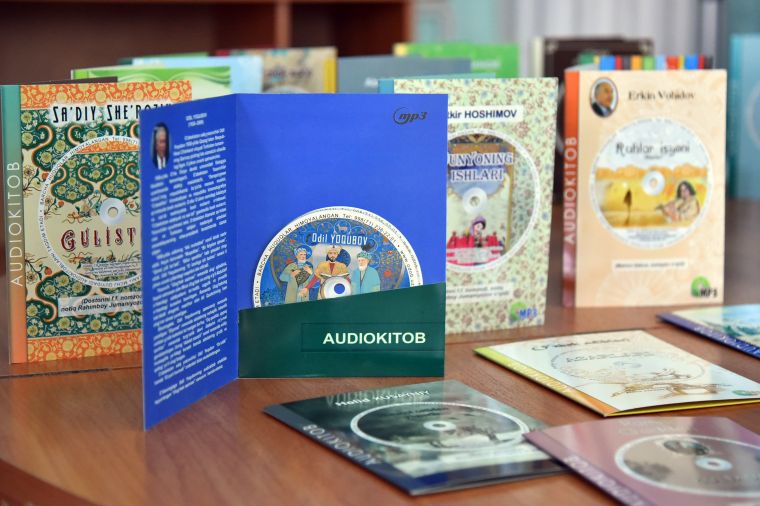
Uzbek literature Literature and art of Uzbekistan is called one of the bright and wonderful pages of the history of the world artistic culture. Along with Egypt and Mesopotamia, Greece and Rome, India and China, Central Asia laid the foundations of human civilization. The emergence of a cultural phenomenon in Uzbekistan is mainly due to its geographical Mesopotamia, where agricultural centers have been location in the Central Asian formed since ancient times. Uzbek literature history The most ancient Uzbek oral literary works are over 200 epic poems, many legends, epic songs performed by folk poets - bakhshi. Heroes of folklore struggle with hostile forces evil spirits, dragons. The oldest cycle of epic poems Ker-ogly and the poem Alpamysh were written around the 10th century. Alpamysh went in the folklore of all the peoples of Central Asia. It talks about the courage of folk heroes, courage and hatred of enemies; it contains many witty aphorisms, vivid metaphors, colorful descriptions. Another popular work from the cycle Ker-ogly is a poem about the transforming power of love of Ravshan-Hon. Many times later it was processed by folk poets. The satirical novels of Nasreddin Afandi, in which the khans and bais are derided, are popular. In the oral Uzbek literature, people of different nationalities - Chinese, Iranian, Turkmen, Negro, etc., female images are devoid of sentimentality. In the XI century, many works are created, based on religious norms of Islamic morality. These are the instructive poems "Kugadau Bilig" ("Knowledge of Grace" or "Science of Happiness") by Yusuf Khas Hadjib Balasaguni, the poem "Khibat al-Khakaik" ("Gift of Truths") by Ahmad Yugnaki.
Prepeared by Imam Bukhari Tashkent Islamic Institute , Department of languages , English teacher Kadirov Farrukh
BBC Studios representative: Presidential initiative is turning Uzbekistan into a crossroads of international cultural dialogue

According to Sergey Stanovkin, BBC Studios’ commercial representative in Eurasia, the international media forum “Islamic Civilization: New Perspective — New Discoveries,” held in Tashkent at the initiative of President Shavkat Mirziyoyev, has become a new media platform aimed at presenting Uzbekistan’s history and civilizational heritage to a global audience in its own independent voice.
Sergey Stanovkin, BBC Studios’ Commercial Representative in Eurasia:
The significance of this media forum is immense. Bringing representatives of professional media organizations together on a single platform produces a completely different impact in the information environment. Although blogging is one of the rapidly developing and important areas today, traditional media have their own audiences, spheres of influence, levels of trust, and editorial policies. Therefore, the fact that this event is being held specifically in the format of a media forum, with the participation of numerous representatives of international media outlets, is particularly significant.
The key task now is to give Central Asia and Uzbekistan a greater presence on the international media agenda. To achieve this, Uzbekistan and the Islamic Civilization Center in Uzbekistan need to have their own voice, their own content, and effective communications. The Islamic Civilization Center in Uzbekistan has something meaningful to say to the world and valuable content to present.
The establishment of the Islamic Civilization Center in Uzbekistan is also extremely important from this perspective. It creates a bridge not only between countries, but also between the past and the future. Understanding history helps us build the future in the right way. When the BBC ran the “Uzbekistan — Crossroads of Civilizations” promotional campaign, I thought a great deal about this idea. In my view, the Islamic Civilization Center in Uzbekistan is one of those important crossroads in the humanitarian sphere — it draws people to Tashkent and Uzbekistan and brings different countries closer together.
What is making Uzbekistan an important platform for international cultural dialogue is, above all, its dynamism and proactive approach. This is clearly visible in both the economy and culture. Uzbekistan is particularly distinguished by its forward-looking vision. Studying the past is extremely important, but speaking about the future and defining the direction of development are equally significant. This is how new partners and new supporters emerge. Uzbekistan is doing this very successfully. That is why it has so many friends and partners. I am confident that Uzbekistan has a great and bright future ahead.