The site is working in test mode!
18 August, 2026   |   5 Rabī‘ al-awwal, 1448

Tashkent city
Fajr
04:08
Sunrise
05:35
Dhuhr
12:27
Asr
17:17
Maghrib
19:22
Isha
20:45
Bismillah
18 August, 2026, 5 Rabī‘ al-awwal, 1448

Uzbek literature

15.05.2020   75345   2 min.
Uzbek literature

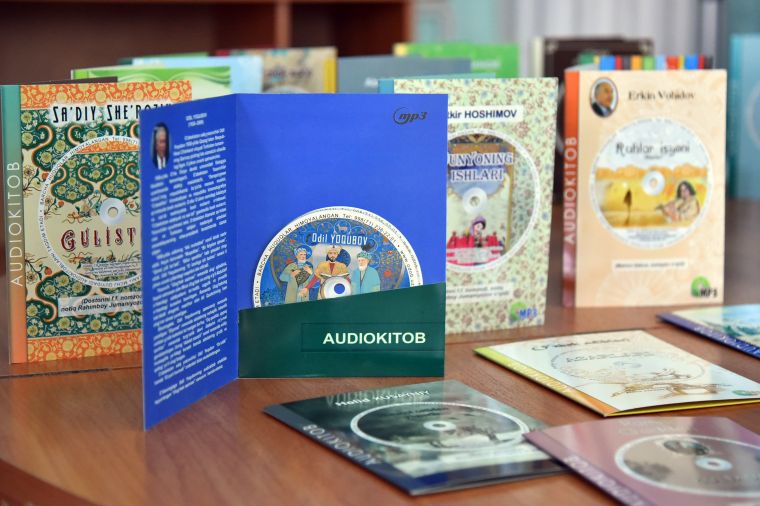
 Uzbek literature Literature and art of Uzbekistan is called one of the bright and wonderful pages of the history of the world artistic culture. Along with Egypt and Mesopotamia, Greece and Rome, India and China, Central Asia laid the foundations of human civilization. The emergence of a cultural phenomenon in Uzbekistan is mainly due to its geographical Mesopotamia, where agricultural centers have been location in the Central Asian formed since ancient times. Uzbek literature history The most ancient Uzbek oral literary works are over 200 epic poems, many legends, epic songs performed by folk poets - bakhshi. Heroes of folklore struggle with hostile forces evil spirits, dragons. The oldest cycle of epic poems Ker-ogly and the poem Alpamysh were written around the 10th century. Alpamysh went in the folklore of all the peoples of Central Asia. It talks about the courage of folk heroes, courage and hatred of enemies; it contains many witty aphorisms, vivid metaphors, colorful descriptions. Another popular work from the cycle Ker-ogly is a poem about the transforming power of love of Ravshan-Hon. Many times later it was processed by folk poets. The satirical novels of Nasreddin Afandi, in which the khans and bais are derided, are popular. In the oral Uzbek literature, people of different nationalities - Chinese, Iranian, Turkmen, Negro, etc., female images are devoid of sentimentality. In the XI century, many works are created, based on religious norms of Islamic morality. These are the instructive poems "Kugadau Bilig" ("Knowledge of Grace" or "Science of Happiness") by Yusuf Khas Hadjib Balasaguni, the poem "Khibat al-Khakaik" ("Gift of Truths") by Ahmad Yugnaki.

Prepeared by Imam Bukhari Tashkent Islamic Institute , Department of languages , English teacher     Kadirov Farrukh


Other posts
News

“Al-Ahram Weekly”: Uzbekistan reclaims its status as a global cultural hub

14.07.2026   52432   3 min.
 “Al-Ahram Weekly”: Uzbekistan reclaims its status as a global cultural hub

Egyptian publication “Al-Ahram Weekly” has published an article titled “Uzbekistan’s cultural renaissance: How the Silk Road Civilization is reclaiming its voice on the global stage”, highlights the country's cultural revival, the development of the creative economy and the expansion of international cultural cooperation, reports Dunyo IA.

Publication notes that for centuries, Uzbekistan sat at the very heart of the Great Silk Road, connecting the civilizations, religions and cultures of Asia, the Middle East and Europe and today, it is once again capturing the attention of the global community.

According to Gayane Umerova, Head of the Department of Creative Economy and Tourism of the Administration of the President of Uzbekistan, under the initiative of President Shavkat Mirziyoyev, culture, tourism and the creative economy are envisioned as fundamental pillars of the nation’s future, alongside infrastructure and industry. This approach, as noted, defines the state mandate to open Uzbekistan to the world and to welcome the world back to Uzbekistan.

Publication highlights that the nation's strategy extends beyond restoring historical sites to establishing new cultural platforms, including the Bukhara Biennial, the Center for Contemporary Art in Tashkent, the future Jadid Heritage Museum and international exhibition participation. This approach signifies a multifaceted cultural development policy.

Publication separately underscores the development of the creative economy and its nexus with cultural diplomacy and the nation’s investment attractiveness. It notes that every major cultural initiative in Uzbekistan is originally designed with a strategic focus on tourism development and investment attraction, including the “Samarkand Express” project, implemented in partnership with the Italian company “Arsenale Group”.

Publication also highlights the international acclaim received by Uzbekistan’s cultural projects, including the nation’s “Garden of Knowledge” pavilion at “Expo 2025 Osaka”, which was honored with the prestigious “Red Dot: Best of the Best” award.

Particular emphasis is placed on the preservation of Uzbekistan’s Islamic heritage, the advancement of museum infrastructure and the implementation of projects aimed at integrating historical legacy into the contemporary cultural context, including the Bukhara master development plan designed by the “Wilmotte & Associés” architectural bureau.

A dedicated section of the article focuses on Uzbekistan’s cultural cooperation with Egypt and the Arab world. It notes that the sides are discussing prospects for interaction in the fields of museum management, tourism, and cultural heritage preservation, alongside the development of institutional partnerships.

According to the publication, a highly symbolic milestone was the election of Professor Khaled El-Anany as Director-General of UNESCO during the 43rd session of the organization’s General Conference, which took place in Samarkand.

In conclusion, it underscores that Uzbekistan is envisioned as a nation that remains profoundly loyal to its traditions while simultaneously advancing modern cultural and creative industries, thereby strengthening international cultural cooperation.