News
Tourism Potential of Uzbekistan showcased in Kuala Lumpur
28.09.2026
30191
1 min.
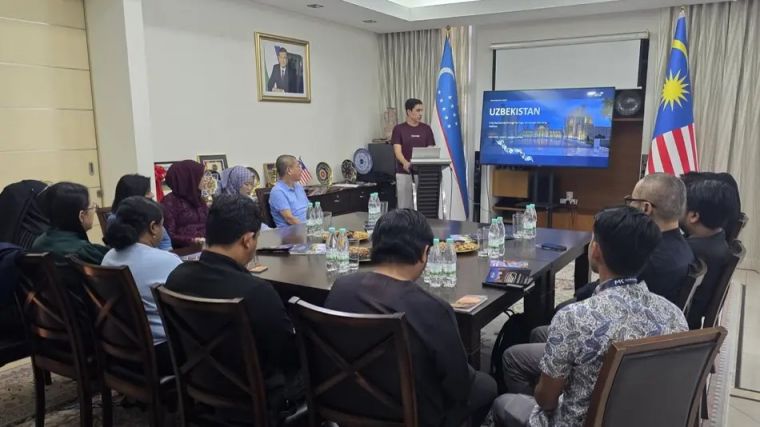
A presentation of the country's tourism potential and a B2B meeting between Uzbek and Malaysian tour operators took place at the Embassy of Uzbekistan, reports Dunyo IA correspondent.
Malaysian participants were briefed on the large-scale reforms in Uzbekistan's tourism sector, measures for the accelerated development of the industry and the creation of comfortable conditions for foreign tourists. It was noted that a visa-free regime is currently in place for citizens of more than 94 countries, including Malaysia.
Uzbek tourism companies presented programs covering Samarkand, Bukhara, Khorezm, Tashkent region and the capital city, alongside tourism packages tailored for pilgrimage, historical-cultural, winter, MICE and gastronomic tourism.
Representatives of “Uzbekistan Airways” provided information on direct flights between Tashkent and Kuala Lumpur. During the winter period, the number of direct flights between Uzbekistan and Malaysia is scheduled to increase from two to four flights per week.
Participants noted that the expansion of direct air connectivity will contribute to the growth of tourist flows between Central and Southeast Asia.
Following the B2B negotiations, concrete agreements were reached on expanding the sales of tourism packages in Malaysia for pilgrimage, winter and MICE tourism with the aim of increasing the flow of tourists to Uzbekistan.
SHARE INFORMATION ON SOCIAL NETWORKS



 Iman
Iman  Prayer
  Fasting
  Zakat
Zakat  Haj
Haj  Qur`an
  Lessons of Islam
  Contact