UZBEKISTAN'S TOURIST ATTRACTIONS
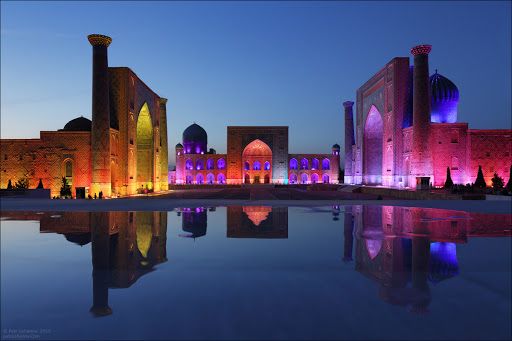
All the famous ancient places to visit in Uzbekistan What comes to mind when Uzbekistan's tourist attractions are in question? First of all, it is the country's architectural heritage, richest in Central Asia: masterpieces of medieval Islamic architecture - minarets, mosques, madrasahs (Islamic colleges), mausoleums, fortresses, palaces, etc as well as ancient Zoroastrian and Buddhist temples and ruins of ancient settlements... Among all of them stand out the famous Registan Square in Samarkand, with the three marvelous madrasahs built in the XV-XVII centuries at its three sides, and the grand Gur-e Amir Mausoleum where the great conqueror Tamerlane (Timur ) is buried. Bukhara is first of all associated with Ismail Samani Mausoleum dating back to the 9th century and the 50-meter-tall Kalyan Minaret. (There are over 170 important architectural monuments altogether in the city.) Khiva is famous for its unique Ichan-Kala 'inner city' historic part - a walled medieval Central Asian town being preserved as it was in the past - an artifact town.. . Thanks to its vast territory and very diverse terrains, Uzbekistan also boasts numerous natural attractions. They are the impressive tracts of the Kyzylkum Desert, for instance, and of course the majestic Tien Shan Mountains with their resorts and fascinating landscapes. SIGHTSEEINGS OF TASHKENT Tashkent ('a stone city'; also spelled Toshkent), Uzbekistan's capital, is in all respects a Central Asian regional hub; it is the fourth largest CIS city with a population of around 3 million. Today it has all the features of a modern metropolis and a capital, with a lot of attractive Central Asian-style newly-built structures and sites, as well as Soviet-era buildings. Tashkent is rich in museums, theaters and concert halls; there are a lot of traditional Central Asian and European-like restaurants and clubs, and several very nice parks, including a zoo and a huge botanical garden. Tashkent is the only Central Asian city which has an underground railway system (Tashkent Metro). It is probably one of the world's most beautiful: its stations are real works of art, each featuring unique designs covering various themes, such as famous people, events, valued notions, terms or just common nouns. Tashkent is a city of wide streets and numerous avenues, and is abundant in trees; although it is located in Central Asia, it has recently had a lot of evergreens planted, in addition to its traditional planes, poplars, oaks, willows, etc. Tashkent looks modern - it grew to its present size mainly during the Soviet times - but it is over 2,000 years old, and there is still some of its old part surviving, called Old City or Old Town. Tashkent Old city features a huge traditional Central Asian bazaar (there are many large and small bazaars in the city; most farmer products in the city are sold through them, not through stores), as well as several Islamic architectural monuments and quaint adobe mahalla neighborhoods , quite worth visiting for their charm. The Independence Square in Tashkent Khazrati Imam Mausolesm of Abubakr Kaftal Ash-Shashi Architectural Complex view all Tashkent Sightseeings »» SIGHTSEEINGS OF SAMARKAND Samarkand (also Samarqand) famous Uzbekistan's historc city. Over 2750 years of age, it boasts very spelled is probably the most
Prepeared by Imam Bukhari Tashkent Islamic Institute , Department of languages , English teacher Kadirov Farrukh
Pakistan and Uzbekistan have great potential for developing mutual trade
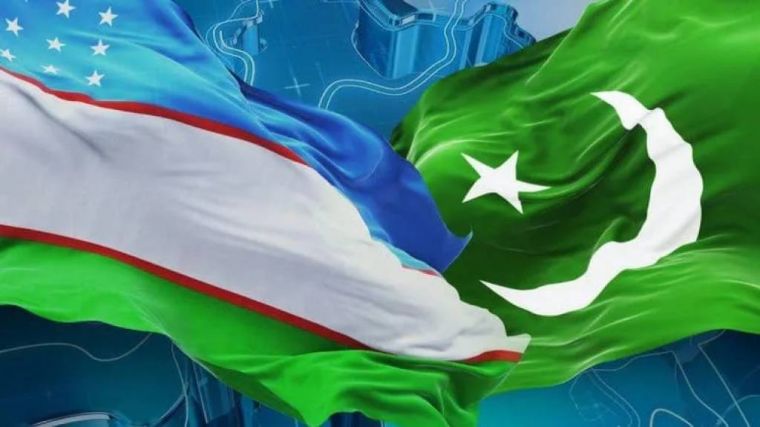
According to the Associated Press of Pakistan, Ambassador Extraordinary and Plenipotentiary of Uzbekistan to Pakistan Alisher Tukhtayev noted that there is great potential for increasing trade and investment between the two countries through the creation of joint ventures, in particular for the development of the textile industry.
During his visit to the All Pakistan Textile Mills Association (APTMA), Uzbekistan’s Ambassador invited representatives of the country’s textile companies to study the demand for high-quality products in Uzbekistan. He noted that Uzbekistan’s cheap energy and rich cotton reserves create attractive opportunities for Pakistani investors to develop trade and investment in the Uzbekistan market.
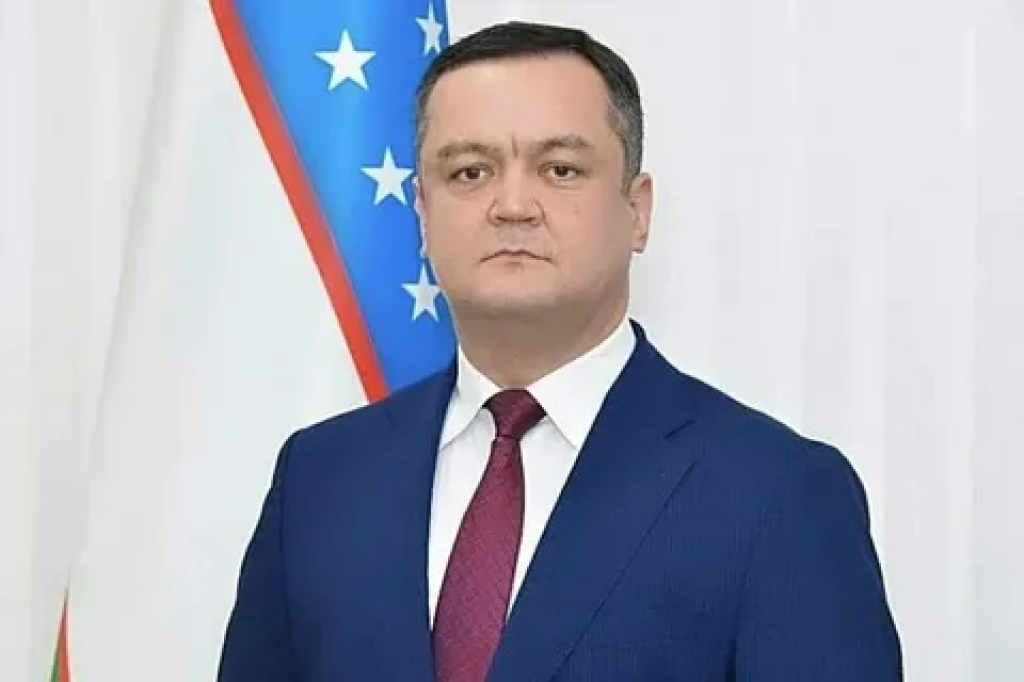
The Ambassador recalled that the two countries have signed several memoranda of understanding and agreements aimed at facilitating market access. Thanks to direct flights, the flight time was reduced by 90 minutes. Negotiations on a trilateral transit trade agreement involving Pakistan, Afghanistan, and Uzbekistan have entered a crucial phase. After reaching an agreement, trade flows will accelerate even more. Uzbekistan’s shopping malls have been opened in Karachi and Lahore. The next such center will be opened in Islamabad.
As A. Tukhtayev noted, Pakistan and Uzbekistan are “fraternal countries, not competitors”, so it is necessary to share resources, knowledge, and experience for mutual benefit. He invited the APTMA delegation to visit Uzbekistan, take part in exhibitions and conferences, and added that other trade delegations will visit this fraternal country in the coming months.
APTMA Chairman Kamran Arshad highlighted several existing problems in mutual trade, including the lack of official banking channels, delays in signing the free trade agreement, language barriers in labeling, issues with the Afghan transit route, and the slow construction pace of the Trans-Afghan Railway. He emphasized the importance of strengthening banking relations, concluding a free trade agreement as soon as possible, and establishing a regular exchange of trade delegations to realize the existing potential fully.
Another participant of the meeting, Asad Shafi, informed the delegation about the possibilities of Pakistan’s textile industry, noting that, despite centuries-old ties, the current volume of bilateral trade is only $125 million. He emphasized that his country aims to boost textile exports to $50 billion under the Sewing Revolution project and urged Uzbekistan to cooperate actively in this endeavor.
Muharrama Pirmatova, UzA