News
Delegation of Uzbekistan explored the sites of historical and cultural heritage in Afghanistan
15.10.2026
10453
2 min.
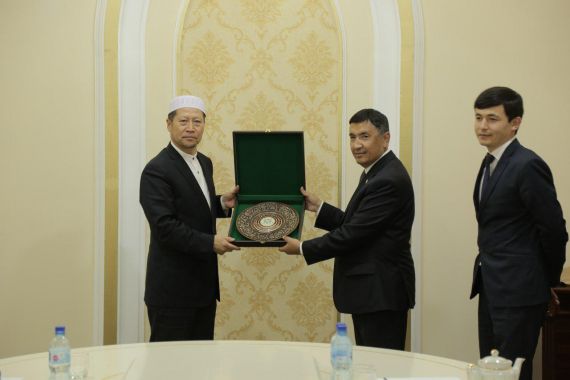
On October 7–11th, a delegation from the Cultural Heritage Agency of Uzbekistan, led by Deputy Director Azizdjan Aripdjanov, paid a working visit to Afghanistan. The purpose of the visit was to assess the condition of the mausoleums of outstanding Uzbek scholars and thinkers, as well as other historical and cultural monuments, and to discuss prospects for cooperation in their preservation and restoration, reports Dunyo IA.
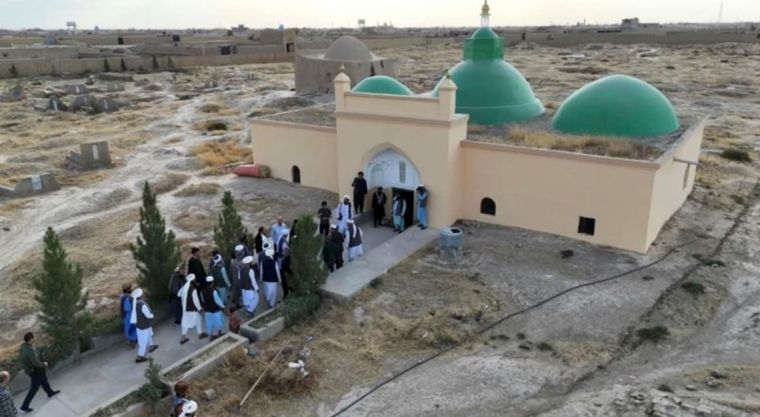
During the visit, representatives of Uzbekistan examined the condition of historical and cultural heritage sites in Balkh, Takhar, Sar-e-Pol and Faryab provinces and gathered the necessary data for further study.
Particular attention was paid to the Rawza al-Mubarak (Blue Mosque) in Mazar-i-Sharif, the pilgrimage site of Boborahim Mashrab in the Ishkamish district of Takhar province, historical brick bridge in the city of Sar-e-Pol, Khisht-Pul and Eidgah mosques, Imamzade Yahya mausoleum, Bobo Vali Jon madrasah in the Andkhoy district of Faryab province, Bobo Vali reservoir built through the charitable funds of Alisher Navoi and Mir Sayyid Baraka architectural monument.
During meetings with Afghan officials, the high qualifications of Uzbek specialists and the extensive experience accumulated by Uzbekistan in the restoration of historical monuments were highly noted. The Afghan side expressed keen interest in cooperating with Uzbek experts to preserve the country's cultural heritage and transmit it to future generations.
Participants of the meetings emphasized that the Uzbek and Afghan peoples have been bound by enduring historical, cultural and religious ties for centuries. Their shared historical heritage was forged through the close interaction of the peoples of Central Asia and Khorasan, with the contribution of the Uzbek people occupying an essential place in the cultural heritage of Afghanistan.
Following the visit, collected materials and data regarding the condition of the inspected sites will undergo a detailed analysis. Based on the findings of this work, the Cultural Heritage Agency of Uzbekistan and the Ministry of Information and Culture of Afghanistan plan to sign a Memorandum of Understanding on cooperation in the preservation and restoration of historical and cultural monuments.
SHARE INFORMATION ON SOCIAL NETWORKS



 Iman
Iman  Prayer
  Fasting
  Zakat
Zakat  Haj
Haj  Qur`an
  Lessons of Islam
  Contact