Aziz Abduhakimov, Chairman of State Committee on Tourism Development: A chain of hotels taking into account religious rituals must be in Uzbekistan.
15.05.2018
140241
1 min.
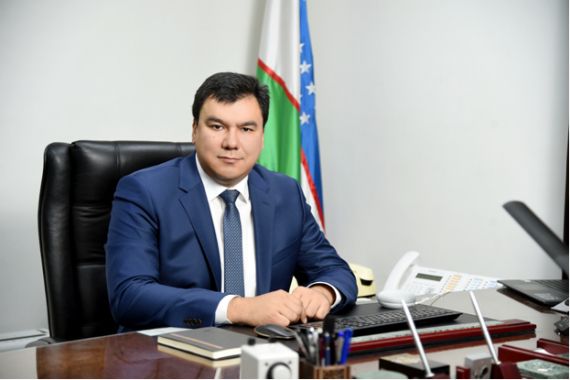
A chain of hotels considering religious rituals, the ziyarat-hotels must be established in Uzbekistan noted Aziz Abduhakimov, the Chairman of the Committee for Tourism Development in his interview for VisitUzbekistan journal.
“In the nearest future ziyarat tourism would be become the main direction in the development of internal and external tourism in our country. However there are still several things we must do for the conveniences of visitors in our airports, railway and bus stations which are washing and pray rooms. We are planning to establish a chain of hotels that foresees religious rituals of visitors. Besides, “Halal” and “Kosher” standards are expected to be introduced”.
According to his words, with the introduction of non-visa agreement between Turkey and Uzbekistan the number of visitors-ziyarat tourists to Uzbekistan from Turkey is expected to be raised to 3-4 times that is around 100-150 thousand visitors annually.
Earlier it was informed that during the official visit of R.T. Erdogan, Turkish President the memorandum was signed between the Committee for Tourism Development of Uzbekistan and its Turkish partners.
Press Service,
Muslim Board of Uzbekistan
SHARE INFORMATION ON SOCIAL NETWORKS



 Iman
Iman  Prayer
  Fasting
  Zakat
Zakat  Haj
Haj  Qur`an
  Lessons of Islam
  Contact