Andijan hosts two special lectures for imams: on recent President’s Decree and on HIV/AIDS.
10.05.2018
51436
1 min.
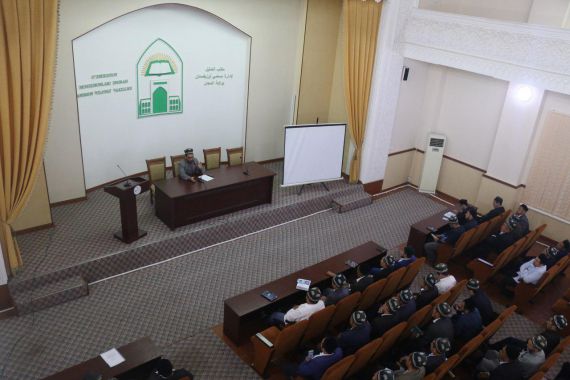
Andijan Region Representation Office of Muslim Board of Uzbekistan hosted the event on recent President’s Decree “On measures of rational improvement of religious-enlightenment sphere”. It was clearly delivered to all imams of the region about the importance of this initiative which has been waited for a long time. It was noted that according to the document the salary of teachers working at the certain religious educational establishments would receive salary which is to increase triple times from July 1st, 2018. During the discussion session participants were given satisfactory answers for the questions.
The same day, on May 1st, another event on HIV/AIDS struggle as part of the implementation of President’s decree dated from January 25, 2018 “On further improvement of struggle against AIDS dissemination and enhancement of prevention measures” was organized.
K.Mamatov, Head of Department of Andijan Region HIV/AIDS Center and M.Alimov, HIV/AIDS specialist took part in the seminar.
During the seminar imams of Andijan region received profound explanation about this alarming disease and were advised on raising public awareness on prevention methods.
Both events justified imams’ expectations as they were meaningful and practical.
Press Service,
Muslim Board of Uzbekistan
SHARE INFORMATION ON SOCIAL NETWORKS



 Iman
Iman  Prayer
  Fasting
  Zakat
Zakat  Haj
Haj  Qur`an
  Lessons of Islam
  Contact

