Cambridge University has opened doors for researches from Uzbekistan
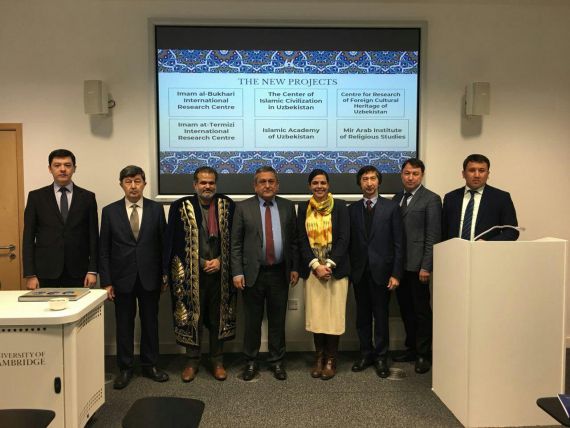
As it was informed earlier, a group of scholars on Islamic and oriental studies have visited Oxford and later Cambridge University. They met with professors and discussed future research perspectives.
Partnership agreements between Central Asian Forum of Cambridge University and Center for Islamic Civilization, Imam Buhari scientific-research center, The Center for research on Uzbek cultural heritage abroad and Tashkent Islamic University were signed.
According to the agreement scholars from Cambridge University are expected to provide lectures at Islamic Academy of Uzbekistan and Tashkent Islamic University and participate in international conferences. Scientific articles of Uzbek researches are going to be published in Cambridge magazines.
The sides agreed on establishing Khorazmi and Ibn Sina scholarships. Cambridge University expressed its willingness to cooperate in scientific and family tourism.
Dr. Siddharth Saxena highly evaluated positive developments in the sphere of ancient cultural heritage research. He also noted that British Oxford and Cambridge University buildings were constructed similar to the architectural styles of madrasahs in Bukhara and Samarkand whic once again proves that friendship relationships were established centuries ago.
We greatly benefit from scientific cooperation with scientists from Uzbekistan as there is great need at our university for specialists who work on cataloging manuscripts in Turkish and Farsi.
It should be noted with great applause that Uzbek lessons started to be offered at Cambridge University since February 12th, 2018. According to the agreements specialists visiting Cambridge from Uzbekistan would be providing Uzbek lessons.
At the end of the meetings the sides expressed their gratitude to the leaders of both countries for the friendly mutual relationships in all spheres of life including science.
Press Service,
Muslim Board of Uzbekistan
Tourism Potential of Uzbekistan showcased in Kuala Lumpur
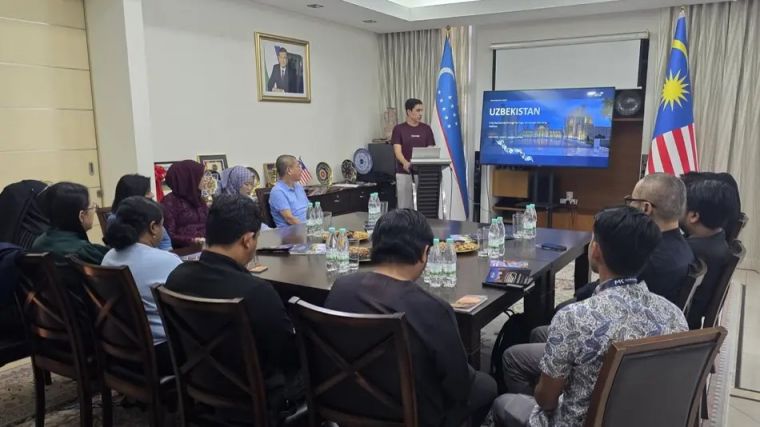
A presentation of the country's tourism potential and a B2B meeting between Uzbek and Malaysian tour operators took place at the Embassy of Uzbekistan, reports Dunyo IA correspondent.
Malaysian participants were briefed on the large-scale reforms in Uzbekistan's tourism sector, measures for the accelerated development of the industry and the creation of comfortable conditions for foreign tourists. It was noted that a visa-free regime is currently in place for citizens of more than 94 countries, including Malaysia.
Uzbek tourism companies presented programs covering Samarkand, Bukhara, Khorezm, Tashkent region and the capital city, alongside tourism packages tailored for pilgrimage, historical-cultural, winter, MICE and gastronomic tourism.
Representatives of “Uzbekistan Airways” provided information on direct flights between Tashkent and Kuala Lumpur. During the winter period, the number of direct flights between Uzbekistan and Malaysia is scheduled to increase from two to four flights per week.
Participants noted that the expansion of direct air connectivity will contribute to the growth of tourist flows between Central and Southeast Asia.
Following the B2B negotiations, concrete agreements were reached on expanding the sales of tourism packages in Malaysia for pilgrimage, winter and MICE tourism with the aim of increasing the flow of tourists to Uzbekistan.