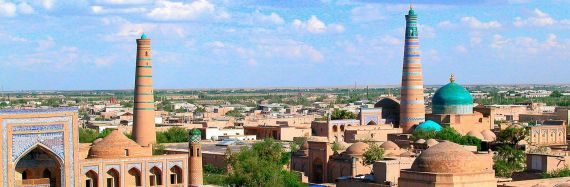
It is true that Uzbekistan is the center for historical buildings. Some of them are more than three thousand years. For example, “Hasti Imam” complex in Tashkent with it’s the first Quran of Usman dating to the VII century attracts thousands of tourists. There are many historical spots in Bukhara as well, one of them is Bakhauddin Naqshband memorial complex. Bahauddin Naqshband rahmatullahi alayh lived in XIV century and founded Naqshbandiya path of Sufism.
Notes for tourists……..
All efforts are being done to make better impression for tourists visiting Uzbekistan. For this reason a new initiatives are being put forward to develop tourism sphere. Starting from February 10th, 2018 the citizens form the following countries: Israel, Indonesia, Malaysia, South Korea, Turkey, Japan and Singapore can visit Uzbekistan for 30 days. For 39 countries visa procedures have been simplified. So, as a result 16 countries can visit Uzbekistan without entry visas.
Up to this day only 9 countries have been using non-visa entry status. Those countries were Azerbaijan, Armaniston, Belorussia, Georgia, Kazakhstan, Moldova, Russia and Kyrgyzstan.
Starting from 1st May, 2018 tourists are going to receive on arrival short term visas and later in summer E-visa is expected to be implemented. Then tourists would be able to do all procedures online including payment.
Besides, Uzbekistan Airlines, national air company is widening its routes in Scandinavia and South-East Asia with direct flight offers.
US State Department included Uzbekistan to the list of the most secure and trusted countries for US tourists on January 10, 2018.
These all proves that Uzbekistan will become one of the most attracted touristic countries in the world.
Press Service,
Muslim Board of Uzbekistan
The Central Bank expects to establish at least 10 full-fledged Islamic banks by 2030. Also, “Islamic windows” — branches providing Sharia financial services — will appear in three state banks. The Central Bank considers Islamic finance as a tool for withdrawing funds from the shadow economy.
Why is this important
According to a UNDP survey, 68% of Uzbekistan’s population does not want to use traditional banking services due to religious beliefs. Launching Islamic banks will expand financial inclusion, increase bank assets, and reduce the share of the shadow economy. This is the largest transformation of the financial system since independence.
What happened
Draft law
The document introduces the concepts of “Islamic banking activity”, “Islamic financial operations”, “investment deposit”, and others. A separate license is provided for Islamic banks. Classical banks will be able to organize “Islamic windows” if they have a license.
Islamic products: Murabaha (deferred trade financing), Mudaraba (investment partnership), Mushoraka (joint venture), Wakala (agency financing), Salam (prepayment of goods).
Features of regulation
Assessment of demand
The Deputy Chairman of the Central Bank clarified: when we talk about 50-60% of the population preferring Islamic finance, we are talking about those who prefer it. Those who categorically refuse traditional services are significantly fewer.
Context
Islamic finance prohibits the collection of interest (riba) and speculative operations. Instead, partnership models are used, where the bank and the client share profits and risks. Uzbekistan is a predominantly Muslim country (90%+ of the population), where a significant portion of citizens avoid traditional banks for religious reasons.
Creating 10 Islamic banks by 2030 is an ambitious task, given that there are currently around 35 commercial banks operating in the country. “Islamic windows” in state banks will allow large players (Uzpromstroybank, Halyk Bank, Asaka Bank) to enter a new segment of clients without creating separate structures.
The Central Bank sees Islamic finance as a tool for combating the shadow economy: religiously motivated citizens who do not trust traditional banks will be able to legalize funds through Sharia products.
A separate tax regime may include benefits for Murabaha-type operations, where the bank formally purchases goods and resells them to the client with a markup — to avoid double taxation.