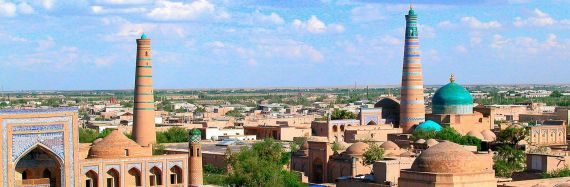
It is true that Uzbekistan is the center for historical buildings. Some of them are more than three thousand years. For example, “Hasti Imam” complex in Tashkent with it’s the first Quran of Usman dating to the VII century attracts thousands of tourists. There are many historical spots in Bukhara as well, one of them is Bakhauddin Naqshband memorial complex. Bahauddin Naqshband rahmatullahi alayh lived in XIV century and founded Naqshbandiya path of Sufism.
Notes for tourists……..
All efforts are being done to make better impression for tourists visiting Uzbekistan. For this reason a new initiatives are being put forward to develop tourism sphere. Starting from February 10th, 2018 the citizens form the following countries: Israel, Indonesia, Malaysia, South Korea, Turkey, Japan and Singapore can visit Uzbekistan for 30 days. For 39 countries visa procedures have been simplified. So, as a result 16 countries can visit Uzbekistan without entry visas.
Up to this day only 9 countries have been using non-visa entry status. Those countries were Azerbaijan, Armaniston, Belorussia, Georgia, Kazakhstan, Moldova, Russia and Kyrgyzstan.
Starting from 1st May, 2018 tourists are going to receive on arrival short term visas and later in summer E-visa is expected to be implemented. Then tourists would be able to do all procedures online including payment.
Besides, Uzbekistan Airlines, national air company is widening its routes in Scandinavia and South-East Asia with direct flight offers.
US State Department included Uzbekistan to the list of the most secure and trusted countries for US tourists on January 10, 2018.
These all proves that Uzbekistan will become one of the most attracted touristic countries in the world.
Press Service,
Muslim Board of Uzbekistan
Egyptian publication “Al-Ahram Weekly” has published an article titled “Uzbekistan’s cultural renaissance: How the Silk Road Civilization is reclaiming its voice on the global stage”, highlights the country's cultural revival, the development of the creative economy and the expansion of international cultural cooperation, reports Dunyo IA.
Publication notes that for centuries, Uzbekistan sat at the very heart of the Great Silk Road, connecting the civilizations, religions and cultures of Asia, the Middle East and Europe and today, it is once again capturing the attention of the global community.
According to Gayane Umerova, Head of the Department of Creative Economy and Tourism of the Administration of the President of Uzbekistan, under the initiative of President Shavkat Mirziyoyev, culture, tourism and the creative economy are envisioned as fundamental pillars of the nation’s future, alongside infrastructure and industry. This approach, as noted, defines the state mandate to open Uzbekistan to the world and to welcome the world back to Uzbekistan.
Publication highlights that the nation's strategy extends beyond restoring historical sites to establishing new cultural platforms, including the Bukhara Biennial, the Center for Contemporary Art in Tashkent, the future Jadid Heritage Museum and international exhibition participation. This approach signifies a multifaceted cultural development policy.
Publication separately underscores the development of the creative economy and its nexus with cultural diplomacy and the nation’s investment attractiveness. It notes that every major cultural initiative in Uzbekistan is originally designed with a strategic focus on tourism development and investment attraction, including the “Samarkand Express” project, implemented in partnership with the Italian company “Arsenale Group”.
Publication also highlights the international acclaim received by Uzbekistan’s cultural projects, including the nation’s “Garden of Knowledge” pavilion at “Expo 2025 Osaka”, which was honored with the prestigious “Red Dot: Best of the Best” award.
Particular emphasis is placed on the preservation of Uzbekistan’s Islamic heritage, the advancement of museum infrastructure and the implementation of projects aimed at integrating historical legacy into the contemporary cultural context, including the Bukhara master development plan designed by the “Wilmotte & Associés” architectural bureau.
A dedicated section of the article focuses on Uzbekistan’s cultural cooperation with Egypt and the Arab world. It notes that the sides are discussing prospects for interaction in the fields of museum management, tourism, and cultural heritage preservation, alongside the development of institutional partnerships.
According to the publication, a highly symbolic milestone was the election of Professor Khaled El-Anany as Director-General of UNESCO during the 43rd session of the organization’s General Conference, which took place in Samarkand.
In conclusion, it underscores that Uzbekistan is envisioned as a nation that remains profoundly loyal to its traditions while simultaneously advancing modern cultural and creative industries, thereby strengthening international cultural cooperation.