frontend\widgets\header\Header: Attempt to read property "fajr" on null

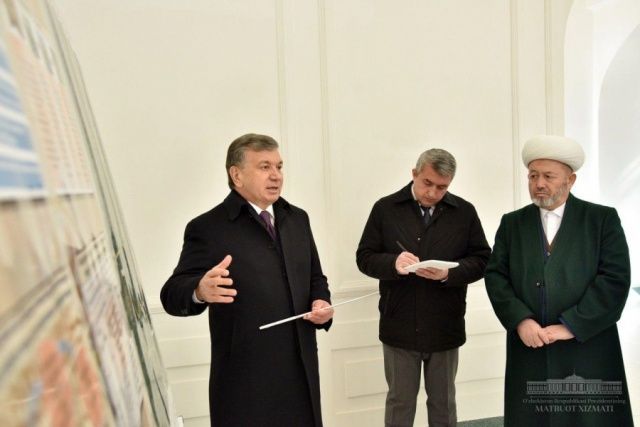
Shavkat Mirziyoyev visits the mausoleum of Bahauddin Naqshband

19.02.2018   36921   3 min.
Shavkat Mirziyoyev visits the mausoleum of Bahauddin Naqshband

The President of Uzbekistan had visited this complex on March 10, 2017, gave appropriate instructions on its further improvement, creating necessary conditions for pilgrims. 

The President inspected activities that have been implemented over the past period. 

According to tradition, surahs from the Quran were read. 

A consistent work is being carried out in accordance with the decree of President Shavkat Mirziyoyev on preparation for the 915th anniversary of Abdulhalik Gijduvani’s birth and the 700th anniversary of Bahauddin Naqshband’s birth of July 11, 2017. The Head of the state was provided with information on the “road map” of spiritual-enlightenment, scientific-practical events in connection with these anniversaries.

 
Shavkat Mirziyoyev visits the mausoleum of Bahauddin Naqshband 

It is planned to hold events on “Naqshbandi readings” for pilgrims, a scientific practical conference for university students, and a scientific conference for students of religious education institutions of the country on “High human qualities in teachings of Khojagon-Naqshbandiyya”. In addition, it is planned to organize an international scientific and practical conference on “Seven spiritual guides of Bukhara: renaissance value of Sufi teaching of Central Asia for the Islamic civilization”. 

The President of the country noted the need of conducting these events at a high organizational level. 

The last resting places of seven spiritual guides – Bahauddin Naqshband, Abdulhalik Gijduvani, Arif Revgari, Ali Romitani, Babai Samosi, Anjir Fagnavi, Said Amir Kulal are revered not only by people of Uzbekistan, but also by Muslims all over the world. 

The Head of the state was informed about the plans on reconstruction of these complexes and opening of new tourist routes. Therefore, it is planned to restore the mausoleums, landscape their territories, build hotels, teahouses, shopping complexes and parking lots. 

The distance between these complexes is 122 kilometers. Shavkat Mirziyoyev gave instructions on organizing a modern infrastructure along the roads linking the mausoleums. In addition, the need was noted for organizing a special faculty on studying the history of Bukhara in Bukhara State University. 

Along the roads linking the mausoleums of seven spiritual guides, it is necessary to establish stands with information about their lives and activities, for pilgrims. To do this, it is necessary to pay attention to training personnel, emphasized the President. 

The Head of the state considered each of the submitted projects, gave instructions on their development. 


Abu Bakir Urozov, UzA
Articles
Other posts
News

Cultural Significance and Centuries-Old Traditions of the Uzbek Mahalla discussed at UNESCO

14.08.2026   18258   4 min.
Cultural Significance and Centuries-Old Traditions of the Uzbek Mahalla discussed at UNESCO

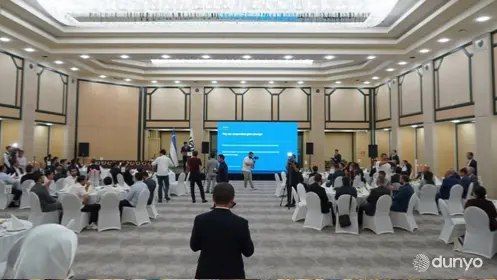
Facilitated by the Permanent Delegation of Uzbekistan to UNESCO, an online meeting was held between representatives of Uzbekistan and the Secretariat of the 2003 UNESCO Convention for the Safeguarding of the Intangible Cultural Heritage, dedicated to the cultural traditions and practices associated with the mahalla, as well as prospects for their promotion at the international level, reports Dunyo IA.

UNESCO Convention for the Safeguarding of the Intangible Cultural Heritage was adopted in 2003 and aims to safeguard living cultural traditions, customs, knowledge, skills and forms of cultural expression transmitted from generation to generation by communities. Operating within the framework of the Convention are the Representative List of the Intangible Cultural Heritage of Humanity, the List of Intangible Cultural Heritage in Need of Urgent Safeguarding and Register of Good Safeguarding Practices.

On behalf of UNESCO, the consultation was attended by Fumiko Ohinata, Secretary of the Convention for the Safeguarding of the Intangible Cultural Heritage and Nicholas Tan, Associate Programme Specialist responsible for the Asia and the Pacific region. Uzbek side was represented by officials from the Ministry of Foreign Affairs, the Mahalla Association of Uzbekistan, the National Commission for UNESCO and Permanent Delegation of the country to UNESCO.

During the meeting, the Uzbek side presented the centuries-old history of the mahalla, its special role in the life of society and its significance in preserving national traditions. It was emphasized that the mahalla is an integral part of the lifestyle of the people of Uzbekistan, uniting individuals on the basis of the principles of good neighbourliness, mutual assistance, solidarity and respect for the older generation.

Particular attention was paid to the cultural dimension of the mahalla. For centuries, it has served as a space where traditions are preserved directly in people's daily lives: holidays and important family events are celebrated collectively, customs of mutual assistance are maintained, intergenerational relations are strengthened and knowledge, values and life experience are transmitted to the youth.

Representatives of the UNESCO Secretariat reviewed the presented materials with great interest and noted the distinct nature of the social lifestyle centered around the mahalla in Uzbekistan. During the conversation, the significance of the traditions of community life, cultural interaction and the intergenerational transmission of heritage was emphasized as vital components of living intangible cultural heritage.

UNESCO experts also noted that the value of such traditions lies in their constant presence in people's lives. Cultural heritage within the mahalla is not limited to the preservation of individual customs but continues to manifest itself in daily interaction, relations between neighbours, collective events, and the participation of different generations in the life of the community.

During the exchange of views, it was noted that the experience of the mahalla reflects the way of organizing community life characteristic of Uzbekistan, where cultural values are preserved by the people themselves, further developed, and transmitted to subsequent generations. UNESCO representatives emphasized that such forms of interaction within local communities could be of significant interest in the context of the “living heritage” concept that underpins the 2003 Convention.

The role of Uzbekistan in promoting intangible cultural heritage and its contribution to enhancing international awareness of the diversity of living cultural traditions were separately highlighted. In this regard, the presented experience of the Uzbek mahalla generated significant interest among the Secretariat specialists.

Consultation held marked another step in developing cooperation between Uzbekistan and UNESCO on the preservation and international promotion of the country’s rich intangible cultural heritage, including the unique traditions and values formed within the institution of the mahalla.