The site is working in test mode!
22 August, 2026   |   9 Rabī‘ al-awwal, 1448

Tashkent city
Fajr
04:13
Sunrise
05:39
Dhuhr
12:26
Asr
17:13
Maghrib
19:16
Isha
20:38
Bismillah
22 August, 2026, 9 Rabī‘ al-awwal, 1448

Commemorating Sheikh Muhammad Sadik Muhammad Yusuf

12.02.2018   45828   4 min.
Commemorating Sheikh Muhammad Sadik Muhammad Yusuf

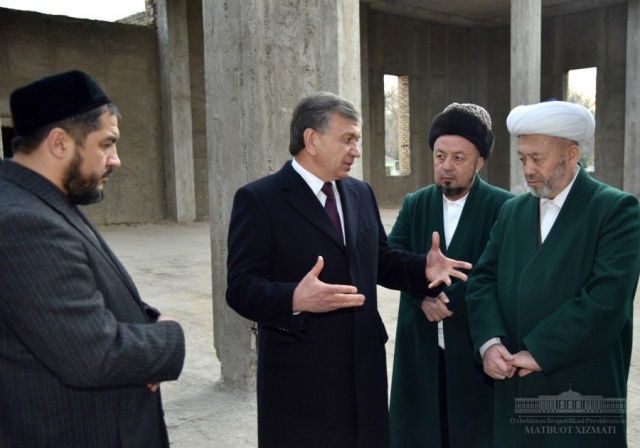
At the initiative of President Shavkat Mirziyoyev, the mosque that is being built in Chilanzar district will be named after Sheikh Muhammad Sadik Muhammad Yusuf. 

The President of Uzbekistan visited the construction site of this mosque, in Tashkent. 

Sheikh Muhammad Sadik Muhammad Yusuf was a scholar, not only well-known in Uzbekistan, but also recognized throughout the Islamic world, said Shavkat Mirziyoyev. He devoted his life to studying and promoting the foundations of our sacred religion, educating youth in the spirit of enlightened Islam. 

Sheikh Muhammad Sadik Muhammad Yusuf in 1989, in a very difficult time, became chairman, mufti of the Spiritual Administration of Muslims of Central Asia and Kazakhstan. That period has a special place in the history as the time of revival of Islamic science, religious traditions and values. He made a great contribution to resolution of many unnecessary disagreements in those difficult years. 

As mufti he conducted wide international activity, became able to establish and develop cultural and enlightenment ties with many Islamic countries. 

Sheikh Muhammad Sadik Muhammad Yusuf as mufti and as a deputy of the Supreme Council of the former union introduced an appeal to the government, which set out issues of respecting the rights of Muslims, creating necessary conditions for them. 

Coming out with such an initiative at a time when the totalitarian ideology was dominant, without a doubt, was a great feat, said President Shavkat Mirziyoyev. As a result, the Soviet government changed its policy towards Muslims, mosques and madrassas were opened, the number of pilgrims performing the Hajj increased. In 1990, 500 Muslims succeeded in performing the Hajj from the Central Asian republics through the city of Tashkent. This is a great result, considering that at that time only 20-30 people from the whole union went to the Hajj annually. 

Sheikh Muhammad Sadik enjoyed great respect and authority among Muslims of the whole world. He was a member of such authoritative organizations as the Executive Bureau of the Assembly of Islamic Scholars and World Thinkers, the International Union of Muslim Scholars, the Muslim World League, the Royal Academy of Jordan. He was awarded the “Laurel of the Nile” gold medal of the Arab Republic of Egypt. It should be emphasized that no one in the history of modern Uzbekistan has reached such heights in the Islamic sciences as he did. 

An outstanding scholar wrote more than 100 books on various religious and enlightenment themes. Wise words, conversations, speeches on radio and television, books, including audiobooks of the Sheikh took a firm place in the life of people of Uzbekistan. 

With his profound knowledge, good instruction and exemplary activities, Sheikh Muhammad Sadik Muhammad Yusuf is an example of conscientious service for the sake of the Motherland and development of religion. Studying his life and scientific activity, familiarizing people with his heritage is an honorable duty. 

President Shavkat Mirziyoyev, getting acquainted with the project of the mosque, noted the need for its further improvement, studying the proposals of the population and religious figures.

Other posts

“Azzaman” Newspaper: Homeland of Great Thinkers is building a new era of the Third Renaissance through science, innovation, technology and human capital

11.08.2026   70676   2 min.
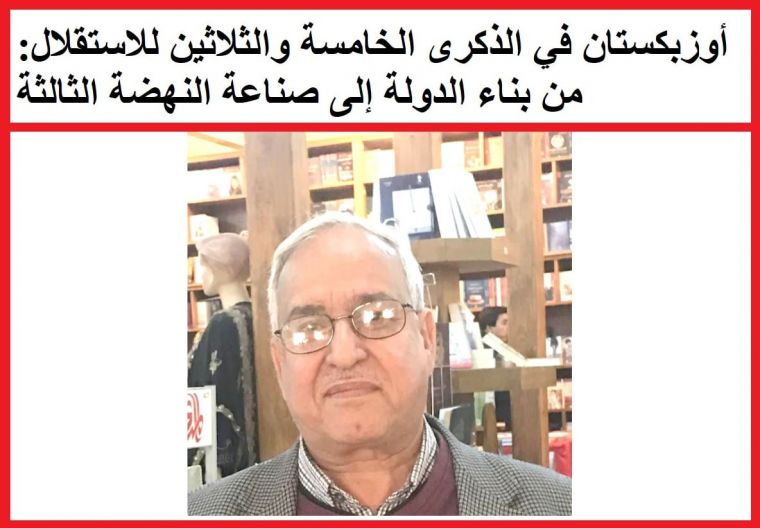
“Azzaman” Newspaper: Homeland of Great Thinkers is building a new era of the Third Renaissance through science, innovation, technology and human capital

One of Iraq's leading Arabic-language newspapers, “Azzaman”, has published an article entitled “Uzbekistan on the 35th Anniversary of Independence: From State-Building to the Third Renaissance”, reports Dunyo IA .

Article highlights Uzbekistan's development path over the years of independence, the large-scale reforms implemented across the country, and the republic's growing standing on the international stage.

It notes that the country's independence in 1991 marked a historic turning point in the life of the Uzbek people, laying the foundations for national statehood, establishing the basis for economic development and ensuring social stability.

Particular attention is paid to the large-scale transformations carried out since 2016 under the leadership of President Shavkat Mirziyoyev within the framework of the New Uzbekistan concept. The article emphasizes that these reforms have earned the country recognition as a state pursuing consistent and balanced development in Central Asia.

Publication also highlights reforms in the social sphere, including improvements to the social protection system, enhanced quality of education and healthcare, as well as initiatives aimed at expanding the participation of young people and women in public life.

Article places particular emphasis on the concept of the Third Renaissance put forward by President Shavkat Mirziyoyev, describing it as one of the country's key strategic development priorities. It notes that the homeland of such eminent scholars as Muhammad al-Khwarizmi, Abu Rayhan al-Biruni, Abu Ali Ibn Sina, Imam al-Bukhari and Imam al-Tirmidhi is today striving to usher in a new era of the Third Renaissance by advancing science, innovation, technology and human capital.

Publication also highlights Uzbekistan's open, pragmatic and balanced foreign policy, its commitment to the principles of good-neighborliness, and its efforts to strengthen cooperation with international and regional organizations. Particular emphasis is placed on the country's role in promoting peace, stability and regional cooperation in Central Asia.

In conclusion, article emphasizes that Uzbekistan's 35 years of independent development demonstrate its unwavering commitment to the path of renewal, constructive development and sustainable progress. It notes that, by harmoniously combining its rich historical and cultural heritage with modern development principles, the country is laying a solid foundation for a prosperous and sustainable future for coming generations.