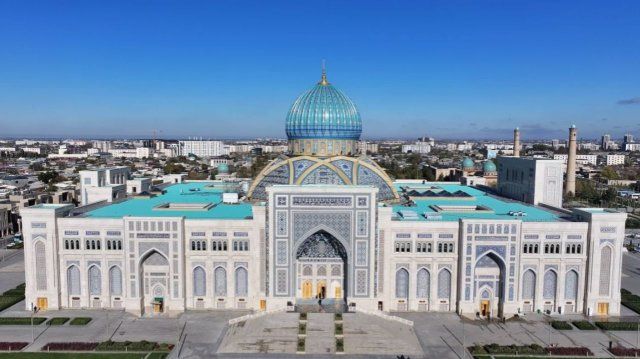
The Islamic Civilization Center in Uzbekistan has been receiving letters of appreciation and cooperation from leaders of foreign countries, prestigious international organizations, academic institutions, and participants of international conferences, further demonstrating the Center’s steadily growing reputation and influence on the global stage.
In particular, in a letter of appreciation addressed to Firdavs Abdukhalikov, Director of the Islamic Civilization Center in Uzbekistan, Her Majesty Raja Zarith Sofiah, Queen of Malaysia, expressed her sincere gratitude for the warm hospitality and cordial reception extended during her official visit to Uzbekistan. The Queen also emphasized that her visit to the Islamic Civilization Center in Uzbekistan left a lasting impression on her. She highly praised the Center’s exhibitions for their vivid and compelling presentation, through modern museum technologies, of the rich history and cultural heritage of Central Asia, as well as the scientific and spiritual legacy of the great scholars who made invaluable contributions to the development of Islamic civilization. In particular, she noted that the spiritual atmosphere of the Qur’an Hall and its unique heritage artifacts inspired in her profound respect and admiration.
The Islamic Civilization Center in Uzbekistan, along with the First International Islamic Civilization Forum held in Tashkent, Samarkand, and Termez from July 7 to 11, 2026, continues to receive widespread international recognition. Following the conclusion of the forum, numerous letters of appreciation and proposals for further cooperation were received from prominent international organizations, academic institutions, and public figures.
In his letter, Professor Shukran Abdul Rahman, Head of the Office of Strategic Institution Transformation at the International Islamic University Malaysia (IIUM), emphasized the international significance of the First International Islamic Civilization Forum. According to him, the forum, which brought together scholars, statesmen, and representatives of international organizations from more than 40 countries, played an important role in promoting the values of peace, tolerance, and enlightenment embodied in Islamic civilization, as well as in strengthening scientific dialogue and academic cooperation among nations. He also commended the high level of organization of the forum, the excellent conditions provided for participants, and the dignified presentation of Uzbekistan’s rich scientific and spiritual heritage to the international community.
The Forum and the activities of the Islamic Civilization Center in Uzbekistan were also highly praised in two separate letters sent by Russia’s Strategic Vision Group “Russia – Islamic World.” In particular, the letters described the establishment of the Islamic Civilization Center in Uzbekistan as one of the largest humanitarian and cultural-educational projects in the Islamic world of the twenty-first century. They also highlighted the leading role of President Shavkat Mirziyoyev in implementing this initiative and acknowledged his efforts to develop the Center into a hub of science, peace, enlightenment, humanism, and creativity.
At the same time, confidence was expressed that the Center would become a prestigious academic and educational institution for scholars, researchers, and students from around the world in the future. The letters also conveyed readiness to implement joint scientific and cultural projects in the fields of museology, history, archaeology, education, bibliography, and publishing.
In his letter, Professor Nidal Al-Ahmad, Secretary General of the Ministry of Culture of the Hashemite Kingdom of Jordan, also emphasized that the First International Islamic Civilization Forum was organized at the highest level, noting that the event once again demonstrated to the international community the tremendous contribution of Islamic civilization to the progress of humanity. He further highlighted that the forum, which brought together scholars, statesmen, and religious leaders from various countries, had become an important international platform for dialogue promoting the values of peace, tolerance, and enlightenment.
As another practical manifestation of the high level of international confidence in the Center’s activities, the regional office of ICESCO in Baku extended an official invitation to the Center’s leadership to participate in the Global Foresight Focal Points Initiative international event, held on July 27–28, 2026. The invitation emphasized the importance of expanding cooperation among ICESCO member states in the fields of strategic foresight, the introduction of innovative approaches to public administration, and future planning.
These expressions of recognition from foreign leaders, distinguished scholars, and international organizations once again confirm that the Islamic Civilization Center in Uzbekistan has, within a short period of time, become one of the leading platforms for international academic and educational cooperation. They also serve as clear evidence that the Center’s efforts to study, preserve, and promote the rich scientific and cultural heritage of Islamic civilization to the global community are receiving high international acclaim.



 Iman
Iman  Prayer
  Fasting
  Zakat
Zakat  Haj
Haj  Qur`an
  Lessons of Islam
  Contact