The site is working in test mode!
19 September, 2026   |   8 Rabī‘ ath-thānī, 1448

Tashkent city
Fajr
04:48
Sunrise
06:07
Dhuhr
12:17
Asr
16:37
Maghrib
18:30
Isha
19:45
Bismillah
19 September, 2026, 8 Rabī‘ ath-thānī, 1448

Commemorating Sheikh Muhammad Sadik Muhammad Yusuf

12.02.2018   47611   4 min.
Commemorating Sheikh Muhammad Sadik Muhammad Yusuf

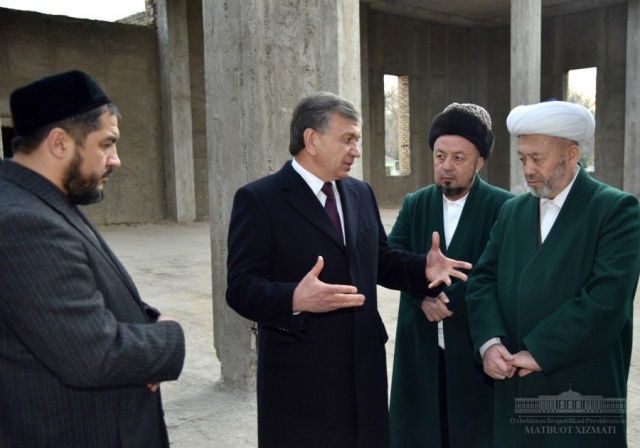
At the initiative of President Shavkat Mirziyoyev, the mosque that is being built in Chilanzar district will be named after Sheikh Muhammad Sadik Muhammad Yusuf. 

The President of Uzbekistan visited the construction site of this mosque, in Tashkent. 

Sheikh Muhammad Sadik Muhammad Yusuf was a scholar, not only well-known in Uzbekistan, but also recognized throughout the Islamic world, said Shavkat Mirziyoyev. He devoted his life to studying and promoting the foundations of our sacred religion, educating youth in the spirit of enlightened Islam. 

Sheikh Muhammad Sadik Muhammad Yusuf in 1989, in a very difficult time, became chairman, mufti of the Spiritual Administration of Muslims of Central Asia and Kazakhstan. That period has a special place in the history as the time of revival of Islamic science, religious traditions and values. He made a great contribution to resolution of many unnecessary disagreements in those difficult years. 

As mufti he conducted wide international activity, became able to establish and develop cultural and enlightenment ties with many Islamic countries. 

Sheikh Muhammad Sadik Muhammad Yusuf as mufti and as a deputy of the Supreme Council of the former union introduced an appeal to the government, which set out issues of respecting the rights of Muslims, creating necessary conditions for them. 

Coming out with such an initiative at a time when the totalitarian ideology was dominant, without a doubt, was a great feat, said President Shavkat Mirziyoyev. As a result, the Soviet government changed its policy towards Muslims, mosques and madrassas were opened, the number of pilgrims performing the Hajj increased. In 1990, 500 Muslims succeeded in performing the Hajj from the Central Asian republics through the city of Tashkent. This is a great result, considering that at that time only 20-30 people from the whole union went to the Hajj annually. 

Sheikh Muhammad Sadik enjoyed great respect and authority among Muslims of the whole world. He was a member of such authoritative organizations as the Executive Bureau of the Assembly of Islamic Scholars and World Thinkers, the International Union of Muslim Scholars, the Muslim World League, the Royal Academy of Jordan. He was awarded the “Laurel of the Nile” gold medal of the Arab Republic of Egypt. It should be emphasized that no one in the history of modern Uzbekistan has reached such heights in the Islamic sciences as he did. 

An outstanding scholar wrote more than 100 books on various religious and enlightenment themes. Wise words, conversations, speeches on radio and television, books, including audiobooks of the Sheikh took a firm place in the life of people of Uzbekistan. 

With his profound knowledge, good instruction and exemplary activities, Sheikh Muhammad Sadik Muhammad Yusuf is an example of conscientious service for the sake of the Motherland and development of religion. Studying his life and scientific activity, familiarizing people with his heritage is an honorable duty. 

President Shavkat Mirziyoyev, getting acquainted with the project of the mosque, noted the need for its further improvement, studying the proposals of the population and religious figures.

Other posts

The first steps of diplomacy: The correspondence between Timur and Charles VI

09.10.2025   36546   3 min.
The first steps of diplomacy: The correspondence between Timur and Charles VI

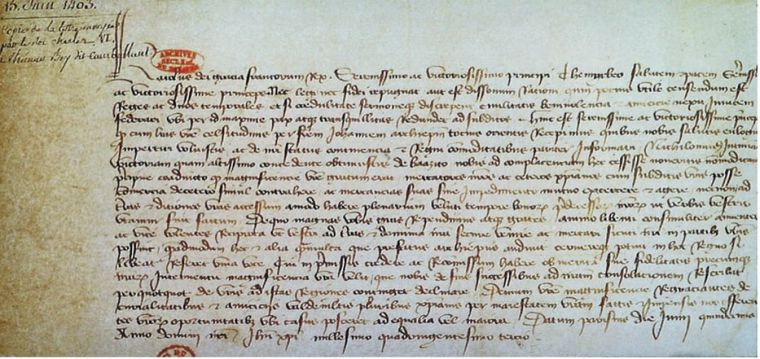
At the end of the 14th century, the correspondence between the great commander Amir Timur and King Charles VI of France, along with the memoirs of the Vatican envoy Ivan Grinlon about Timur’s court, are presented at the Center for Islamic Civilization in Uzbekistan. These documents represent not only a unique chapter in the history of diplomacy but also invaluable sources that introduce our nation’s scientific and cultural heritage to the world.

In the “Second Renaissance” section of the Center’s museum, early Islamic sources, medieval scholars’ manuscripts, and rare documents from the Timurid era are brought together in one space.

In the exhibition dedicated to the era of Amir Timur, every aspect of the sovereign’s activity state administration, domestic policy, and international relations is presented on a scholarly basis. Among the displayed materials are decrees, letters, and royal correspondences written in the Arabic script. One of them is a decree granted by Amir Timur to the descendants of the sayyids of Khwarazm, reflecting the great ruler’s profound respect for scholars.

“Each era has its own laws: over time, the number of artifacts decreases. Yet the survival of original sources from the period of Amir Timur is a great fortune for history”, says Sanjar G‘ulomov, Senior Research Fellow at the Institute of Oriental Studies, Academy of Sciences of Uzbekistan.

The most captivating part of the exhibition features the correspondence between Amir Timur, King Charles VI of France, and the Vatican. Written in 1402, these letters are among the earliest examples in the history of world diplomacy. Accompanying them is the Vatican envoy Ivan Grinlon’s work “Memoirs on the Court of Amir Timur”, which provides detailed information about court life, state governance, and international relations.

These documents show that Amir Timur was not only a great military leader but also a statesman with exceptional diplomatic skill. He established active political relations with France, the Vatican, China, India, and several other nations.

It should be noted that many of the exhibits displayed in the museum are original, centuries-old artifacts that have been carefully preserved. As previously reported, the correspondence between Amir Timur and King Charles VI of France was expected to arrive in Uzbekistan, and now these historic documents have rightfully taken their place in the museum’s collection. Moreover, with the help of modern technology, visitors can view the manuscripts digitally or explore them interactively.