Commemorating Sheikh Muhammad Sadik Muhammad Yusuf
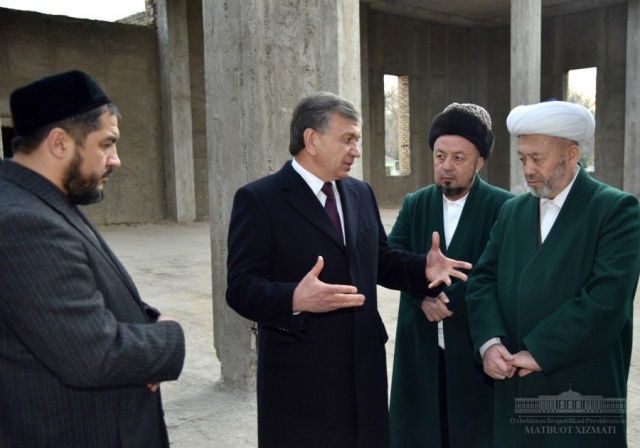
At the initiative of President Shavkat Mirziyoyev, the mosque that is being built in Chilanzar district will be named after Sheikh Muhammad Sadik Muhammad Yusuf.
The President of Uzbekistan visited the construction site of this mosque, in Tashkent.
Sheikh Muhammad Sadik Muhammad Yusuf was a scholar, not only well-known in Uzbekistan, but also recognized throughout the Islamic world, said Shavkat Mirziyoyev. He devoted his life to studying and promoting the foundations of our sacred religion, educating youth in the spirit of enlightened Islam.
Sheikh Muhammad Sadik Muhammad Yusuf in 1989, in a very difficult time, became chairman, mufti of the Spiritual Administration of Muslims of Central Asia and Kazakhstan. That period has a special place in the history as the time of revival of Islamic science, religious traditions and values. He made a great contribution to resolution of many unnecessary disagreements in those difficult years.
As mufti he conducted wide international activity, became able to establish and develop cultural and enlightenment ties with many Islamic countries.
Sheikh Muhammad Sadik Muhammad Yusuf as mufti and as a deputy of the Supreme Council of the former union introduced an appeal to the government, which set out issues of respecting the rights of Muslims, creating necessary conditions for them.
Coming out with such an initiative at a time when the totalitarian ideology was dominant, without a doubt, was a great feat, said President Shavkat Mirziyoyev. As a result, the Soviet government changed its policy towards Muslims, mosques and madrassas were opened, the number of pilgrims performing the Hajj increased. In 1990, 500 Muslims succeeded in performing the Hajj from the Central Asian republics through the city of Tashkent. This is a great result, considering that at that time only 20-30 people from the whole union went to the Hajj annually.
Sheikh Muhammad Sadik enjoyed great respect and authority among Muslims of the whole world. He was a member of such authoritative organizations as the Executive Bureau of the Assembly of Islamic Scholars and World Thinkers, the International Union of Muslim Scholars, the Muslim World League, the Royal Academy of Jordan. He was awarded the “Laurel of the Nile” gold medal of the Arab Republic of Egypt. It should be emphasized that no one in the history of modern Uzbekistan has reached such heights in the Islamic sciences as he did.
An outstanding scholar wrote more than 100 books on various religious and enlightenment themes. Wise words, conversations, speeches on radio and television, books, including audiobooks of the Sheikh took a firm place in the life of people of Uzbekistan.
With his profound knowledge, good instruction and exemplary activities, Sheikh Muhammad Sadik Muhammad Yusuf is an example of conscientious service for the sake of the Motherland and development of religion. Studying his life and scientific activity, familiarizing people with his heritage is an honorable duty.
President Shavkat Mirziyoyev, getting acquainted with the project of the mosque, noted the need for its further improvement, studying the proposals of the population and religious figures.
Pakistani Media: First International Forum on Islamic Civilization in Tashkent defines Global Agenda
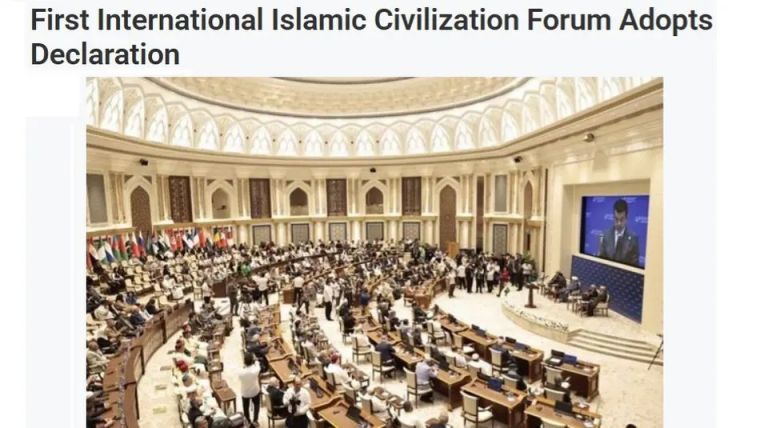
Pakistani media outlets, including “Diplomatic News Agency”, “Islamabad Post”, “News Network Pakistan”, “The World News” and “Infora News”, have published the final Declaration adopted by the participants of the First International Forum of Islamic Civilization held in Tashkent, reports Dunyo IA.
Publications note that the forum participants reaffirmed their commitment to the principles of peace, tolerance, enlightenment, intercultural, and interreligious dialogue and recognized the historical contribution of Uzbekistan to the development of Islamic and global civilization. The declaration expresses gratitude to the President of Uzbekistan Shavkat Mirziyoyev, for the initiative put forward at the 72nd session of the UN General Assembly, aimed at studying, preserving, and popularizing the heritage of Islamic civilization.
Particular attention is paid to the creation of the Center of Islamic Civilization in Uzbekistan and the holding of the forum as a practical embodiment of this initiative. In addition, the document outlines a number of international projects, as well as the development of a joint roadmap until 2030 to implement the adopted decisions.
