الحمد لله الذي قدر آجال العباد، وكتب أعمارهم قبل موالدهم، وقال
وَلِكُلِّ أُمَّةٍ أَجَلٌ فَإِذَا جَاءَ أَجَلُهُمْ لَا يَسْتَأْخِرُونَ سَاعَةً وَلَا يَسْتَقْدِمُونَ
، والصلاة والسلام على سيد الأنبياء وإمام الحنفاء محمد بن عبدالله وآله وأصحابه النجباء
Dear all!
On January 18, 2018 Muslim Board of Uzbekistan is in deep sorrow due to the accident happened in Aktuber region, Kazakhstan. On behalf of Council of Ulama of Muslim Board of Uzbekistan I express deep condolences of a death to the families of diseased
According to official information, on “Samara-Shimkent” highway in Aktyuber region of Kazakhstan “Setra” bus burst into fire while moving on high speed. Overall 57 passengers who were heading to Kazan, Russia from Southern Kazakhstan were inside the bus. 52 of passengers died and 5 managed to escape.
The special commission headed by Prime Minister left for Kazakhstan to find out the reasons of the incident. It was the extraordinary task of the President.
Meanwhile in all of the mosques of Uzbekistan special Quran tilawat was made for the victims of the bus fire during the Friday sermons.
Dear citizens, our dearest prophet Muhammad sollalohu alayhi wasallam mentioned in one of the hadith that if a person dies while drowning, burning, being kept under destruction or bearing a child, he or she would be considered as shaheed (martyr).
Quran mentions that muslims should offer supplication for those who passed away. So we all ask that May Allah bestow mercy on all our brothers who died in bus fire. May Allah give strong patience to their relatives!
Assalamu alaykum wa rohmatullohu wa barokatuhu!
Usmankhan Alimov,
Chairman of Muslim Board of Uzbekistan, Muftiy
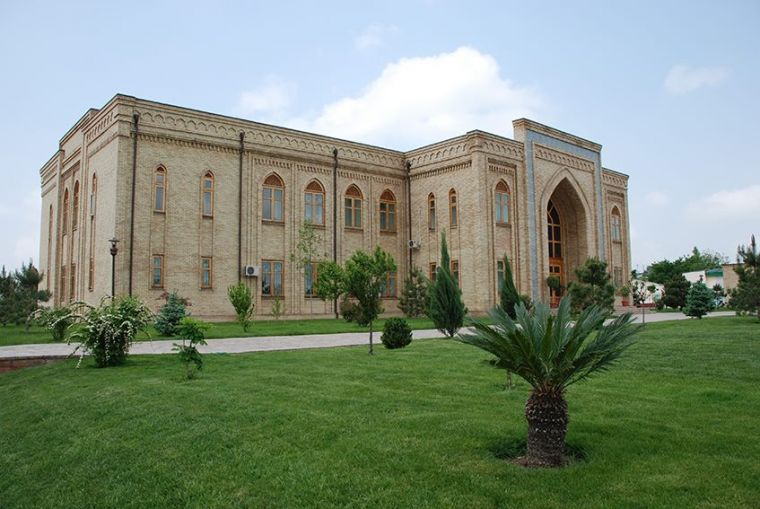
Saudi Arabia’s Minister of Health, Fahad Al-Jalajel, who visited the Islamic Civilization Center in Uzbekistan, emphasized that the complex, established at the initiative of President Shavkat Mirziyoyev, is creating a new environment for learning by seamlessly integrating history, science, and enlightenment in a modern format for future generations.
During his visit to the Islamic Civilization Center in Uzbekistan, Saudi Arabia’s Minister of Health, Fahad Al-Jalajel, toured the museum’s exhibitions, rare manuscripts, displays on the history of Islamic civilization, the rich scholarly legacy of great Muslim scholars, and exhibitions featuring advanced digital and interactive technologies.
During the visit, the distinguished guest explored the Center’s exhibitions showcasing the centuries-long development of Islamic civilization, its traditions of science and enlightenment, the invaluable contributions of scholars from Central Asia, particularly present-day Uzbekistan, to the advancement of global knowledge, as well as the large-scale reforms being implemented in New Uzbekistan to preserve and promote the nation’s cultural heritage.
Sharing his impressions of the Center, the senior Saudi official noted that the complex, established at the initiative of President Shavkat Mirziyoyev, plays a significant role in presenting the rich intellectual and spiritual heritage of Islamic civilization to the international community through modern museum practices and innovative exhibition concepts.
“Seeing the history of science and enlightenment that has evolved over centuries at the Islamic Civilization Center filled me with a profound sense of pride and admiration. Here, one can witness how civilization has developed in harmony with the passage of time. I would like to express my sincere gratitude to President Shavkat Mirziyoyev for making it possible to present this museum and its rich historical legacy to the world in a language that is accessible and understandable to all.
This Center provides the younger generation with a profound understanding of past civilizations, connects them with their own history, and demonstrates the enduring link between every historical era and today’s progress. We, your brothers and sisters in Saudi Arabia, are truly delighted to witness the remarkable reforms and achievements being realized in Uzbekistan,” he said.
According to Fahad Al-Jalajel, initiatives of this kind serve as an important foundation for strengthening cultural dialogue among nations, fostering a deeper appreciation of our shared civilizational heritage, and expanding international cooperation in the fields of science and enlightenment.