Condolences of Muftiy for death of 52 citizens of Uzbekistan in Kazakstan bus blaze.
الحمد لله الذي قدر آجال العباد، وكتب أعمارهم قبل موالدهم، وقال
وَلِكُلِّ أُمَّةٍ أَجَلٌ فَإِذَا جَاءَ أَجَلُهُمْ لَا يَسْتَأْخِرُونَ سَاعَةً وَلَا يَسْتَقْدِمُونَ
، والصلاة والسلام على سيد الأنبياء وإمام الحنفاء محمد بن عبدالله وآله وأصحابه النجباء
Dear all!
On January 18, 2018 Muslim Board of Uzbekistan is in deep sorrow due to the accident happened in Aktuber region, Kazakhstan. On behalf of Council of Ulama of Muslim Board of Uzbekistan I express deep condolences of a death to the families of diseased
According to official information, on “Samara-Shimkent” highway in Aktyuber region of Kazakhstan “Setra” bus burst into fire while moving on high speed. Overall 57 passengers who were heading to Kazan, Russia from Southern Kazakhstan were inside the bus. 52 of passengers died and 5 managed to escape.
The special commission headed by Prime Minister left for Kazakhstan to find out the reasons of the incident. It was the extraordinary task of the President.
Meanwhile in all of the mosques of Uzbekistan special Quran tilawat was made for the victims of the bus fire during the Friday sermons.
Dear citizens, our dearest prophet Muhammad sollalohu alayhi wasallam mentioned in one of the hadith that if a person dies while drowning, burning, being kept under destruction or bearing a child, he or she would be considered as shaheed (martyr).
Quran mentions that muslims should offer supplication for those who passed away. So we all ask that May Allah bestow mercy on all our brothers who died in bus fire. May Allah give strong patience to their relatives!
Assalamu alaykum wa rohmatullohu wa barokatuhu!
Usmankhan Alimov,
Chairman of Muslim Board of Uzbekistan, Muftiy
“Q8 Press”: Initiatives proposed at the I International Forum of Islamic Civilization serve to strengthen partnership, peace and intercultural dialogue
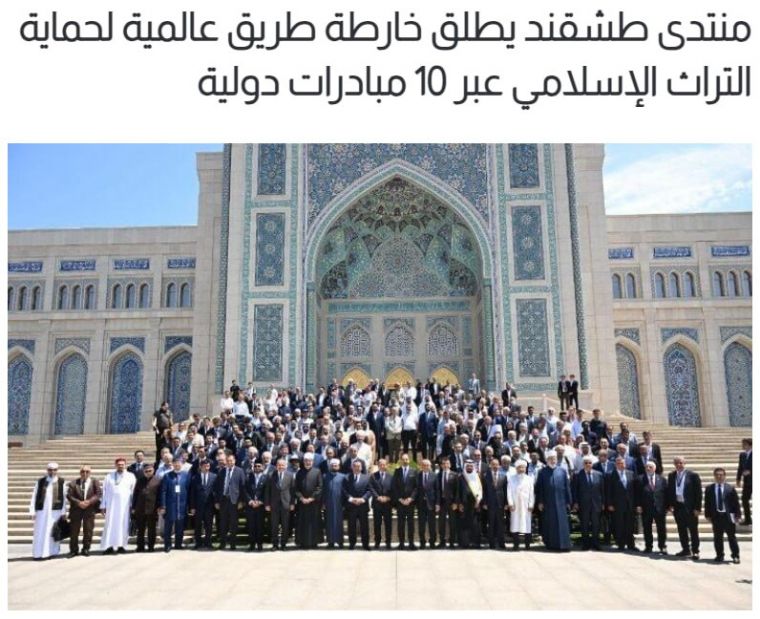
Kuwaiti electronic publication “Q8 Press” published a material on the outcomes of the First International Forum of Islamic Civilization held in Uzbekistan, reports Dunyo IA correspondent.
Publication notes that the forum became an important platform for the development of international cooperation in the study, preservation and promotion of the heritage of Islamic civilization. Particular attention is paid to the adoption of the Tashkent Declaration, which includes ten international initiatives.
Among the key proposals are the creation of the World Alliance of Islamic Civilization, a digital registry and heritage library, as well as the development of cooperation between scientific institutions, museums, and research centers.
According to the assessment of “Q8 Press”, the proposed initiatives will contribute to the preservation of historical and cultural heritage, the strengthening of partnership, peace and intercultural dialogue.
