News
“Uthaym” Newspaper: Enlightening development model of New Uzbekistan attracts the attention of the International Community
10.08.2026
66315
2 min.
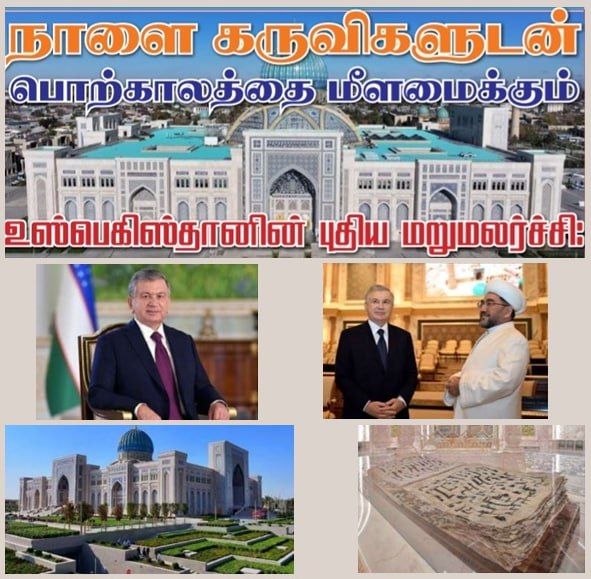
An analytical article dedicated to the rich historical and cultural heritage of Uzbekistan, as well as the state policy aimed at its preservation and transmission to future generations, has been published in the popular Sri Lankan newspaper “Uthaym”, reports Dunyo IA.
Publication highlights the reforms underway in New Uzbekistan to revive national values, protect cultural heritage sites and advance science and education.
As noted in the article, in recent years, one of the priority areas of Uzbekistan's state policy has become the comprehensive improvement of the spiritual and educational sphere, the deep study of the centuries-old scientific and cultural heritage of the people, and its wide popularization in the global community. It is emphasized that systemic work is being carried out in the country to restore historical monuments, modernize the activities of museums and archives, preserve and digitalize manuscript funds, as well as promote national cultural heritage on the international arena.
Particular attention in the article is paid to the initiative of the President of Uzbekistan Shavkat Mirziyoyev to implement the idea of the Third Renaissance, which is viewed as one of the key strategic directions of the country's development. According to the author, this concept is designed not only to ensure the preservation of historical heritage but also to facilitate the strengthening of the intellectual and spiritual potential of the state through the harmonious development of science, education, culture and innovation.
“In this sense, the concept of the Third Renaissance is viewed as a nationwide program aimed at reviving the great scientific traditions of Uzbekistan, raising an educated and patriotic young generation, as well as further strengthening the country's international prestige”, publication states.
Furthermore, the publication highlights Uzbekistan's cooperation with UNESCO and other international organizations in the field of cultural heritage protection, alongside the country's efforts to preserve historical monuments and harmoniously develop international tourism and scientific research.
As the “Uthaym” newspaper notes, enlightening development model of New Uzbekistan arouses growing interest and attracts increasingly close attention from the international community.
SHARE INFORMATION ON SOCIAL NETWORKS



 Iman
Iman  Prayer
  Fasting
  Zakat
Zakat  Haj
Haj  Qur`an
  Lessons of Islam
  Contact
