Two new mosques have been opened in Pskent district and “Kamchik” high mountain pass.
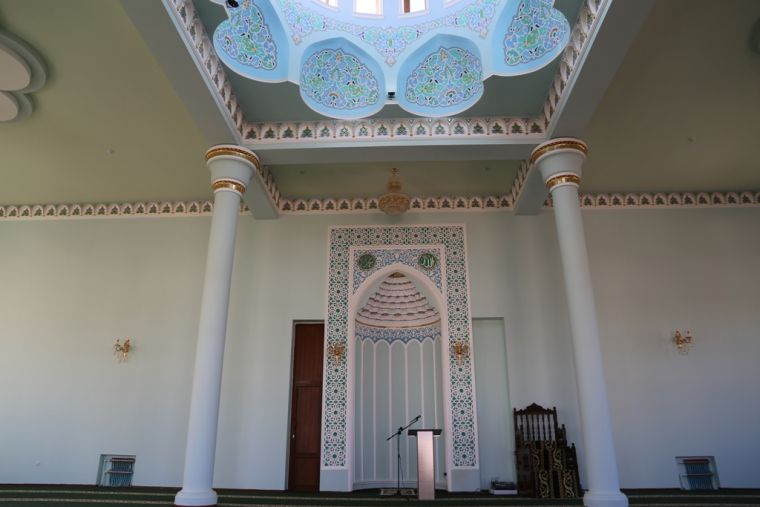
Much efforts are being done to deliver the true and pure essense of Islam in our country. One of such actions was done in Pskent district last year when Usmankhan Alimov, the Chairman of Muslim Board of Uzbekistan and Khayrulla Turmatov, Chief Imam of Tashkent region put initial bricks to build the mosque “Usmat Ota”.
The capacity of the newly built mosque is 250-300 people and in the nearest future the construction of library, museum and parking lot are expected to be raised in an adjoining area.
In his speech Muftiy Usmonkhon Alimov congratulated muslims with this historical event. Later the guests were invited for a lunch organized by Akromov, District Mayor.
Another new mosque has been opened in Kuksaroy neighborhood, Okhangaron district, Tashkent region. The mosque “Islom nuri (Light of Islam)” is located just on the side of the highway of Kamchik mountain highway pass.
The opening ceremony was led by Muftiy Usmankhan Alimov, who in his speech expressed warm wishes to worshippers and made genuine prayers.
Press Service,
Muslim Board of Uzbekistan
Uzbek Plov presented at the “World Halal Food Festival 2026” in London

Within the framework of the 12th international “World Halal Food Festival 2026” held in the capital of the United Kingdom, traditional Uzbek plov was presented to the guests of the event, reports Dunyo IA correspondent.
At this large-scale gastronomic event, which gathered guests from various countries around the world, the team of the London-based Uzbek restaurant “Oshpaz” prepared Uzbek plov according to the traditional recipe - in special cast-iron cauldrons (kazans) directly in front of the festival visitors. This allowed the guests not only to appreciate the unique taste of the dish but also to familiarize themselves with the process of its preparation and the traditions of the Uzbek national cuisine.
Uzbek plov generated great interest among the festival guests. The harmonious combination of aromatic spices, rice, carrots and meat, along with the traditional method of cooking in a cauldron, left a vibrant impression on the visitors.
“World Halal Food Festival” is a major international event dedicated to the promotion of halal products, gastronomy and cultural diversity. More than 200 halal product manufacturers and entrepreneurs from over 25 countries participated in the 2026 festival. Over the course of two days, the event was attended by more than 20,000 people.
Participation in the festival contributed to a broader acquaintance of the British public with the Uzbek national cuisine, the presentation of the rich gastronomic heritage of Uzbekistan to an international audience, as well as the promotion of the country’s tourism potential.
