The mosque designed by Uzbek architects is being built in Chechen Republic
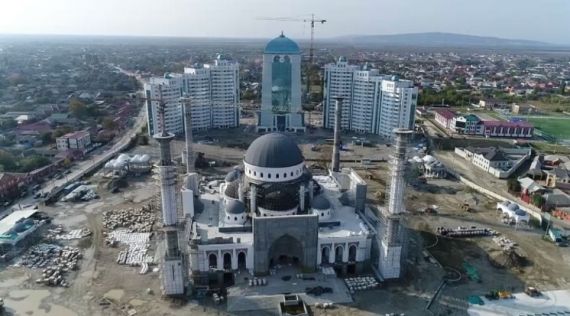
The mosque which accommodates 20 thousand worshippers at a time is being built in Shali city, Chechen Republic. The mosque is designed by Uzbek architects.
With the initiative of local residents the mosque is planned to be named after Ramzan Kadirov. The construction works started in 2012 and the opening ceremony is expected in 2018.
The mosque is located opposite “Shali-City” complex. The mosque has 4 minarets in all four corners of main building. Each minaret is 63 meters high. The dome of mosque is 43 meters high. Adjoining area of the mosque will be covered with 12 fountains. The mosque will be constructed and decorated in the unique style without any analogues in the world. The overall area of the mosque will be 6,5 hectares.
Press Service,
Muslim Board of Uzbekistan
“Sayidaty”: Uzbekistan - a destination rich in ancient history, remarkable architecture and vibrant culture
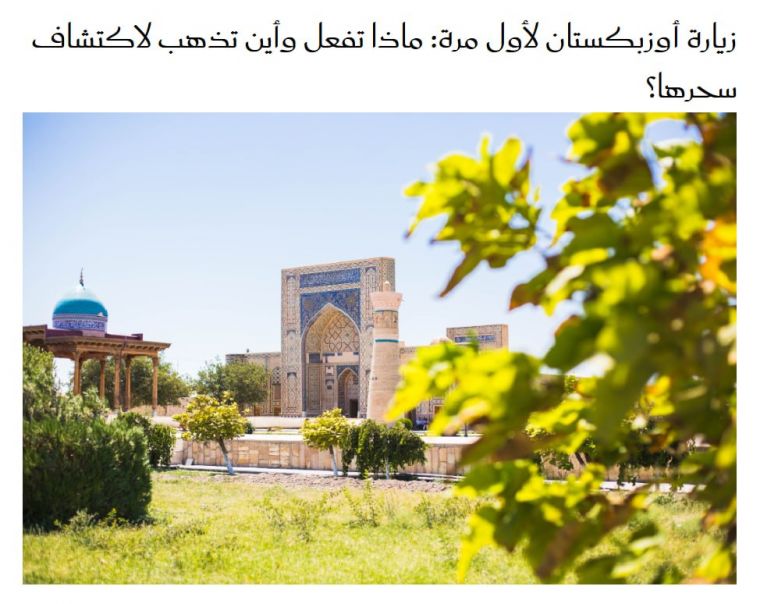
Saudi online magazine “Sayidaty” has published an article dedicated to Uzbekistan’s tourism potential and recommendations for travellers planning their first visit to the country, reports Dunyo IA.
Publication notes that Uzbekistan is a destination rich in ancient history, remarkable architecture and vibrant culture. Located in Central Asia, the country is known for its ancient cities that flourished along the Great Silk Road, as well as its picturesque natural landscapes and friendly people. Regardless of travellers’ interests - whether history or nature - the country offers numerous remarkable places and a wide range of experiences to discover.
Among the key places and activities recommended for visitors, the publication highlights Registan Square in Samarkand - an architectural gem featuring three historic madrasahs decorated with mosaics and bright blue tiles. Visitors can climb to the upper balconies for panoramic views and enjoy a light show in the evening, the publication notes. In Bukhara, particular attention is given to the historic Ark Citadel, the former residence of the emirs of Bukhara, which houses a museum of archaeological artefacts and offers views over the city, as well as Bolo Haouz Mosque, known for its carved wooden columns and tranquil pond.
In addition, the guide recommends strolling through the narrow streets of Ichan-Kala, the inner city of Khiva and a UNESCO World Heritage Site, and visiting the Tashkent Metro, described as an architectural masterpiece of the Soviet era, where each station is decorated with unique chandeliers and mosaics. To experience local culture and cuisine, travellers are advised to visit Chorsu Bazaar in Tashkent, where they can taste traditional plov, purchase handmade souvenirs such as carpets and ceramics and interact with local vendors.