Two new mosques have been opened in Pskent district and “Kamchik” high mountain pass
04.01.2018
25858
1 min.
Much efforts are being done to deliver the true and pure essense of Islam in our country. One of such actions was done in Pskent district last year when Usmankhan Alimov, the Chairman of Muslim Board of Uzbekistan and Khayrulla Turmatov, Chief Imam of Tashkent region put initial bricks to build the mosque “Usmat Ota”.
The capacity of the newly built mosque is 250-300 people and in the nearest future the construction of library, museum and parking lot are expected to be raised in an adjoining area.
In his speech Muftiy Usmonkhon Alimov congratulated muslims with this historical event. Later the guests were invited for a lunch organized by Akromov, District Mayor.
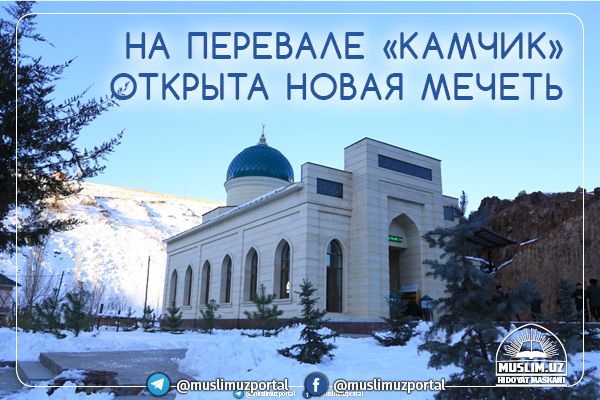
Another new mosque has been opened in Kuksaroy neighborhood, Okhangaron district, Tashkent region. The mosque “Islom nuri (Light of Islam)” is located just on the side of the highway of Kamchik mountain highway pass.
The opening ceremony was led by Muftiy Usmankhan Alimov, who in his speech expressed warm wishes to worshippers and made genuine prayers.
{gallery}//2018/01.01.2018/Islom_nuri{/gallery}
Press Service,
Muslim Board of Uzbekistan
SHARE INFORMATION ON SOCIAL NETWORKS



 Iman
Iman  Prayer
  Fasting
  Zakat
Zakat  Haj
Haj  Qur`an
  Lessons of Islam
  Contact