Feedback on President’s historical speech dedicated for year 2017.
26.12.2017
28571
3 min.
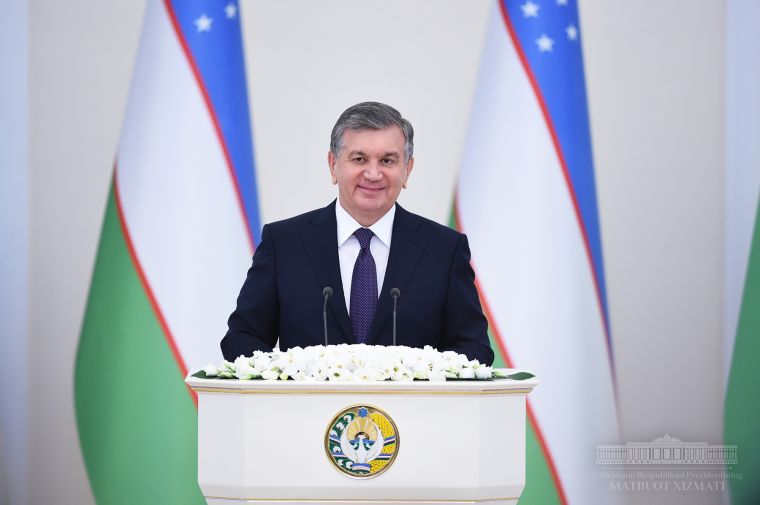
First of all, Shavkat Mirziyoyev started his speech with the information about high level meetings: 21 high level meetings, 60 state level and international organization heads meetings.
More than 400 investment agreements valued at 60 bln US dollars, 40 “road map” execution plans have been developed. After currency liberalization the buy-sell operations has increased 1,5 times in avarege making up 1,3 bln US dollars, state gold-currency reserves made up 1,1 bln US dollars.
This year 12 free economic zones, 45 industrial zones have been established. 50 more new industrial zones are being organized.
As a result of constructing new industrial zones more than 336 thousand new vacancies have been filled. It was significant contribution for the solution of employment issues.
Later President Shavkat Mirziyoyev explained why economic houses are being built in rural areas. “The houses we previously built were expensive and they were not available to common citizens. As a result only rich people bought those houses. We decided to build houses for ordinary citizens like teachers and doctors” noted the leader of the country. Particularly, more than 24 thousand new economic houses have been built in rural areas. 187 multi-storey residential buildings were raised where approximately 8 thousand families moved to thouse houses.
Talking about international loans and credits President noted that a country which mismanages foreign money will encounter serious problems falling into debts. For this reason Shavkat Mirziyoyev noted to pay great attention to this sphere and avoid any mistakes. As an example he analyzed the activity of gas-chemical complex in Ustyurt, Karakalpakstan which is not giving efficient results. Another sphere is credits allocated for drinking water supplies: for the last 10 years 17 projects valued at 618 mln US dollars, unfortunately most of the projecs have not been finished until the end.
Notable results have been observed in the relationships with China, South Korea and Turkey. It is worth noting that embassies are working with new principles.
According to IMF Uzbekistan is on the 134th place among 187 states by GDP per capita. Unfortunately, for the country with rich resources it is not appropriate place.
In conclusion, it should be noted that the speech of our President has become historical which analyzed all spheres of life with practical suggestions for improvement.
Press Service,
Muslim Board of Uzbekistan
SHARE INFORMATION ON SOCIAL NETWORKS



 Iman
Iman  Prayer
  Fasting
  Zakat
Zakat  Haj
Haj  Qur`an
  Lessons of Islam
  Contact