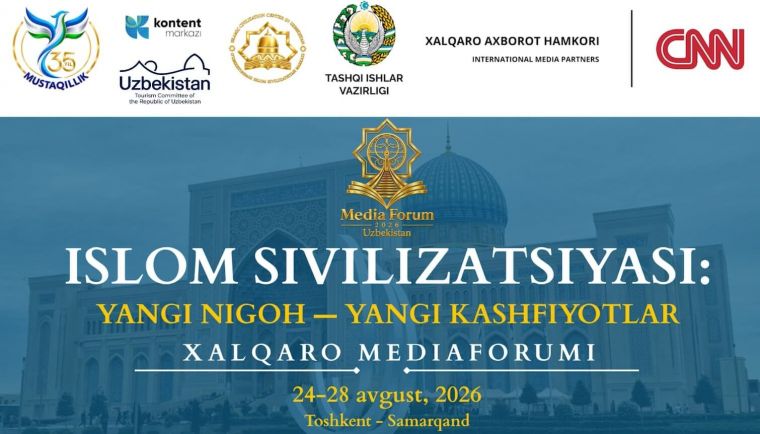
International Media Forum “Islamic Civilization: A New Perspective – New Discoveries” held in Uzbekistan
25.08.2026
112253
1 min.

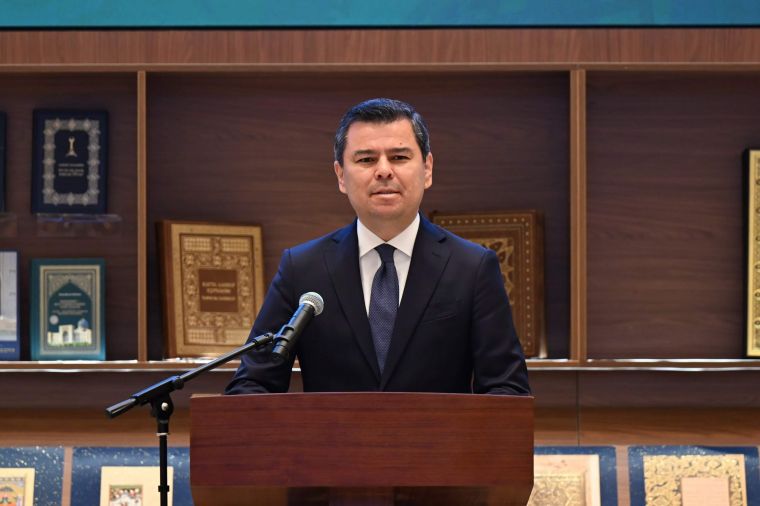
International Media Forum “Islamic Civilization: A New Perspective – New Discoveries” is being held in Uzbekistan, bringing together representatives of leading international media outlets, news agencies, television channels, international publications, digital platforms, as well as members of the academic and expert communities, reports Dunyo IA correspondent.
Forum is being held in Tashkent and Samarkand from August 24th to 29th and has brought together up to 300 participants from 43 countries. Event is attended by heads and representatives of media companies, documentary filmmakers, producers, scholars and specialists in the creative industries and artificial intelligence. "Euronews" and "CNN" are the event’s main media partners.
Center for Islamic Civilization in Uzbekistan serves as the main venue of the forum.
Forum program includes five plenary sessions and more than 50 presentations and reports. Key topics include the legacy of Muhammad al-Khwarizmi, Abu Ali ibn Sina, Abu Rayhan al-Biruni, Abu Mansur al-Maturidi, Imam al-Bukhari, Imam al-Tirmidhi, Mirzo Ulugbek and Alisher Navoi, as well as ways to present this heritage to contemporary international audiences through cinema, television, literature, digital platforms and artificial intelligence technologies.
Particular attention is being paid to projects related to the study and preservation of the Quranic and manuscript heritage.
Overall, International Media Forum program includes more than 100 business, educational, cultural and ceremonial events.



SHARE INFORMATION ON SOCIAL NETWORKS



 Iman
Iman  Prayer
  Fasting
  Zakat
Zakat  Haj
Haj  Qur`an
  Lessons of Islam
  Contact