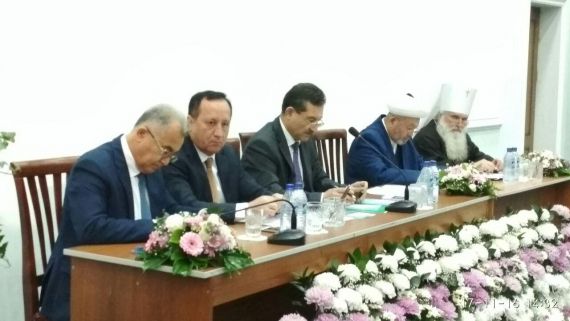
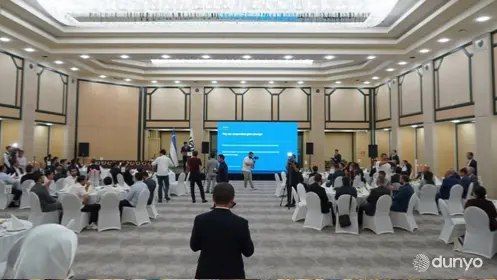
International “Umrah Plus” Tourism Association has been established in Tashkent, reports Dunyo IA.
Event was attended by representatives of the Committee for Tourism of Uzbekistan and Ministry of Foreign Affairs, embassies and diplomatic missions of foreign countries, tourism industry specialists and international partners.
According to the Committee for Tourism, the main objective of the new international structure is to combine Umrah pilgrimage with Uzbekistan’s rich historical, cultural and religious heritage, increase the flow of foreign pilgrims and promote the country’s potential in pilgrimage tourism internationally.
As noted, Uzbekistan is paying particular attention to bringing the tourism sector to a new stage of development, turning it into one of the important drivers of the national economy and promoting the country’s tourism potential more widely in international tourism markets. In this context, development of pilgrimage tourism and attraction of new target markets are among the key priorities of the “Umrah Plus” concept.
As part of the Association’s activities, particular attention will be given to attracting pilgrims from Indonesia, Malaysia and other countries to Uzbekistan under the “Umrah Plus” programme. New tourist routes are planned to be developed, combining Umrah pilgrimage in Saudi Arabia with visits to historical and religious sites in Tashkent, Samarkand and Bukhara.
A roadmap has been approved to attract 100,000 pilgrims from Malaysia and Indonesia in 2026–2027. In addition, the programme will focus on improving the quality of tourism services, expanding air connectivity, strengthening cooperation with foreign tour operators, and developing new tourism products that meet the requirements of the international market.
In particular, proposals have been put forward to launch transit tourism routes enabling travellers to fly from Kuala Lumpur to Saudi Arabia via Samarkand or Bukhara. Such routes are expected to help combine Uzbekistan’s transport and logistics potential in Central Asia with its potential in pilgrimage tourism.
Event also saw the signing of a memorandum of cooperation between the State Institution “Project Office for the Development of Tourism Products” under the Committee for Tourism of Uzbekistan and the International “Umrah Plus” Tourism Association. Parties agreed to implement joint projects, exchange expertise and further expand cooperation in pilgrimage tourism.
Mechanisms for implementing the “Umrah Plus” programme were established by a Resolution of the Cabinet of Ministers of the Republic of Uzbekistan dated January 9th, 2026. According to the document, until the end of 2026, tour operators attracting tourists from Malaysia and Indonesia under the programme will be provided with a US$100 subsidy per tourist.
It is expected that the newly established International “Umrah Plus” Tourism Association will serve as an important platform for coordinating international cooperation in this area, strengthening ties with foreign tourism markets and broadly promoting Uzbekistan’s potential in pilgrimage tourism.



 Iman
Iman  Prayer
  Fasting
  Zakat
Zakat  Haj
Haj  Qur`an
  Lessons of Islam
  Contact