Tolerance is guarantee of stability in society
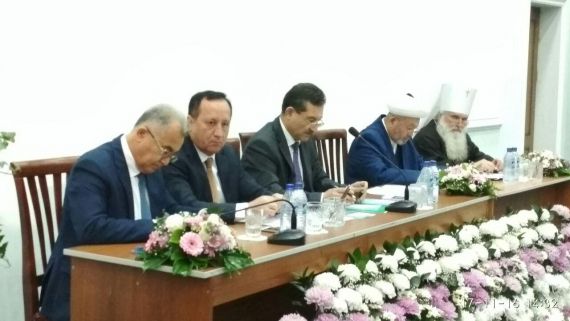
A scientific-practical conference on the theme “Inter-confessional dialogue and religious tolerance – guarantee of stability in society” was held at the Tashkent Islamic University on November 16, 2017. It was organized by the Committee of Religious Affairs, Tashkent Islamic University and the UNESCO Office in Uzbekistan. Traditionally, the conference is dedicated to the International Day of Tolerance on November 16.
Guests from Germany, Israel, Italy, Poland, Russia, Tajikistan, representatives of the diplomatic corps and international missions accredited in Tashkent, leaders of religious confessions conducting their activities on the territory of the republic, scientists and specialists of Uzbekistan took part in the international conference.
In a country like Uzbekistan that has chosen the path of democratic development, in which religion has its rightful place in society, guaranteed freedom of religion, the prohibition of planting religious beliefs and beliefs, ensuring equal rights for all, regardless of nationality, race and religion.
2242 religious organizations belong to 16 different denominations. They act in Uzbekistan in peace and equality. The Tashkent Islamic Institute, the Mir Arab Higher School, nine Islamic secondary specialized schools and two Christian seminaries carry out religious education activities.
The press service of the Uzbekistan Muslim Board
International seminar in Japan marks 150th birth anniversary of Mahmudkhoja Behbudi

An international scientific seminar dedicated to the 150th birth anniversary of prominent Jadid movement figure Mahmudkhoja Behbudi was held at the library of the Toyo Bunko Research Institute with the participation of scholars from Uzbekistan, Japan, and Türkiye, reports Dunyo IA.
The seminar was attended by Professor Hisao Komatsu of the University of Tokyo, a leading researcher of the Jadid movement, and was organized with the support of the Mitsubishi Foundation. Participants discussed initiatives aimed at further studying and promoting the rich intellectual and cultural legacy of the Jadid movement in Central Asia.
Another event dedicated to Behbudi's legacy was jointly organized with the Tokyo University of Foreign Studies. It brought together representatives of Japan's academic community, scholars from Uzbekistan and Türkiye, as well as students studying the Uzbek language.
The program featured a book exhibition and a screening of the documentary film Mahmudkhoja Behbudi. More than 20 films on the Jadid movement were also presented to the Japanese side to support further academic and educational research.

