News
BBC Studios representative: Presidential initiative is turning Uzbekistan into a crossroads of international cultural dialogue
04.09.2026
133843
3 min.

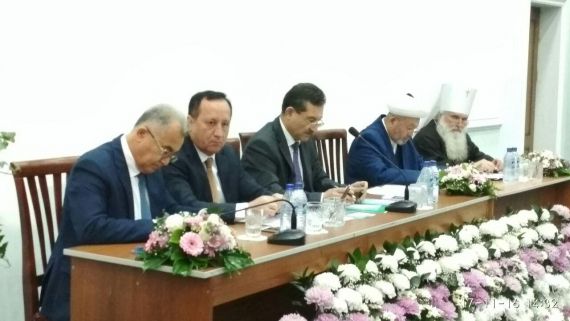
According to Sergey Stanovkin, BBC Studios’ commercial representative in Eurasia, the international media forum “Islamic Civilization: New Perspective — New Discoveries,” held in Tashkent at the initiative of President Shavkat Mirziyoyev, has become a new media platform aimed at presenting Uzbekistan’s history and civilizational heritage to a global audience in its own independent voice.
Sergey Stanovkin, BBC Studios’ Commercial Representative in Eurasia:
The significance of this media forum is immense. Bringing representatives of professional media organizations together on a single platform produces a completely different impact in the information environment. Although blogging is one of the rapidly developing and important areas today, traditional media have their own audiences, spheres of influence, levels of trust, and editorial policies. Therefore, the fact that this event is being held specifically in the format of a media forum, with the participation of numerous representatives of international media outlets, is particularly significant.
The key task now is to give Central Asia and Uzbekistan a greater presence on the international media agenda. To achieve this, Uzbekistan and the Islamic Civilization Center in Uzbekistan need to have their own voice, their own content, and effective communications. The Islamic Civilization Center in Uzbekistan has something meaningful to say to the world and valuable content to present.
The establishment of the Islamic Civilization Center in Uzbekistan is also extremely important from this perspective. It creates a bridge not only between countries, but also between the past and the future. Understanding history helps us build the future in the right way. When the BBC ran the “Uzbekistan — Crossroads of Civilizations” promotional campaign, I thought a great deal about this idea. In my view, the Islamic Civilization Center in Uzbekistan is one of those important crossroads in the humanitarian sphere — it draws people to Tashkent and Uzbekistan and brings different countries closer together.
What is making Uzbekistan an important platform for international cultural dialogue is, above all, its dynamism and proactive approach. This is clearly visible in both the economy and culture. Uzbekistan is particularly distinguished by its forward-looking vision. Studying the past is extremely important, but speaking about the future and defining the direction of development are equally significant. This is how new partners and new supporters emerge. Uzbekistan is doing this very successfully. That is why it has so many friends and partners. I am confident that Uzbekistan has a great and bright future ahead.
SHARE INFORMATION ON SOCIAL NETWORKS



 Iman
 Prayer
 Fasting
 Zakat
 Haj
 Qur`an
 Lessons of Islam
 Contact