The Manuscript of the Uthmanic Mushaf at the Muslim Board of Uzbekistan Under Scholarly Study
24.10.2025
117187
2 min.
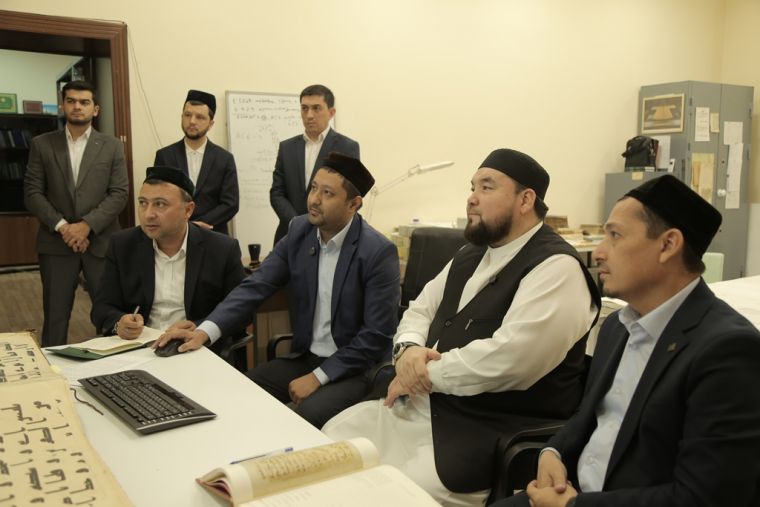
The manuscript of the Uthmanic Mushaf preserved at the Library of the Muslim Board of Uzbekistan is currently undergoing codicological examination.
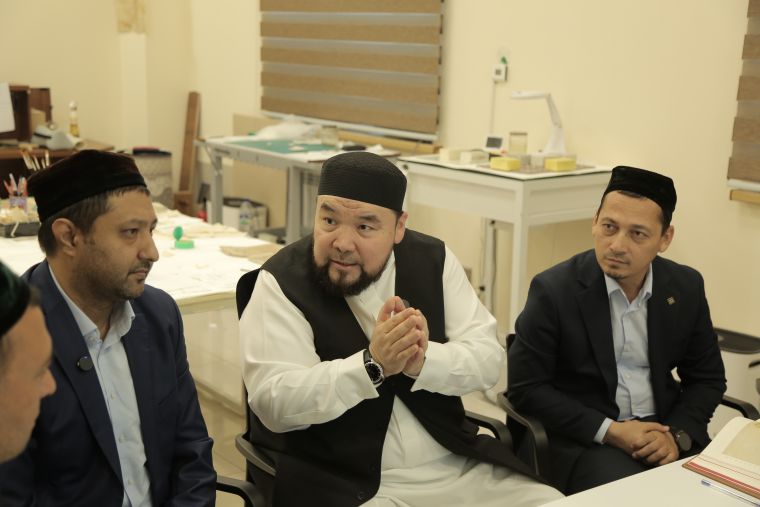
This research involves a team of scholars including Shaykh Alijon Qori Fayzullah, Head of the “Qur’an and Tajwid Education” Department; Kamoliddin Mahkamov, Head of the Library Department; and Jahongir Qori Nematov, Head of the “Qur’anic Studies” Department at Tashkent Islamic Institute.
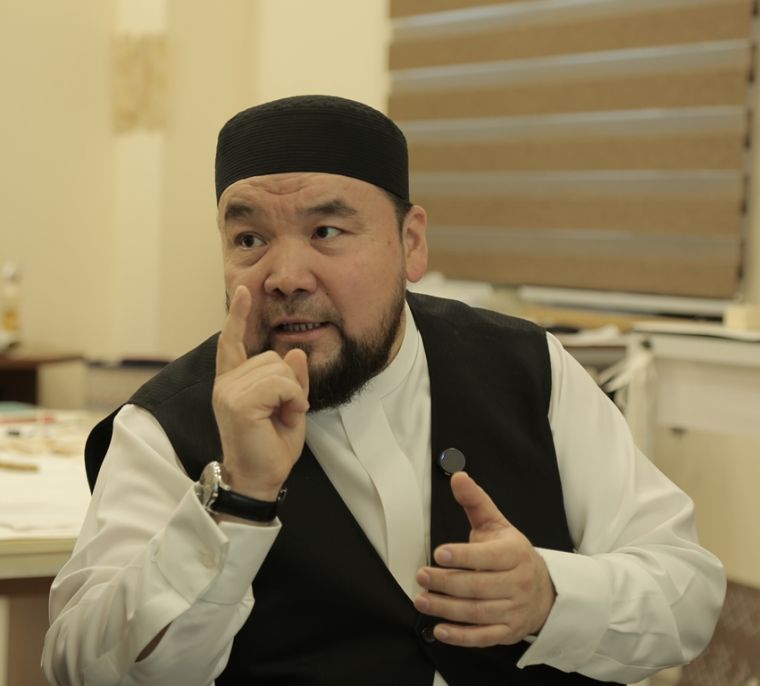
Shaykh Alijon Qori Fayzullah emphasized the importance of observing accuracy and trustworthiness when studying and reproducing the script of the Mushaf. He highlighted significant rules of orthography and recitation (qira’at) related to the original handwriting of the Uthmanic Mushaf currently kept at the “Muhi Muborak” Madrasa Museum.
The digital copy of the original Uthmanic Mushaf serves as the main object of the study. In preparing the critical text, researchers also refer to other ancient copies of the Mushaf preserved in Turkey and the United Kingdom.
Each line of the manuscript is being carefully rewritten, with verse and line numbers marked in red. Any textual discrepancies found in the 19th-century copied version are noted in the margins and explained through scholarly commentary.
With the support of the Fund for the Development of Culture and Art of Uzbekistan, both local and international experts — including Dr. Christine Rose from the University of Cambridge, French restorers Achel Delaeau and Coralie Barbe, and Nil Baydar, Head of the Istanbul Manuscripts Workshop and Archive Department — have developed a phased restoration plan to ensure the long-term preservation of the sacred manuscript.
Press Service of the Muslim Board of Uzbekistan



SHARE INFORMATION ON SOCIAL NETWORKS



 Iman
Iman  Prayer
  Fasting
  Zakat
Zakat  Haj
Haj  Qur`an
  Lessons of Islam
  Contact