Bukhara hosts International Pilgrimage Tourism Week
02.12.2024
105332
1 min.
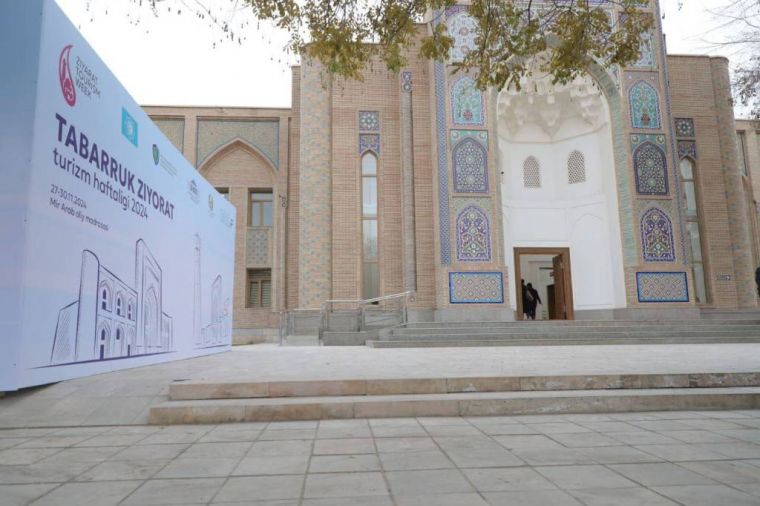
Representatives of the sphere, local and international media, members of the Committee on Religious Affairs, and the Committee on Tourism took part in the opening of the International Pilgrimage Tourism Week.
The International Pilgrimage Tourism Week is dedicated to the scientific and spiritual heritage of such representatives of the Islamic world as Abu Hafs Kabir Bukhari, Sayf al-Din Bakharzi, Abdulkholik Gijduvani, and Bahauddin Naqshband. Bukhara, among the famous seven cities such as Makkah, Madinah, Mazar-i-Sharif, Jerusalem, Baghdad, and Damascus, once again demonstrates itself as a city that has made an invaluable contribution to the glory of Islam.
To ensure the implementation of reforms in the tourism sector, in particular the further development of pilgrimage tourism, practical work is being carried out in Uzbekistan to establish the Golden Ring tourist route, increase air routes between Muslim countries, and build large hotels, tourist centers, and restaurants with the participation of investors.
Bukhara, the pearl of Islamic civilization, will host events and conferences during the International Pilgrimage Tourism Week.
SHARE INFORMATION ON SOCIAL NETWORKS



 Iman
Iman  Prayer
  Fasting
  Zakat
Zakat  Haj
Haj  Qur`an
  Lessons of Islam
  Contact