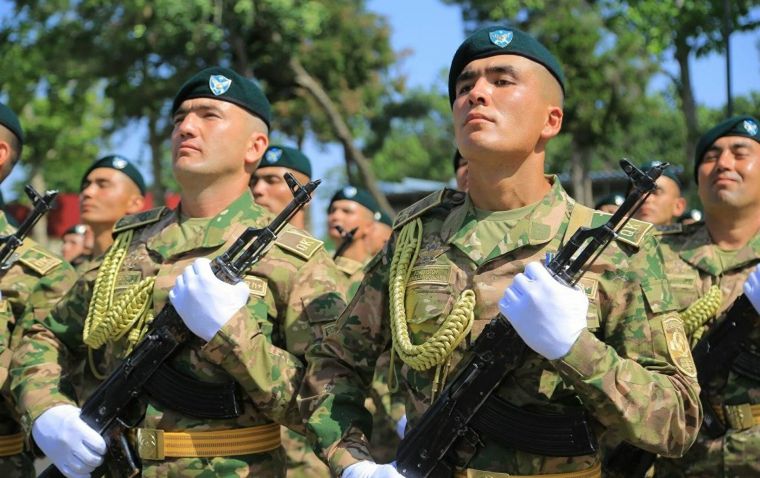
What do you know about the 14th of January – the Day of Defenders of the Motherland of Uzbekistan? There are many professions in the world, but being a defender of the motherland is one of the most honorable. It is an honor to protect one’s family, home, and children. Therefore, the Day of Defenders of the Motherland is a national holiday for the Uzbek people.
The history of this day in Uzbekistan dates back to 1992 when, on January 14, the country’s parliament decided to transfer all military units, educational institutions, and other formations stationed on the territory of Uzbekistan under the jurisdiction of the Republic. Since then, every year on January 14, Uzbekistan celebrates this significant state holiday.
Motherland Defenders Day in Uzbekistan is celebrated widely and spectacularly. According to tradition, the anthem of the Republic of Uzbekistan is performed on Independence Square in the capital. Military units march through the square with a solemn parade accompanied by a military orchestra. Participants in the parade also lay wreaths at the foot of the Monument of Independence.
The Day of Defenders of the Motherland is also known as Uzbek Army Day. It is the official professional holiday of the Uzbek Armed Forces. Before 1992, Uzbekistan, as part of the former Soviet Union, observed Soviet Army and Navy Day. After gaining independence, countries like Russia, Belarus, Kyrgyzstan, Tajikistan, and Kazakhstan continued to celebrate Soviet Army and Navy Day as Defender of the Fatherland Day. However, on December 29, 1993, the Uzbek Parliament officially established the Day of Defenders of the Motherland to commemorate the anniversary of the formation of the country’s armed forces.
On this day, military units of the Tashkent Garrison line up in Independence Square and receive congratulations and awards from the president and the minister of defense. Holiday activities also include wreath-laying ceremonies at the Monument to the Independence of Uzbekistan and the Amir Timur Monument.
To celebrate this holiday in a high and impressive spirit, President Shavkat Mirziyoyev issued a decree on the 30th anniversary of the establishment of the Armed Forces of the Republic of Uzbekistan, emphasizing the need for grand celebrations.
According to the noble ideas of President Shavkat Mirziyoyev, “The Army and the people stick together.” This principle is reflected in the practical actions of authorities, neighborhoods, youth and women’s organizations, educational institutions, and the general public. This shows that defending the Motherland is not only a duty but also an honorable responsibility.
Military personnel and veterans who have devoted their lives to protecting the Motherland are honored with great respect every year. The Day of Defenders of the Motherland is celebrated with great enthusiasm and joy, highlighting the value of these professionals’ service to the nation.
Protecting the Motherland is a sacred duty for all. The National Army and law enforcement agencies play a crucial role in ensuring the peaceful and stable life of the people and creating the necessary conditions for their well-being.
In today’s world, with increasing threats of international terrorism, extremism, and radicalism, it is essential for our Armed Forces to maintain a high level of combat readiness. Significant reforms in military and political fields have strengthened the National Army, making it more capable of responding to any threats.
Additionally, the knowledge, skills, and mental training of every serviceman are continuously improving. The military profession has always been considered both demanding and honorable. Our soldiers endure harsh conditions, guarding the peace of our homeland day and night, in both cold and heat.
Efforts to strengthen the country’s defense capabilities, foster patriotism among youth, and enhance public involvement in supporting the army have reached a new qualitative level.
Today, we can proudly say that our National Army has become a reliable guarantor of our borders’ security. By applying global best practices in military patriotism, construction, and industry, our armed forces have become a source of pride. Modern servicemen exemplify loyalty, bravery, and selflessness, demonstrating deep knowledge, strong will, and firm preparation to fulfill their sacred duty.
Across the globe, people dedicate their lives to maintaining peace and safeguarding their homeland. This noble profession is universally respected and honored. On January 14th, we commemorate the establishment of Uzbekistan’s Armed Forces. In 2025, the people of Uzbekistan will proudly celebrate the 33rd anniversary of the Day of Defenders of the Motherland.
Internet sources:
Fakhriddin Yernazarov,
Senior Teacher of the “Languages” Department
of the Tashkent Islamic Institute named after Imam al-Bukhari.

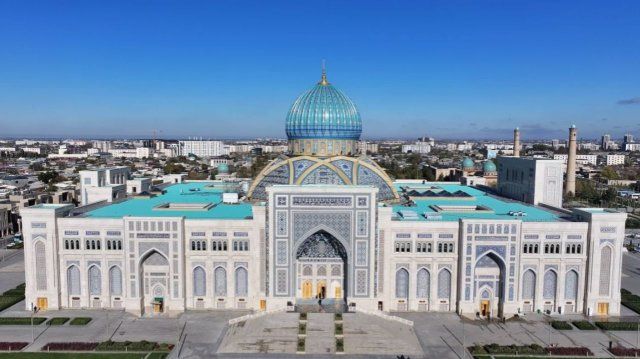
The Islamic Civilization Center in Uzbekistan has been receiving letters of appreciation and cooperation from leaders of foreign countries, prestigious international organizations, academic institutions, and participants of international conferences, further demonstrating the Center’s steadily growing reputation and influence on the global stage.
In particular, in a letter of appreciation addressed to Firdavs Abdukhalikov, Director of the Islamic Civilization Center in Uzbekistan, Her Majesty Raja Zarith Sofiah, Queen of Malaysia, expressed her sincere gratitude for the warm hospitality and cordial reception extended during her official visit to Uzbekistan. The Queen also emphasized that her visit to the Islamic Civilization Center in Uzbekistan left a lasting impression on her. She highly praised the Center’s exhibitions for their vivid and compelling presentation, through modern museum technologies, of the rich history and cultural heritage of Central Asia, as well as the scientific and spiritual legacy of the great scholars who made invaluable contributions to the development of Islamic civilization. In particular, she noted that the spiritual atmosphere of the Qur’an Hall and its unique heritage artifacts inspired in her profound respect and admiration.
The Islamic Civilization Center in Uzbekistan, along with the First International Islamic Civilization Forum held in Tashkent, Samarkand, and Termez from July 7 to 11, 2026, continues to receive widespread international recognition. Following the conclusion of the forum, numerous letters of appreciation and proposals for further cooperation were received from prominent international organizations, academic institutions, and public figures.
In his letter, Professor Shukran Abdul Rahman, Head of the Office of Strategic Institution Transformation at the International Islamic University Malaysia (IIUM), emphasized the international significance of the First International Islamic Civilization Forum. According to him, the forum, which brought together scholars, statesmen, and representatives of international organizations from more than 40 countries, played an important role in promoting the values of peace, tolerance, and enlightenment embodied in Islamic civilization, as well as in strengthening scientific dialogue and academic cooperation among nations. He also commended the high level of organization of the forum, the excellent conditions provided for participants, and the dignified presentation of Uzbekistan’s rich scientific and spiritual heritage to the international community.
The Forum and the activities of the Islamic Civilization Center in Uzbekistan were also highly praised in two separate letters sent by Russia’s Strategic Vision Group “Russia – Islamic World.” In particular, the letters described the establishment of the Islamic Civilization Center in Uzbekistan as one of the largest humanitarian and cultural-educational projects in the Islamic world of the twenty-first century. They also highlighted the leading role of President Shavkat Mirziyoyev in implementing this initiative and acknowledged his efforts to develop the Center into a hub of science, peace, enlightenment, humanism, and creativity.
At the same time, confidence was expressed that the Center would become a prestigious academic and educational institution for scholars, researchers, and students from around the world in the future. The letters also conveyed readiness to implement joint scientific and cultural projects in the fields of museology, history, archaeology, education, bibliography, and publishing.
In his letter, Professor Nidal Al-Ahmad, Secretary General of the Ministry of Culture of the Hashemite Kingdom of Jordan, also emphasized that the First International Islamic Civilization Forum was organized at the highest level, noting that the event once again demonstrated to the international community the tremendous contribution of Islamic civilization to the progress of humanity. He further highlighted that the forum, which brought together scholars, statesmen, and religious leaders from various countries, had become an important international platform for dialogue promoting the values of peace, tolerance, and enlightenment.
As another practical manifestation of the high level of international confidence in the Center’s activities, the regional office of ICESCO in Baku extended an official invitation to the Center’s leadership to participate in the Global Foresight Focal Points Initiative international event, held on July 27–28, 2026. The invitation emphasized the importance of expanding cooperation among ICESCO member states in the fields of strategic foresight, the introduction of innovative approaches to public administration, and future planning.
These expressions of recognition from foreign leaders, distinguished scholars, and international organizations once again confirm that the Islamic Civilization Center in Uzbekistan has, within a short period of time, become one of the leading platforms for international academic and educational cooperation. They also serve as clear evidence that the Center’s efforts to study, preserve, and promote the rich scientific and cultural heritage of Islamic civilization to the global community are receiving high international acclaim.