The 14th of January – The Day of Defenders of the Motherland
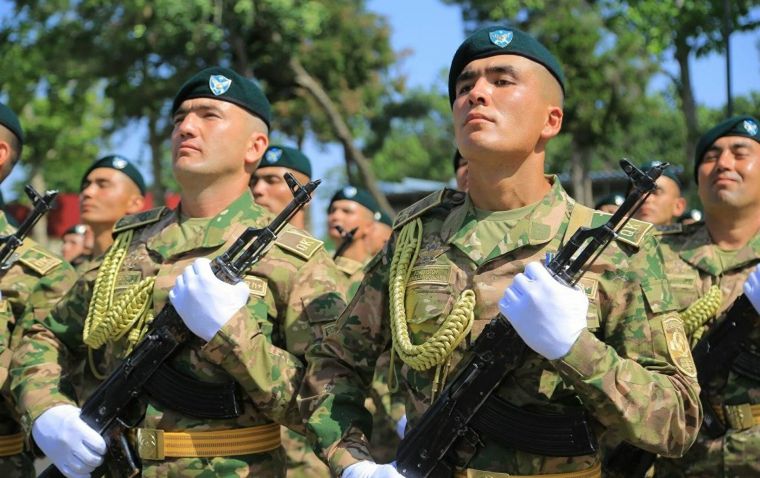
What do you know about the 14th of January – the Day of Defenders of the Motherland of Uzbekistan? There are many professions in the world, but being a defender of the motherland is one of the most honorable. It is an honor to protect one’s family, home, and children. Therefore, the Day of Defenders of the Motherland is a national holiday for the Uzbek people.
The history of this day in Uzbekistan dates back to 1992 when, on January 14, the country’s parliament decided to transfer all military units, educational institutions, and other formations stationed on the territory of Uzbekistan under the jurisdiction of the Republic. Since then, every year on January 14, Uzbekistan celebrates this significant state holiday.
Motherland Defenders Day in Uzbekistan is celebrated widely and spectacularly. According to tradition, the anthem of the Republic of Uzbekistan is performed on Independence Square in the capital. Military units march through the square with a solemn parade accompanied by a military orchestra. Participants in the parade also lay wreaths at the foot of the Monument of Independence.
The Day of Defenders of the Motherland is also known as Uzbek Army Day. It is the official professional holiday of the Uzbek Armed Forces. Before 1992, Uzbekistan, as part of the former Soviet Union, observed Soviet Army and Navy Day. After gaining independence, countries like Russia, Belarus, Kyrgyzstan, Tajikistan, and Kazakhstan continued to celebrate Soviet Army and Navy Day as Defender of the Fatherland Day. However, on December 29, 1993, the Uzbek Parliament officially established the Day of Defenders of the Motherland to commemorate the anniversary of the formation of the country’s armed forces.
On this day, military units of the Tashkent Garrison line up in Independence Square and receive congratulations and awards from the president and the minister of defense. Holiday activities also include wreath-laying ceremonies at the Monument to the Independence of Uzbekistan and the Amir Timur Monument.
To celebrate this holiday in a high and impressive spirit, President Shavkat Mirziyoyev issued a decree on the 30th anniversary of the establishment of the Armed Forces of the Republic of Uzbekistan, emphasizing the need for grand celebrations.
According to the noble ideas of President Shavkat Mirziyoyev, “The Army and the people stick together.” This principle is reflected in the practical actions of authorities, neighborhoods, youth and women’s organizations, educational institutions, and the general public. This shows that defending the Motherland is not only a duty but also an honorable responsibility.
Military personnel and veterans who have devoted their lives to protecting the Motherland are honored with great respect every year. The Day of Defenders of the Motherland is celebrated with great enthusiasm and joy, highlighting the value of these professionals’ service to the nation.
Protecting the Motherland is a sacred duty for all. The National Army and law enforcement agencies play a crucial role in ensuring the peaceful and stable life of the people and creating the necessary conditions for their well-being.
In today’s world, with increasing threats of international terrorism, extremism, and radicalism, it is essential for our Armed Forces to maintain a high level of combat readiness. Significant reforms in military and political fields have strengthened the National Army, making it more capable of responding to any threats.
Additionally, the knowledge, skills, and mental training of every serviceman are continuously improving. The military profession has always been considered both demanding and honorable. Our soldiers endure harsh conditions, guarding the peace of our homeland day and night, in both cold and heat.
Efforts to strengthen the country’s defense capabilities, foster patriotism among youth, and enhance public involvement in supporting the army have reached a new qualitative level.
Today, we can proudly say that our National Army has become a reliable guarantor of our borders’ security. By applying global best practices in military patriotism, construction, and industry, our armed forces have become a source of pride. Modern servicemen exemplify loyalty, bravery, and selflessness, demonstrating deep knowledge, strong will, and firm preparation to fulfill their sacred duty.
Across the globe, people dedicate their lives to maintaining peace and safeguarding their homeland. This noble profession is universally respected and honored. On January 14th, we commemorate the establishment of Uzbekistan’s Armed Forces. In 2025, the people of Uzbekistan will proudly celebrate the 33rd anniversary of the Day of Defenders of the Motherland.
Internet sources:
- en.wikipedia.org
- people-travels.com
- suit.uz
- nspi.uz
Fakhriddin Yernazarov,
Senior Teacher of the “Languages” Department
of the Tashkent Islamic Institute named after Imam al-Bukhari.
Delegation from the International Islamic Academy of Uzbekistan pays visit to Indonesia
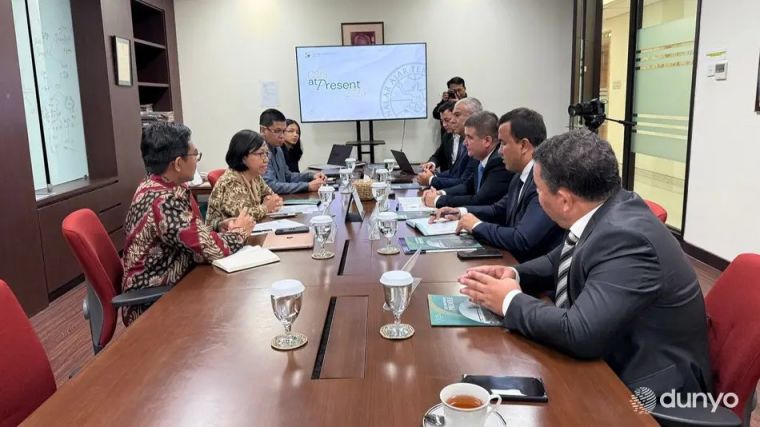
A delegation of the International Islamic Academy of Uzbekistan, led by the Advisor to the Rector Utkir Khasanbaev, has concluded a working visit to Indonesia, reports Dunyo IA.
During the visit, the representatives of Uzbekistan held negotiations at the National Counter Terrorism Agency of the Republic of Indonesia (BNPT).
During the meeting with Director of the Agency's International Cooperation Department, National Police General of Indonesia Dhani Hernando, the sides discussed issues concerning the advancement of interaction between the relevant authorities of the two nations, the implementation of joint projects, and the establishment of a systematic exchange of experience.
Dhani Hernando delivered an overview of the agency's operations. It was noted that the BNPT was established in 2010 to protect the citizens and national interests of Indonesia from terrorist threats, prevent radicalization processes, and ensure the security and stability of the state. Currently, the Agency, in coordination with law enforcement bodies, religious figures, educational institutions, civil society institutes, and international partners, is executing comprehensive measures aimed at eliminating the root causes of terrorism and violent extremism.
Particular attention during the meeting was focused on the Indonesian experience in deradicalization. It was emphasized that this process must not be confined exclusively to the activities of law enforcement agencies. A vital role is played by the broad engagement of families, religious leaders, local communities and civil society institutions, alongside the application of a tailored, individualized approach that factors in the unique characteristics and needs of each individual. Such a comprehensive approach was recognized as a key element in preventing extremism, bolstering social stability and ensuring both national and international security.
Furthermore, the delegation held negotiations with Dr. Ani Siska MY, Vice Rector II for Human Resources, Infrastructure, Finance, Business, Cooperation and Marketing at Sahid University (Universitas Sahid), Indonesia.
During the conversation, the sides discussed the further expansion of cooperation within the framework of the Memorandum of Understanding signed between the two higher education institutions in 2023. In particular, the parties reviewed issues concerning the organization of faculty and student exchanges, the development of joint lecture programs, the facilitation of academic visits and the implementation of collaborative research projects.
University representative invited the Academy to co-organize an international conference on social development issues, scheduled to take place this October. Furthermore, it was noted that while experience in implementing joint master’s degree programs is currently absent, this direction could potentially become an important aspect of bilateral cooperation in the future.
Following the meeting, the sides agreed to develop a joint “roadmap” for the practical implementation of the Memorandum of Cooperation signed in 2023. Academic mobility, the delivery of online lectures, and the advancement of scientific, educational-methodological and digital cooperation were identified as priority areas.
Furthermore, the delegation observed the operations of the Center for Pilgrimage Tourism Research at Sahid University.
Within the framework of the visit, the delegation met with the Vice President of the Centre for Strategic and International Studies of Indonesia (CSIS), Dr. Medilina Hendytio.
During the talks, it was noted that CSIS was established on September 1, 1971, in Jakarta as an independent, non-profit think tank dedicated to formulating evidence-based recommendations and proposals aimed at improving state policy.
Today, Center conducts research in the fields of economics, international relations, politics and social transformations, while also publishing scholarly journals such as the “Indonesian Quarterly” (IQ) and “Analisis CSIS”. Concurrently, CSIS is actively engaged in research aimed at preventing violent extremism, identifying high-risk groups and formulating analytical recommendations for state programs.
For his part, Utkir Khasanbaev noted that cooperation between Uzbekistan and Indonesia is advancing to a qualitatively new level. According to him, particular significance attaches to the development of interaction in safeguarding the youth from the influence of radical and extremist ideologies, conducting collaborative scientific research, enhancing strategic communications and formulating alternative educational narratives.
During the meeting, it was emphasized that the exchange of experience will facilitate the further development of bilateral cooperation. The CSIS representatives highlighted the existing opportunities for foreign scholars, doctoral students, and independent researchers to work on scientific projects based at the Center, secure targeted grants and undertake international research fellowships. Academy’s delegation was also invited to participate in the visiting scholars program, the non-resident researchers program and international research internships.
All the meetings held within the framework of the visit transpired in a warm and constructive atmosphere, establishing a vital foundation for the further development of cooperation between Uzbekistan and Indonesia in the fields of education, science, as well as the prevention of radicalization and violent extremism.
