حَدَّثَنَا أَبُو الْيَمَانِ الْحَكَمُ بْنُ نَافِعٍ، قَالَ: أَخْبَرَنَا شُعَيْبٌ، عَنِ الزُّهْرِيِّ، قَالَ: أَخْبَرَنِي عُبَيْدُ اللَّهِ بْنُ عَبْدِ اللَّهِ بْنِ عُتْبَةَ بْنِ مَسْعُودٍ، أَنَّ عَبْدَ اللَّهِ بْنَ عَبَّاسٍ أَخْبَرَهُ، أَنَّ أَبَا سُفْيَانَ بْنَ حَرْبٍ أَخْبَرَهُ، "أَنَّ هِرَقْلَ أَرْسَلَ إِلَيْهِ فِي رَكْبٍ مِنْ قُرَيْشٍ، وَكَانُوا تِجَارًا بِالشَّأْمِ فِي الْمُدَّةِ الَّتِي كَانَ رَسُولُ اللَّهِ صَلَّى اللَّهُ عَلَيْهِ وَسَلَّمَ مَادَّ فِيهَا أَبَا سُفْيَانَ وَكُفَّارَ قُرَيْشٍ، فَأَتَوْهُ وَهُمْ بِإِيلِيَاءَ، فَدَعَاهُمْ فِي مَجْلِسِهِ وَحَوْلَهُ عُظَمَاءُ الرُّومِ، ثُمَّ دَعَاهُمْ وَدَعَا بِتَرْجُمَانِهِ، فَقَالَ: أَيُّكُمْ أَقْرَبُ نَسَبًا بِهَذَا الرَّجُلِ الَّذِي يَزْعُمُ أَنَّهُ نَبِيٌّ؟ فَقَالَ: أَبُو سُفْيَانَ، فَقُلْتُ: أَنَا أَقْرَبُهُمْ نَسَبًا، فَقَالَ: أَدْنُوهُ مِنِّي وَقَرِّبُوا أَصْحَابَهُ فَاجْعَلُوهُمْ عِنْدَ ظَهْرِهِ، ثُمَّ قَالَ لِتَرْجُمَانِهِ: قُلْ لَهُمْ إِنِّي سَائِلٌ هَذَا عَنْ هَذَا الرَّجُلِ، فَإِنْ كَذَبَنِي فَكَذِّبُوهُ، فَوَاللَّهِ لَوْلَا الْحَيَاءُ مِنْ أَنْ يَأْثِرُوا عَلَيَّ كَذِبًا لَكَذَبْتُ عَنْهُ، ثُمَّ كَانَ أَوَّلَ مَا سَأَلَنِي عَنْهُ، أَنْ قَالَ: كَيْفَ نَسَبُهُ فِيكُمْ؟ قُلْتُ: هُوَ فِينَا ذُو نَسَبٍ، قَالَ: فَهَلْ قَالَ هَذَا الْقَوْلَ مِنْكُمْ أَحَدٌ قَطُّ قَبْلَهُ؟ قُلْتُ: لَا، قَالَ: فَهَلْ كَانَ مِنْ آبَائِهِ مِنْ مَلِكٍ؟ قُلْتُ: لَا، قَالَ: فَأَشْرَافُ النَّاسِ يَتَّبِعُونَهُ أَمْ ضُعَفَاؤُهُمْ؟ فَقُلْتُ: بَلْ ضُعَفَاؤُهُمْ، قَالَ: أَيَزِيدُونَ أَمْ يَنْقُصُونَ؟ قُلْتُ: بَلْ يَزِيدُونَ، قَالَ: فَهَلْ يَرْتَدُّ أَحَدٌ مِنْهُمْ سَخْطَةً لِدِينِهِ بَعْدَ أَنْ يَدْخُلَ فِيهِ؟ قُلْتُ: لَا، قَالَ: فَهَلْ كُنْتُمْ تَتَّهِمُونَهُ بِالْكَذِبِ قَبْلَ أَنْ يَقُولَ مَا قَالَ؟ قُلْتُ: لَا، قَالَ: فَهَلْ يَغْدِرُ؟ قُلْتُ: لَا، وَنَحْنُ مِنْهُ فِي مُدَّةٍ لَا نَدْرِي مَا هُوَ فَاعِلٌ فِيهَا، قَالَ: وَلَمْ تُمْكِنِّي كَلِمَةٌ أُدْخِلُ فِيهَا شَيْئًا غَيْرُ هَذِهِ الْكَلِمَةِ، قَالَ: فَهَلْ قَاتَلْتُمُوهُ؟ قُلْتُ: نَعَمْ، قَالَ: فَكَيْفَ كَانَ قِتَالُكُمْ إِيَّاهُ؟ قُلْتُ: الْحَرْبُ بَيْنَنَا وَبَيْنَهُ سِجَالٌ يَنَالُ مِنَّا وَنَنَالُ مِنْهُ، قَالَ: مَاذَا يَأْمُرُكُمْ؟ قُلْتُ: يَقُولُ اعْبُدُوا اللَّهَ وَحْدَهُ وَلَا تُشْرِكُوا بِهِ شَيْئًا، وَاتْرُكُوا مَا يَقُولُ آبَاؤُكُمْ، وَيَأْمُرُنَا بِالصَّلَاةِ وَالصِّدْقِ وَالْعَفَافِ وَالصِّلَةِ، فَقَالَ لِلتَّرْجُمَانِ: قُلْ لَهُ سَأَلْتُكَ عَنْ نَسَبِهِ؟ فَذَكَرْتَ أَنَّهُ فِيكُمْ ذُو نَسَبٍ، فَكَذَلِكَ الرُّسُلُ تُبْعَثُ فِي نَسَبِ قَوْمِهَا، وَسَأَلْتُكَ، هَلْ قَالَ أَحَدٌ مِنْكُمْ هَذَا الْقَوْلَ؟ فَذَكَرْتَ أَنْ لَا، فَقُلْتُ: لَوْ كَانَ أَحَدٌ قَالَ هَذَا الْقَوْلَ قَبْلَهُ؟ لَقُلْتُ: رَجُلٌ يَأْتَسِي بِقَوْلٍ قِيلَ قَبْلَهُ، وَسَأَلْتُكَ، هَلْ كَانَ مِنْ آبَائِهِ مِنْ مَلِكٍ؟ فَذَكَرْتَ أَنْ لَا، قُلْتُ: فَلَوْ كَانَ مِنْ آبَائِهِ مِنْ مَلِكٍ؟ قُلْتُ: رَجُلٌ يَطْلُبُ مُلْكَ أَبِيهِ، وَسَأَلْتُكَ، هَلْ كُنْتُمْ تَتَّهِمُونَهُ بِالْكَذِبِ قَبْلَ أَنْ يَقُولَ مَا قَالَ؟ فَذَكَرْتَ أَنْ لَا، فَقَدْ أَعْرِفُ أَنَّهُ لَمْ يَكُنْ لِيَذَرَ الْكَذِبَ عَلَى النَّاسِ وَيَكْذِبَ عَلَى اللَّهِ، وَسَأَلْتُكَ، أَشْرَافُ النَّاسِ اتَّبَعُوهُ أَمْ ضُعَفَاؤُهُمْ؟ فَذَكَرْتَ أَنَّ ضُعَفَاءَهُمُ اتَّبَعُوهُ وَهُمْ أَتْبَاعُ الرُّسُلِ، وَسَأَلْتُكَ، أَيَزِيدُونَ أَمْ يَنْقُصُونَ؟ فَذَكَرْتَ أَنَّهُمْ يَزِيدُونَ، وَكَذَلِكَ أَمْرُ الْإِيمَانِ حَتَّى يَتِمَّ، وَسَأَلْتُكَ، أَيَرْتَدُّ أَحَدٌ سَخْطَةً لِدِينِهِ بَعْدَ أَنْ يَدْخُلَ فِيهِ؟ فَذَكَرْتَ أَنْ لَا، وَكَذَلِكَ الْإِيمَانُ حِينَ تُخَالِطُ بَشَاشَتُهُ الْقُلُوبَ، وَسَأَلْتُكَ، هَلْ يَغْدِرُ؟ فَذَكَرْتَ أَنْ لَا، وَكَذَلِكَ الرُّسُلُ لَا تَغْدِرُ، وَسَأَلْتُكَ، بِمَا يَأْمُرُكُمْ؟ فَذَكَرْتَ أَنَّهُ يَأْمُرُكُمْ أَنْ تَعْبُدُوا اللَّهَ وَلَا تُشْرِكُوا بِهِ شَيْئًا، وَيَنْهَاكُمْ عَنْ عِبَادَةِ الْأَوْثَانِ، وَيَأْمُرُكُمْ بِالصَّلَاةِ، وَالصِّدْقِ، وَالْعَفَافِ، فَإِنْ كَانَ مَا تَقُولُ حَقًّا فَسَيَمْلِكُ مَوْضِعَ قَدَمَيَّ هَاتَيْنِ، وَقَدْ كُنْتُ أَعْلَمُ أَنَّهُ خَارِجٌ لَمْ أَكُنْ أَظُنُّ أَنَّهُ مِنْكُمْ، فَلَوْ أَنِّي أَعْلَمُ أَنِّي أَخْلُصُ إِلَيْهِ لَتَجَشَّمْتُ لِقَاءَهُ، وَلَوْ كُنْتُ عِنْدَهُ لَغَسَلْتُ عَنْ قَدَمِهِ، ثُمَّ دَعَا بِكِتَابِ رَسُولِ اللَّهِ صَلَّى اللَّهُ عَلَيْهِ وَسَلَّمَ الَّذِي بَعَثَ بِه دِحْيَةُ إِلَى عَظِيمِ بُصْرَى فَدَفَعَهُ إِلَى هِرَقْلَ فَقَرَأَهُ، فَإِذَا فِيهِ، بِسْمِ اللَّهِ الرَّحْمَنِ الرَّحِيمِ، مِنْ مُحَمَّدٍ عَبْدِ اللَّهِ وَرَسُولِهِ إِلَى هِرَقْلَ عَظِيمِ الرُّومِ، سَلَامٌ عَلَى مَنِ اتَّبَعَ الْهُدَى، أَمَّا بَعْدُ، فَإِنِّي أَدْعُوكَ بِدِعَايَةِ الْإِسْلَامِ أَسْلِمْ تَسْلَمْ يُؤْتِكَ اللَّهُ أَجْرَكَ مَرَّتَيْنِ، فَإِنْ تَوَلَّيْتَ فَإِنَّ عَلَيْكَ إِثْمَ الْأَرِيسِيِّينَ، وَيَا أَهْلَ الْكِتَابِ تَعَالَوْا إِلَى كَلِمَةٍ سَوَاءٍ بَيْنَنَا وَبَيْنَكُمْ، أَنْ لَا نَعْبُدَ إِلَّا اللَّهَ وَلَا نُشْرِكَ بِهِ شَيْئًا، وَلَا يَتَّخِذَ بَعْضُنَا بَعْضًا أَرْبَابًا مِنْ دُونِ اللَّهِ، فَإِنْ تَوَلَّوْا فَقُولُوا: اشْهَدُوا بِأَنَّا مُسْلِمُونَ، قَالَ أَبُو سُفْيَانَ: فَلَمَّا قَالَ مَا قَالَ وَفَرَغَ مِنْ قِرَاءَةِ الْكِتَابِ، كَثُرَ عِنْدَهُ الصَّخَبُ وَارْتَفَعَتِ الْأَصْوَاتُ وَأُخْرِجْنَا، فَقُلْتُ لِأَصْحَابِي حِينَ أُخْرِجْنَا: لَقَدْ أَمِرَ أَمْرُ ابْنِ أَبِي كَبْشَةَ إِنَّهُ يَخَافُهُ مَلِكُ بَنِي الْأَصْفَرِ، فَمَا زِلْتُ مُوقِنًا أَنَّهُ سَيَظْهَرُ حَتَّى أَدْخَلَ اللَّهُ عَلَيَّ الْإِسْلَامَ، وَكَانَ ابْنُ النَّاظُورِ صَاحِبُ إِيلِيَاءَ وَهِرَقْلَ سُقُفًّا عَلَى نَصَارَى الشَّأْمِ، يُحَدِّثُ أَنَّ هِرَقْلَ حِينَ قَدِمَ إِيلِيَاءَ أَصْبَحَ يَوْمًا خَبِيثَ النَّفْسِ، فَقَالَ بَعْضُ بَطَارِقَتِهِ: قَدِ اسْتَنْكَرْنَا هَيْئَتَكَ، قَالَ ابْنُ النَّاظُورِ: وَكَانَ هِرَقْلُ حَزَّاءً يَنْظُرُ فِي النُّجُومِ، فَقَالَ لَهُمْ حِينَ سَأَلُوهُ: إِنِّي رَأَيْتُ اللَّيْلَةَ حِينَ نَظَرْتُ فِي النُّجُومِ مَلِكَ الْخِتَانِ قَدْ ظَهَرَ، فَمَنْ يَخْتَتِنُ مِنْ هَذِهِ الْأُمَّةِ؟ قَالُوا: لَيْسَ يَخْتَتِنُ إِلَّا الْيَهُودُ، فَلَا يُهِمَّنَّكَ شَأْنُهُمْ وَاكْتُبْ إِلَى مَدَايِنِ مُلْكِكَ، فَيَقْتُلُوا: مَنْ فِيهِمْ مِنْ الْيَهُودِ؟ فَبَيْنَمَا هُمْ عَلَى أَمْرِهِمْ، أُتِيَ هِرَقْلُ بِرَجُلٍ أَرْسَلَ بِهِ مَلِكُ غَسَّانَ يُخْبِرُ عَنْ خَبَرِ رَسُولِ اللَّهِ صَلَّى اللَّهُ عَلَيْهِ وَسَلَّمَ، فَلَمَّا اسْتَخْبَرَهُ هِرَقْلُ، قَالَ: اذْهَبُوا فَانْظُرُوا أَمُخْتَتِنٌ هُوَ أَمْ لَا؟ فَنَظَرُوا إِلَيْهِ فَحَدَّثُوهُ أَنَّهُ مُخْتَتِنٌ، وَسَأَلَهُ عَنْ الْعَرَبِ؟ فَقَالَ: هُمْ يَخْتَتِنُونَ، فَقَالَ هِرَقْلُ: هَذَا مَلِكُ هَذِهِ الْأُمَّةِ قَدْ ظَهَرَ، ثُمَّ كَتَبَ هِرَقْلُ إِلَى صَاحِبٍ لَهُ بِرُومِيَةَ وَكَانَ نَظِيرَهُ فِي الْعِلْمِ، وَسَارَ هِرَقْلُ إِلَى حِمْصَ، فَلَمْ يَرِمْ حِمْصَ حَتَّى أَتَاهُ كِتَابٌ مِنْ صَاحِبِهِ يُوَافِقُ رَأْيَ هِرَقْلَ عَلَى خُرُوجِ النَّبِيِّ صَلَّى اللَّهُ عَلَيْهِ وَسَلَّمَ وَأَنَّهُ نَبِيٌّ، فَأَذِنَ هِرَقْلُ لِعُظَمَاءِ الرُّومِ فِي دَسْكَرَةٍ لَهُ بِحِمْصَ، ثُمَّ أَمَرَ بِأَبْوَابِهَا فَغُلِّقَتْ، ثُمَّ اطَّلَعَ، فَقَالَ: يَا مَعْشَرَ الرُّومِ، هَلْ لَكُمْ فِي الْفَلَاحِ وَالرُّشْدِ، وَأَنْ يَثْبُتَ مُلْكُكُمْ فَتُبَايِعُوا هَذَا النَّبِيَّ؟ فَحَاصُوا حَيْصَةَ حُمُرِ الْوَحْشِ إِلَى الْأَبْوَابِ فَوَجَدُوهَا قَدْ غُلِّقَتْ، فَلَمَّا رَأَى هِرَقْلُ نَفْرَتَهُمْ وَأَيِسَ مِنَ الْإِيمَانِ، قَالَ: رُدُّوهُمْ عَلَيَّ، وَقَالَ: إِنِّي قُلْتُ مَقَالَتِي آنِفًا أَخْتَبِرُ بِهَا شِدَّتَكُمْ عَلَى دِينِكُمْ، فَقَدْ رَأَيْتُ، فَسَجَدُوا لَهُ وَرَضُوا عَنْهُ فَكَانَ ذَلِكَ آخِرَ شَأْنِ هِرَقْلَ"، رَوَاهُ صَالِحُ بْنُ كَيْسَانَ، وَيُونُسُ، وَمَعْمَرٌ، عَن الزُّهْرِيِّ.
Sahih hadith: Narrated 'Abdullah bin 'Abbas: Abu Sufyan bin Harb informed me that Heraclius had sent a messenger to him while he had been accompanying a caravan from Quraish. They were merchants doing business in Sham (Syria, Palestine, Lebanon and Jordan), at the time when Allah's Apostle had truce with Abu Sufyan and Quraish infidels. So Abu Sufyan and his companions went to Heraclius at Ilya (Jerusalem). Heraclius called them in the court and he had all the senior Roman dignitaries around him. He called for his translator who, translating Heraclius's question said to them, Who amongst you is closely related to that man who claims to be a Prophet? Abu Sufyan replied, I am the nearest relative to him (amongst the group). Heraclius said, Bring him (Abu Sufyan) close to me and make his companions stand behind him. Abu Sufyan added, Heraclius told his translator to tell my companions that he wanted to put some questions to me regarding that man (The Prophet) and that if I told a lie they (my companions) should contradict me. Abu Sufyan added, By Allah! Had I not been afraid of my companions labeling me a liar, I would not have spoken the truth about the Prophet. The first question he asked me about him was: 'What is his family status amongst you?' I replied, 'He belongs to a good (noble) family amongst us.' Heraclius further asked, 'Has anybody amongst you ever claimed the same (i.e. to be a Prophet) before him?' I replied, 'No.' He said, 'Was anybody amongst his ancestors a king?' I replied, 'No.' Heraclius asked, 'Do the nobles or the poor follow him?' I replied, 'It is the poor who follow him.' He said, 'Are his followers increasing decreasing (day by day)?' I replied, 'They are increasing.' He then asked, 'Does anybody amongst those who embrace his religion become displeased and renounce the religion afterwards?' I replied, 'No.' Heraclius said, 'Have you ever accused him of telling lies before his claim (to be a Prophet)?' I replied, 'No. ' Heraclius said, 'Does he break his promises?' I replied, 'No. We are at truce with him but we do not know what he will do in it.' I could not find opportunity to say anything against him except that. Heraclius asked, 'Have you ever had a war with him?' I replied, 'Yes.' Then he said, 'What was the outcome of the battles?' I replied, 'Sometimes he was victorious and sometimes we.' Heraclius said, 'What does he order you to do?' I said, 'He tells us to worship Allah and Allah alone and not to worship anything along with Him, and to renounce all that our ancestors had said. He orders us to pray, to speak the truth, to be chaste and to keep good relations with our Kith and kin.' Heraclius asked the translator to convey to me the following, I asked you about his family and your reply was that he belonged to a very noble family. In fact all the Apostles come from noble families amongst their respective peoples. I questioned you whether anybody else amongst you claimed such a thing, your reply was in the negative. If the answer had been in the affirmative, I would have thought that this man was following the previous man's statement. Then I asked you whether anyone of his ancestors was a king. Your reply was in the negative, and if it had been in the affirmative, I would have thought that this man wanted to take back his ancestral kingdom. I further asked whether he was ever accused of telling lies before he said what he said, and your reply was in the negative. So I wondered how a person who does not tell a lie about others could ever tell a lie about Allah. I, then asked you whether the rich people followed him or the poor. You replied that it was the poor who followed him. And in fact all the Apostle have been followed by this very class of people. Then I asked you whether his followers were increasing or decreasing. You replied that they were increasing, and in fact this is the way of true faith, till it is complete in all respects. I further asked you whether there was anybody, who, after embracing his religion, became displeased and discarded his religion. Your reply was in the negative, and in fact this is (the sign of) true faith, when its delight enters the hearts and mixes with them completely. I asked you whether he had ever betrayed. You replied in the negative and likewise the Apostles never betray. Then I asked you what he ordered you to do. You replied that he ordered you to worship Allah and Allah alone and not to worship any thing along with Him and forbade you to worship idols and ordered you to pray, to speak the truth and to be chaste. If what you have said is true, he will very soon occupy this place underneath my feet and I knew it (from the scriptures) that he was going to appear but I did not know that he would be from you, and if I could reach him definitely, I would go immediately to meet him and if I were with him, I would certainly wash his feet.' Heraclius then asked for the letter addressed by Allah's Apostle which was delivered by Dihya to the Governor of Busra, who forwarded it to Heraclius to read. The contents of the letter were as follows: In the name of Allah the Beneficent, the Merciful (This letter is) from Muhammad the slave of Allah and His Apostle to Heraclius the ruler of Byzantine. Peace be upon him, who follows the right path. Furthermore I invite you to Islam, and if you become a Muslim you will be safe, and Allah will double your reward, and if you reject this invitation of Islam you will be committing a sin by misguiding your Arisiyin (peasants). (And I recite to you Allah's Statement:) 'O people of the scripture! Come to a word common to you and us that we worship none but Allah and that we associate nothing in worship with Him, and that none of us shall take others as Lords beside Allah. Then, if they turn away, say: Bear witness that we are Muslims (those who have surrendered to Allah).' (3:64). Abu Sufyan then added, When Heraclius had finished his speech and had read the letter, there was a great hue and cry in the Royal Court. So we were turned out of the court. I told my companions that the question of Ibn-Abi-Kabsha) (the Prophet Muhammad) has become so prominent that even the King of Bani Al-Asfar (Byzantine) is afraid of him. Then I started to become sure that he (the Prophet) would be the conqueror in the near future till I embraced Islam (i.e. Allah guided me to it). The sub narrator adds, Ibn An-Natur was the Governor of llya' (Jerusalem) and Heraclius was the head of the Christians of Sham. Ibn An-Natur narrates that once while Heraclius was visiting ilya' (Jerusalem), he got up in the morning with a sad mood. Some of his priests asked him why he was in that mood? Heraclius was a foreteller and an astrologer. He replied, 'At night when I looked at the stars, I saw that the leader of those who practice circumcision had appeared (become the conqueror). Who are they who practice circumcision?' The people replied, 'Except the Jews nobody practices circumcision, so you should not be afraid of them (Jews). 'Just Issue orders to kill every Jew present in the country.' While they were discussing it, a messenger sent by the king of Ghassan to convey the news of Allah's Apostle to Heraclius was brought in. Having heard the news, he (Heraclius) ordered the people to go and see whether the messenger of Ghassan was circumcised. The people, after seeing him, told Heraclius that he was circumcised. Heraclius then asked him about the Arabs. The messenger replied, 'Arabs also practice circumcision.' (After hearing that) Heraclius remarked that sovereignty of the 'Arabs had appeared. Heraclius then wrote a letter to his friend in Rome who was as good as Heraclius in knowledge. Heraclius then left for Homs. (a town in Syrian and stayed there till he received the reply of his letter from his friend who agreed with him in his opinion about the emergence of the Prophet and the fact that he was a Prophet. On that Heraclius invited all the heads of the Byzantines to assemble in his palace at Homs. When they assembled, he ordered that all the doors of his palace be closed. Then he came out and said, 'O Byzantines! If success is your desire and if you seek right guidance and want your empire to remain then give a pledge of allegiance to this Prophet (i.e. embrace Islam).' (On hearing the views of Heraclius) the people ran towards the gates of the palace like onagers but found the doors closed. Heraclius realized their hatred towards Islam and when he lost the hope of their embracing Islam, he ordered that they should be brought back in audience. (When they returned) he said, 'What already said was just to test the strength of your conviction and I have seen it.' The people prostrated before him and became pleased with him, and this was the end of Heraclius's story (in connection with his faith).
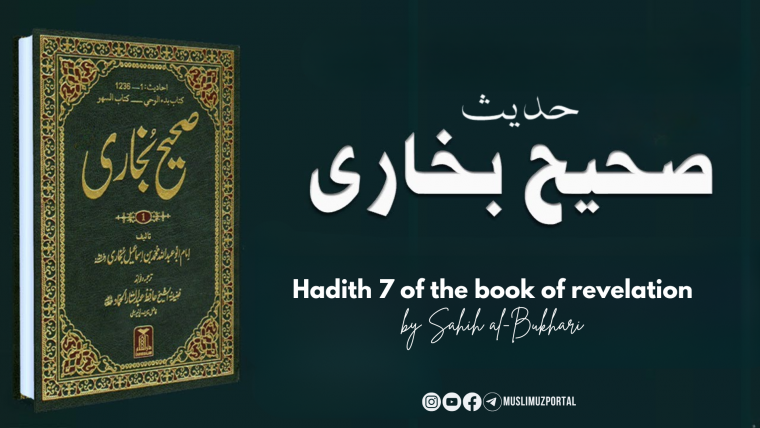
Reference: Sahih al-Bukhari 1: Chapter 1, Hadith 7.
Uzbekistan is taking confident steps to connect its rich spiritual and cultural heritage with the global academic community by expanding international scientific cooperation, reports iccu.uz.
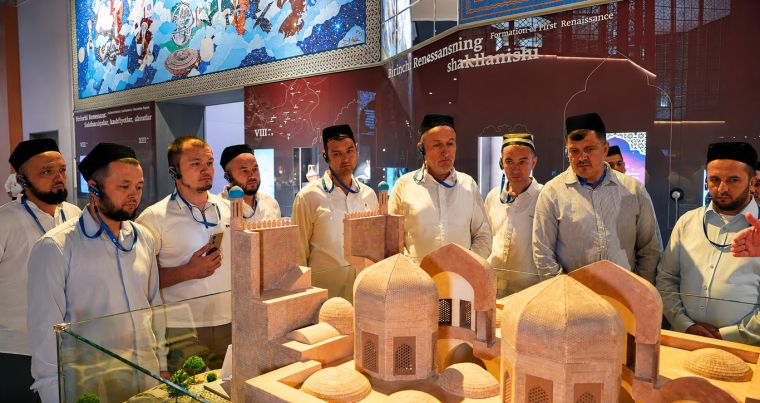
As a tangible reflection of this effort, the Islamic Civilization Center in Uzbekistan hosted a ceremony to receive 1,000 rare books for its library. The collection was presented by Dr. Muhammad Zakariya Al-Orabi, Head of the Orabi International Group in the Sultanate of Oman and a distinguished researcher and public figure.
The event was attended by representatives of the Committee on Religious Affairs, the leadership of the Islamic Civilization Center in Uzbekistan, scholars, researchers, and leading experts in the field.
During the ceremony, Gulnora Ganieva, Deputy Director of the Center, emphasized that under the leadership of President Shavkat Mirziyoyev, the development of science, the preservation of cultural heritage, the study of manuscripts, and the acquisition of rare sources preserved in countries around the world have been elevated to the level of state policy.
She noted that the Islamic Civilization Center in Uzbekistan, established at the initiative of the President, has evolved into far more than a museum or a library. Today, it serves as an international platform for scholarly dialogue on the history of Islamic civilization, source studies, and Oriental studies.
“The books presented by the Sultanate of Oman will do far more than enrich our library’s collection. They will serve as a solid foundation for expanding fundamental research in the history of Islamic civilization, Islamic law, Qur’anic exegesis, Hadith studies, Islamic creed, the Arabic language, and many other disciplines. They will also contribute to the education and development of a new generation of scholars,” said Gulnora Ganieva.
Dr. Muhammad Zakariya Al-Orabi described the presentation of the books as a symbolic milestone in the cultural and academic cooperation between the two countries.
“These are not merely books. They represent respect for knowledge, a commitment to enlightenment, and an intellectual bridge that strengthens trust between our peoples. We highly appreciate President Shavkat Mirziyoyev’s initiative to establish the Islamic Civilization Center in Uzbekistan. We are confident that this Center will become a distinguished platform uniting the scholarly heritage of the entire Islamic world,” said Dr. Al-Orabi.
According to him, libraries preserve the collective memory of human civilization, and every book opens the door to new knowledge, fresh ideas, and groundbreaking scholarly discoveries. Therefore, investing in knowledge is equivalent to investing in the future.
Davronbek Maqsudov, First Deputy Chairman of the Committee on Religious Affairs, who also attended the ceremony, underscored the significance of this noble initiative for strengthening the country’s academic and research potential.
He noted that bringing fundamental scholarly publications published in the Arab world in recent years to Uzbekistan will expand the pool of reliable academic resources available to researchers, university faculty, master’s students, and young scholars.
The donated collection covers a wide range of disciplines, including Islamic history, Qur’anic exegesis, Hadith studies, Islamic jurisprudence, Islamic creed, the Arabic language, the history of Islamic civilization, and other fields. It also includes recently published academic works from across the Arab world, further strengthening the Center’s Library as one of the region’s richest specialized collections.
In recent years, Uzbekistan has pursued an active foreign policy in the field of cultural diplomacy. At the initiative of President Shavkat Mirziyoyev, international cooperation has expanded through the Islamic Civilization Center in Uzbekistan, the International Islamic Academy of Uzbekistan, and the Imam Bukhari, Imam Termizi, and Imam Maturidi International Scientific Research Centers. Joint projects are being implemented in partnership with UNESCO, ICESCO, and a number of leading academic institutions.
The donation of 1,000 rare books from the Sultanate of Oman is regarded as another tangible outcome of this consistent state policy.
At the conclusion of the ceremony, both sides emphasized that this meaningful initiative would further strengthen academic, cultural, and educational cooperation between Uzbekistan and the Sultanate of Oman. They also expressed their readiness to expand collaboration through joint research projects, book exchange programs, scholarly expeditions, and academic initiatives.