The site is working in test mode!
19 August, 2026   |   6 Rabī‘ al-awwal, 1448

Tashkent city
Fajr
04:09
Sunrise
05:36
Dhuhr
12:27
Asr
17:16
Maghrib
19:21
Isha
20:43
Bismillah
19 August, 2026, 6 Rabī‘ al-awwal, 1448

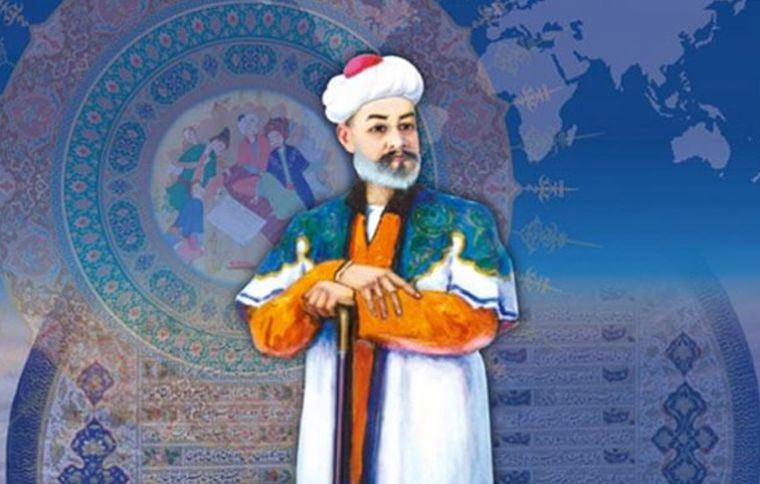
Do you know about the life and activity of Mir Alisher Navoi?

07.02.2025   167612   10 min.
Do you know about the life and activity of Mir Alisher Navoi?

   Mir Alisher Navoi was a great poet, thinker, a linguist and a statesman. His full name was Nizomiddin Mir Alisher Navoi. He is the outstanding figure of Uzbek literature, known in the West as Chagatai literature. There is no greater personality than him in the literature of the Turkic peoples. He was a founder of Uzbek literature. Mir Alisher Navoi knew languages. He knew the Arabic, Persian and Turkic languages very well. Mir Alisher Navoi’s contribution to the world civilization is great. We will celebrate his 584th anniversary widely this year. 

    He wrote his poems under the pen-names of Navoi (in his poems which were written in the old Uzbek language) and Foni (in his poems which were written in Persian language).

    He was born on February 9, 1441 in Herat and spent the main part of his life there. He studied in various educational establishments of Herat, Mashhad and Samarkand (in Ulugbek madrasah).  Mir Alisher Navoi's family was close to Timurid's palace. According to the information of great historian Giyasiddin Hondamir, an old poet Mavlona Lutfi met with Mir Alisher Navoi, when he was a child and Mavlona Lutfi appreciated his talent.

    Famous poet and thinker Abdurahmon Jomi was the teacher and adviser of Mir Alisher Navoi,

    Mir Alisher Navoi had no his own family. He dedicated his life to the science, the young people who studied and trade. He always wanted people to be educated and helped them.

   One of the Timurid's Sulton Husayn Boyqaro took the crown of Herat in 1469, and a new period began in Mir Alisher Navoi's life. In 1469 he was given a title as a stamper and in 1472 as a minister (vazir) of the state by Husayn Boyqaro. Mir Alisher Navoi was famous as a poet and a statesman, he owned a great wealth at that time. During 1480 he built a number of madrasahs, 40 robots (the place where karavan could have a little rest), 17 mosques, 10 honaqohs, 9 bath-houses, 9 bridges, 20 pools in Herat and in other parts of the country for his own money (from his own account). Mir Alisher Navoi was sent to Astrobod as a governor (head) in 1487. Husayn Boyqaro gave a title to Navoi as "Muqarribi hazrati sultoniy (the closest person to sultan)". One of the main features of that title was that who could do state work instead of Husayn Bayqaro.
    The great poet Mir Alisher Navoi died on 3rd of January in 1441 in Herat. He was buried in Herat (in Afghanistan).
    According to the capacity of Mir Alisher Navoi's "Hamsa" includes the following dostons (plays): "Hayratu-l-abror", "Farhod va Shirin", "Layli va Majnun", "Sab'ai sayyor" and "Saddi Iskandariy". Mir Alisher Navoi Navoi was the first poet who created completed "Hamsa" in Turkic language (the old Uzbek language) and proved that such great work could be written in the Turkic language.
   The problems which are connected with the leader were the main plan in "Sab'ai Sayyor" and "Saddi Iskandariy" which are the parts of "Hamsa". In the tradition of writing Hamsa Mir Alisher Navoi's "Hamsa" is distinguished with its social-political character and being original. Having read Navoi's "Hamsa" Abdurahmon Jomi  was impressed and appreciated his work.
   Mir Alisher Navoi's thoughts, the quintessence of philosophical views - tasavvufiy ideas of the last days of his life were described in "Lisonu-t-tayr" .
    During 1491-1498 Mir Alisher Navoi created 4 devons (collection) called "Hazoinu-l-maoniy". The general capacity of it is more than 50000 verses. There were 21 lyric genres in Eastern literature and Navoi used 16 of them in his poems. The collection of his poems in the Persian language is called "Devonu Foni". These two devons include 3150 poems which were written in gazal genre. Mir Alisher Navoi collected his qasidas in Persian and made 2 miscellane as called "Sittai Zaruriya: ("Olti Zarurat") and "Fusuli arbaa" ("Four seasons").
   Mir Alisher Navoi's "Muhokamatu-l-lugatayn" is devoted to the comparative analysis of Turkish and Persian. His tazkira "Majolisun-nafois" was written in the way of literary criticism. His "Mezon ul-avzon" was written about the theory of aruz, "Mufradot" was written about the rules of problems.
   Also he created the works called "Tarixi muluki ajam", "Tarixi anbiyo va hukamo". In the base of his collection called "Munshaot". In memorialistic genre he wrote "Hamsatu-l-mutaxayyirin" ("Besh hayrat") devoting to Abdurahmon Jomi (1494), "Holoti Sayyid Hasan Ardasher"). In Mir Alisher Navoi's nasriy work "Mahbubu-l-qulub" (1500) the social and political thoughts were expressed in high level.
    Mir Alisher Navoi knew languages. He knew the Arabic and Persian languages very well.

    His contribution is great in the world civilization. Mir Alisher Navoi’s works are translated into many languages in the world. Throughout his life, Mir Alisher Navoi combined literary works with politics. Being a high-ranking official, he made a significant contribution to the socio-economic development of the country; He sponsored the development of science and art, and always strived for peace and harmony.

    Mir Alisher Navoi put forward the global problems with the sufizm in his poetry.
    After the independence of the Republic of Uzbekistan Navoi's poems about religion and sufizm are widely studied. Especially from this point of view the objective study of Navoi's poems are increased. The religious poems of Navoi called "Arbain", "Munojot" were adopted firstly. The work "Nasoyimu-l-muhabbat", which includes information about 750 shayxs of tasavvuf was adopted.
   Mir Alisher Navoi left rich literary heritage. The great Uzbek poet, thinker, philosopher, creator is the author of unique works, more than thirty collections of poems, prose works, major poems and scientific. His creativity is great. The volume of his six poems is about 60.000 lines (misra).  In 1483-85, Mir Alisher  Navoi created the work "Khamsa" ("Five"), which consisted of poems: "Khairat al-Abrar" ("Confusion of the Righteous"), "Farhad va Shirin" ("Farhad and Shirin"), "Leyli va Mazhnun", "Sabai Sayyar" ("Seven Planets"), "Saddi Iskandari" ("Wall of Iskandar"). They were created on the basis of the hamsa tradition - the creation of five (five poems)."Hamsa" Navoi - the first work in the genre of serials, created in the Turkic language. He proves that such a voluminous work can be created in the Turkic language.

   There are many manuscripts and printed copies of Mir Alisher Navoi's "Hamsa" in Central Asia 166 manuscripts which were copied during XV-XX centuries, are kept in the fund of manuscripts of the Institute Oriental Languages in the Academy of Sciences of Uzbekistan. In 84 of them all dostons (plays) of pentas are given in it.
    254 handwritings of 24 works of Mir Alisher Navoi are kept in the Academy of Sciences of Uzbekistan, in the Institute of Oriental Languages (3rd fund).The list of handwriters who copied the works of Mir Alisher Navoi and some information about them can be a risola. 

    Although Alisher Navoi passed away many centuries ago, his literary heritage and contributions to the Enlightenment continue to endure. Today, he is celebrated as a national hero in Uzbekistan, and his wise words continue to inspire people.

Used Internet sites

  1.ziyuz.uz     

  2. uzbekistan.travel         

  3.yandex.uz

  4.ziyoratga.uz 

Fakhriddin Ernazarov


Other posts
News

The international prestige of the Islamic Civilization Center in Uzbekistan has once again received high recognition

07.08.2026   49685   6 min.
The international prestige of the Islamic Civilization Center in Uzbekistan has once again received high recognition

The Islamic Civilization Center in Uzbekistan has been receiving letters of appreciation and cooperation from leaders of foreign countries, prestigious international organizations, academic institutions, and participants of international conferences, further demonstrating the Center’s steadily growing reputation and influence on the global stage.

In particular, in a letter of appreciation addressed to Firdavs Abdukhalikov, Director of the Islamic Civilization Center in Uzbekistan, Her Majesty Raja Zarith Sofiah, Queen of Malaysia, expressed her sincere gratitude for the warm hospitality and cordial reception extended during her official visit to Uzbekistan. The Queen also emphasized that her visit to the Islamic Civilization Center in Uzbekistan left a lasting impression on her. She highly praised the Center’s exhibitions for their vivid and compelling presentation, through modern museum technologies, of the rich history and cultural heritage of Central Asia, as well as the scientific and spiritual legacy of the great scholars who made invaluable contributions to the development of Islamic civilization. In particular, she noted that the spiritual atmosphere of the Qur’an Hall and its unique heritage artifacts inspired in her profound respect and admiration.

The Islamic Civilization Center in Uzbekistan, along with the First International Islamic Civilization Forum held in Tashkent, Samarkand, and Termez from July 7 to 11, 2026, continues to receive widespread international recognition. Following the conclusion of the forum, numerous letters of appreciation and proposals for further cooperation were received from prominent international organizations, academic institutions, and public figures.

In his letter, Professor Shukran Abdul Rahman, Head of the Office of Strategic Institution Transformation at the International Islamic University Malaysia (IIUM), emphasized the international significance of the First International Islamic Civilization Forum. According to him, the forum, which brought together scholars, statesmen, and representatives of international organizations from more than 40 countries, played an important role in promoting the values of peace, tolerance, and enlightenment embodied in Islamic civilization, as well as in strengthening scientific dialogue and academic cooperation among nations. He also commended the high level of organization of the forum, the excellent conditions provided for participants, and the dignified presentation of Uzbekistan’s rich scientific and spiritual heritage to the international community.

The Forum and the activities of the Islamic Civilization Center in Uzbekistan were also highly praised in two separate letters sent by Russia’s Strategic Vision Group “Russia – Islamic World.” In particular, the letters described the establishment of the Islamic Civilization Center in Uzbekistan as one of the largest humanitarian and cultural-educational projects in the Islamic world of the twenty-first century. They also highlighted the leading role of President Shavkat Mirziyoyev in implementing this initiative and acknowledged his efforts to develop the Center into a hub of science, peace, enlightenment, humanism, and creativity.

At the same time, confidence was expressed that the Center would become a prestigious academic and educational institution for scholars, researchers, and students from around the world in the future. The letters also conveyed readiness to implement joint scientific and cultural projects in the fields of museology, history, archaeology, education, bibliography, and publishing.

In his letter, Professor Nidal Al-Ahmad, Secretary General of the Ministry of Culture of the Hashemite Kingdom of Jordan, also emphasized that the First International Islamic Civilization Forum was organized at the highest level, noting that the event once again demonstrated to the international community the tremendous contribution of Islamic civilization to the progress of humanity. He further highlighted that the forum, which brought together scholars, statesmen, and religious leaders from various countries, had become an important international platform for dialogue promoting the values of peace, tolerance, and enlightenment.

As another practical manifestation of the high level of international confidence in the Center’s activities, the regional office of ICESCO in Baku extended an official invitation to the Center’s leadership to participate in the Global Foresight Focal Points Initiative international event, held on July 27–28, 2026. The invitation emphasized the importance of expanding cooperation among ICESCO member states in the fields of strategic foresight, the introduction of innovative approaches to public administration, and future planning.

These expressions of recognition from foreign leaders, distinguished scholars, and international organizations once again confirm that the Islamic Civilization Center in Uzbekistan has, within a short period of time, become one of the leading platforms for international academic and educational cooperation. They also serve as clear evidence that the Center’s efforts to study, preserve, and promote the rich scientific and cultural heritage of Islamic civilization to the global community are receiving high international acclaim.