Do you know about the life and activity of Mir Alisher Navoi?
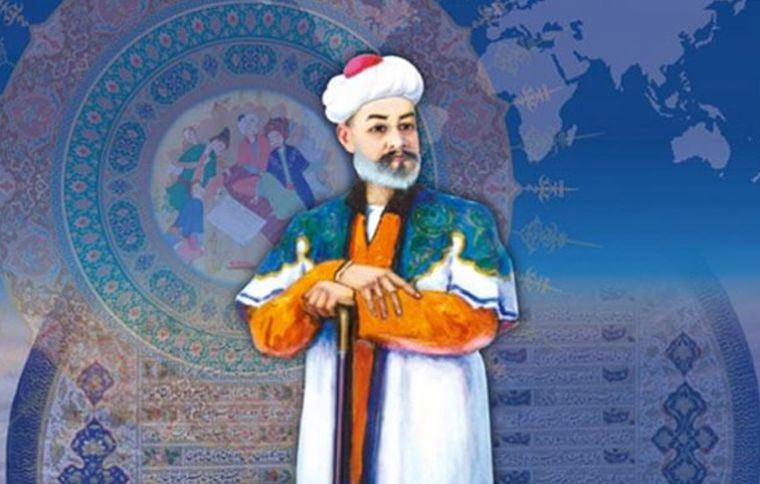
Mir Alisher Navoi was a great poet, thinker, a linguist and a statesman. His full name was Nizomiddin Mir Alisher Navoi. He is the outstanding figure of Uzbek literature, known in the West as Chagatai literature. There is no greater personality than him in the literature of the Turkic peoples. He was a founder of Uzbek literature. Mir Alisher Navoi knew languages. He knew the Arabic, Persian and Turkic languages very well. Mir Alisher Navoi’s contribution to the world civilization is great. We will celebrate his 584th anniversary widely this year.
He wrote his poems under the pen-names of Navoi (in his poems which were written in the old Uzbek language) and Foni (in his poems which were written in Persian language).
He was born on February 9, 1441 in Herat and spent the main part of his life there. He studied in various educational establishments of Herat, Mashhad and Samarkand (in Ulugbek madrasah). Mir Alisher Navoi's family was close to Timurid's palace. According to the information of great historian Giyasiddin Hondamir, an old poet Mavlona Lutfi met with Mir Alisher Navoi, when he was a child and Mavlona Lutfi appreciated his talent.
Famous poet and thinker Abdurahmon Jomi was the teacher and adviser of Mir Alisher Navoi,
Mir Alisher Navoi had no his own family. He dedicated his life to the science, the young people who studied and trade. He always wanted people to be educated and helped them.
One of the Timurid's Sulton Husayn Boyqaro took the crown of Herat in 1469, and a new period began in Mir Alisher Navoi's life. In 1469 he was given a title as a stamper and in 1472 as a minister (vazir) of the state by Husayn Boyqaro. Mir Alisher Navoi was famous as a poet and a statesman, he owned a great wealth at that time. During 1480 he built a number of madrasahs, 40 robots (the place where karavan could have a little rest), 17 mosques, 10 honaqohs, 9 bath-houses, 9 bridges, 20 pools in Herat and in other parts of the country for his own money (from his own account). Mir Alisher Navoi was sent to Astrobod as a governor (head) in 1487. Husayn Boyqaro gave a title to Navoi as "Muqarribi hazrati sultoniy (the closest person to sultan)". One of the main features of that title was that who could do state work instead of Husayn Bayqaro.
The great poet Mir Alisher Navoi died on 3rd of January in 1441 in Herat. He was buried in Herat (in Afghanistan).
According to the capacity of Mir Alisher Navoi's "Hamsa" includes the following dostons (plays): "Hayratu-l-abror", "Farhod va Shirin", "Layli va Majnun", "Sab'ai sayyor" and "Saddi Iskandariy". Mir Alisher Navoi Navoi was the first poet who created completed "Hamsa" in Turkic language (the old Uzbek language) and proved that such great work could be written in the Turkic language.
The problems which are connected with the leader were the main plan in "Sab'ai Sayyor" and "Saddi Iskandariy" which are the parts of "Hamsa". In the tradition of writing Hamsa Mir Alisher Navoi's "Hamsa" is distinguished with its social-political character and being original. Having read Navoi's "Hamsa" Abdurahmon Jomi was impressed and appreciated his work.
Mir Alisher Navoi's thoughts, the quintessence of philosophical views - tasavvufiy ideas of the last days of his life were described in "Lisonu-t-tayr" .
During 1491-1498 Mir Alisher Navoi created 4 devons (collection) called "Hazoinu-l-maoniy". The general capacity of it is more than 50000 verses. There were 21 lyric genres in Eastern literature and Navoi used 16 of them in his poems. The collection of his poems in the Persian language is called "Devonu Foni". These two devons include 3150 poems which were written in gazal genre. Mir Alisher Navoi collected his qasidas in Persian and made 2 miscellane as called "Sittai Zaruriya: ("Olti Zarurat") and "Fusuli arbaa" ("Four seasons").
Mir Alisher Navoi's "Muhokamatu-l-lugatayn" is devoted to the comparative analysis of Turkish and Persian. His tazkira "Majolisun-nafois" was written in the way of literary criticism. His "Mezon ul-avzon" was written about the theory of aruz, "Mufradot" was written about the rules of problems.
Also he created the works called "Tarixi muluki ajam", "Tarixi anbiyo va hukamo". In the base of his collection called "Munshaot". In memorialistic genre he wrote "Hamsatu-l-mutaxayyirin" ("Besh hayrat") devoting to Abdurahmon Jomi (1494), "Holoti Sayyid Hasan Ardasher"). In Mir Alisher Navoi's nasriy work "Mahbubu-l-qulub" (1500) the social and political thoughts were expressed in high level.
Mir Alisher Navoi knew languages. He knew the Arabic and Persian languages very well.
His contribution is great in the world civilization. Mir Alisher Navoi’s works are translated into many languages in the world. Throughout his life, Mir Alisher Navoi combined literary works with politics. Being a high-ranking official, he made a significant contribution to the socio-economic development of the country; He sponsored the development of science and art, and always strived for peace and harmony.
Mir Alisher Navoi put forward the global problems with the sufizm in his poetry.
After the independence of the Republic of Uzbekistan Navoi's poems about religion and sufizm are widely studied. Especially from this point of view the objective study of Navoi's poems are increased. The religious poems of Navoi called "Arbain", "Munojot" were adopted firstly. The work "Nasoyimu-l-muhabbat", which includes information about 750 shayxs of tasavvuf was adopted.
Mir Alisher Navoi left rich literary heritage. The great Uzbek poet, thinker, philosopher, creator is the author of unique works, more than thirty collections of poems, prose works, major poems and scientific. His creativity is great. The volume of his six poems is about 60.000 lines (misra). In 1483-85, Mir Alisher Navoi created the work "Khamsa" ("Five"), which consisted of poems: "Khairat al-Abrar" ("Confusion of the Righteous"), "Farhad va Shirin" ("Farhad and Shirin"), "Leyli va Mazhnun", "Sabai Sayyar" ("Seven Planets"), "Saddi Iskandari" ("Wall of Iskandar"). They were created on the basis of the hamsa tradition - the creation of five (five poems)."Hamsa" Navoi - the first work in the genre of serials, created in the Turkic language. He proves that such a voluminous work can be created in the Turkic language.
There are many manuscripts and printed copies of Mir Alisher Navoi's "Hamsa" in Central Asia 166 manuscripts which were copied during XV-XX centuries, are kept in the fund of manuscripts of the Institute Oriental Languages in the Academy of Sciences of Uzbekistan. In 84 of them all dostons (plays) of pentas are given in it.
254 handwritings of 24 works of Mir Alisher Navoi are kept in the Academy of Sciences of Uzbekistan, in the Institute of Oriental Languages (3rd fund).The list of handwriters who copied the works of Mir Alisher Navoi and some information about them can be a risola.
Although Alisher Navoi passed away many centuries ago, his literary heritage and contributions to the Enlightenment continue to endure. Today, he is celebrated as a national hero in Uzbekistan, and his wise words continue to inspire people.
Used Internet sites
1.ziyuz.uz
2. uzbekistan.travel
3.yandex.uz
4.ziyoratga.uz
Fakhriddin Ernazarov
The President of Uzbekistan calls for further expansion of practical cooperation within the CIS
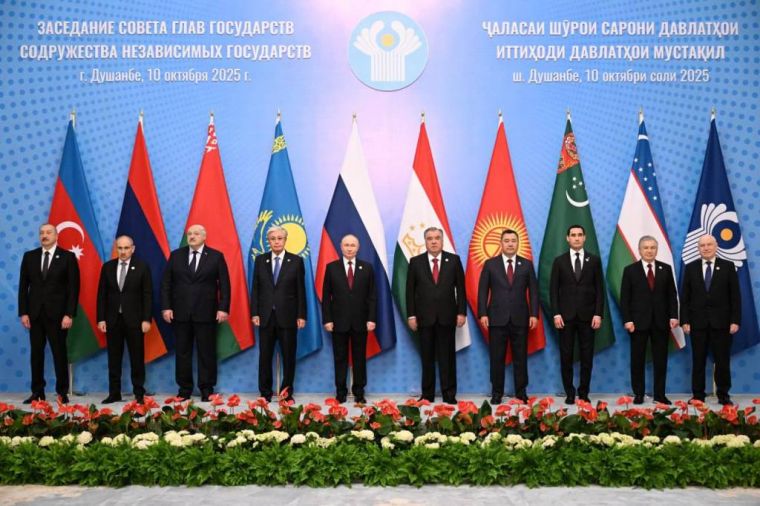
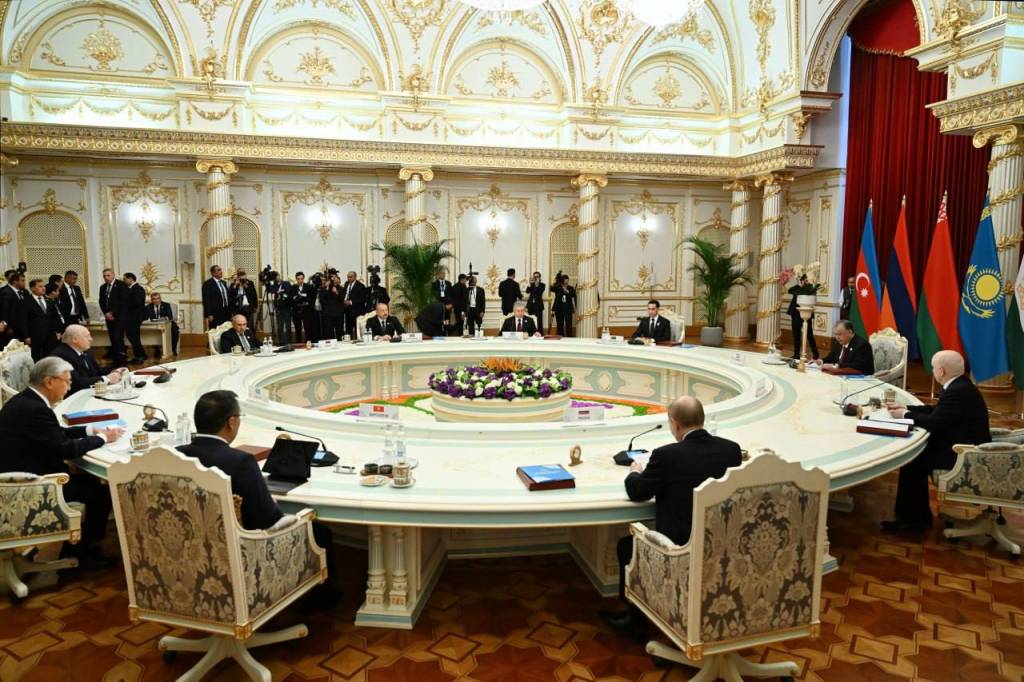
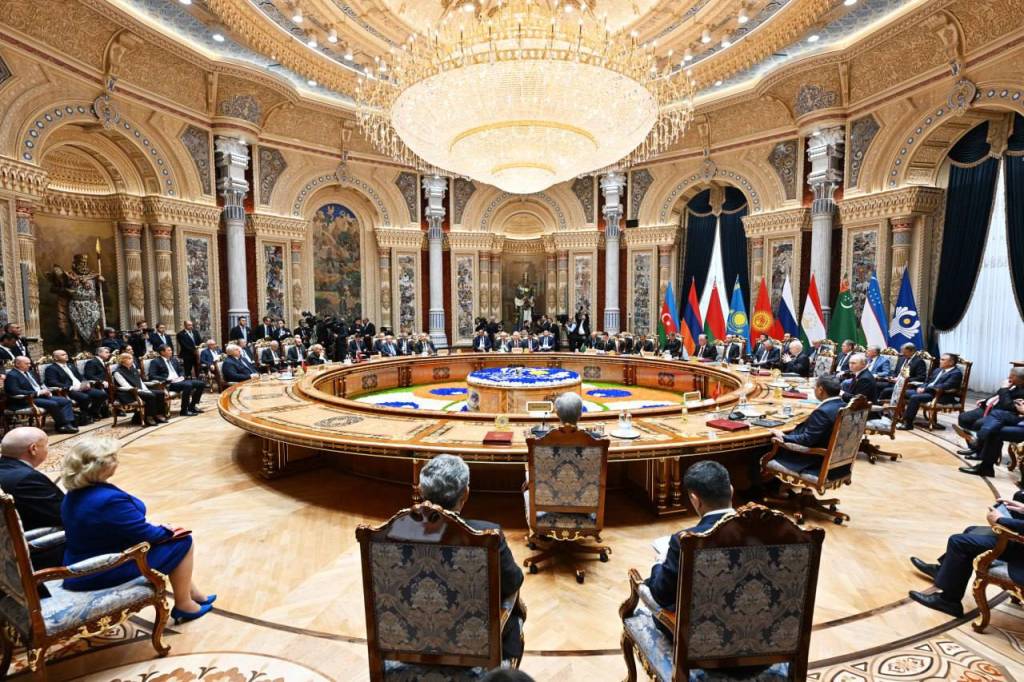
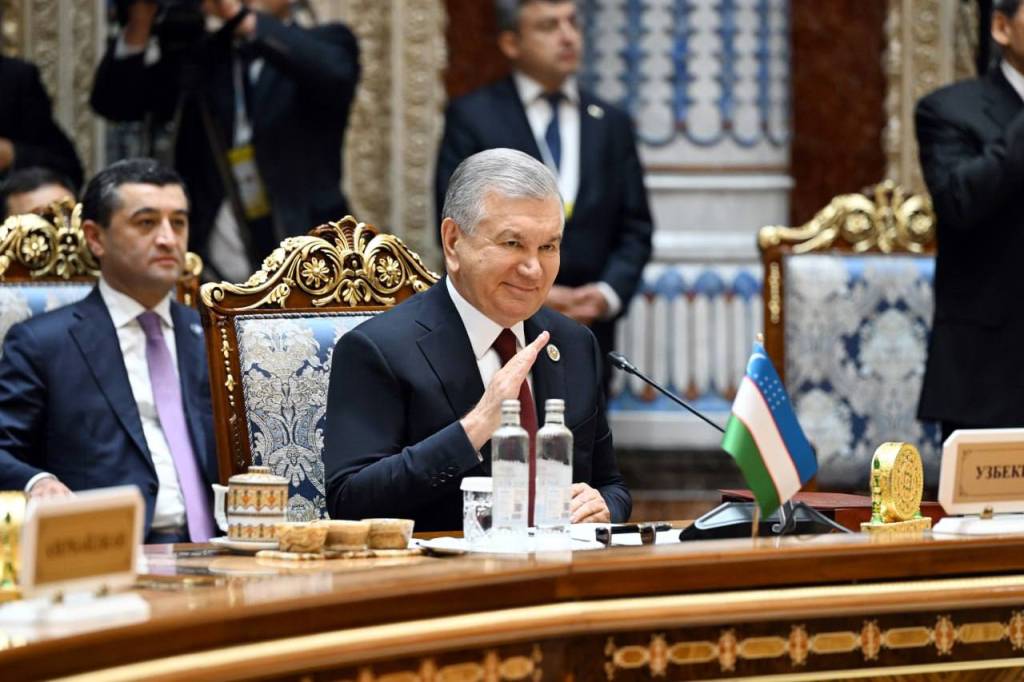
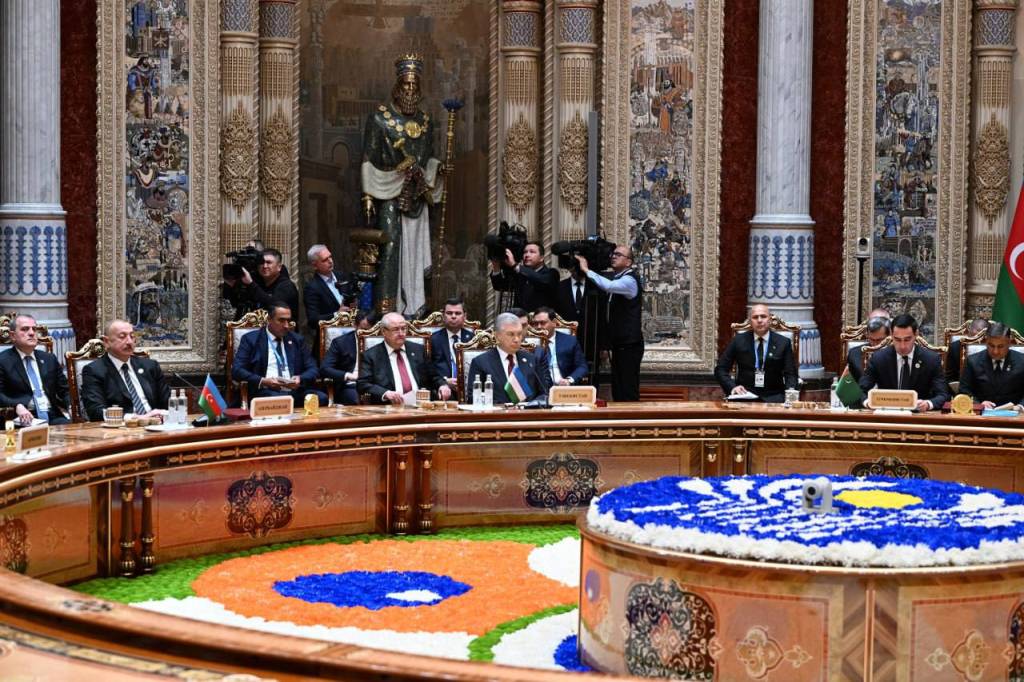
On October 10, the President of the Republic of Uzbekistan Shavkat Mirziyoyev took part in the regular meeting of the Council of Heads of State of the Commonwealth of Independent States (CIS), held in Dushanbe.
The summit, chaired by the President of the Republic of Tajikistan Emomali Rahmon, was attended by the President of the Republic of Azerbaijan Ilham Aliyev, the President of the Republic of Belarus Alexander Lukashenko, the President of the Republic of Kazakhstan Kassym-Jomart Tokayev, the President of the Kyrgyz Republic Sadyr Japarov, the President of the Russian Federation Vladimir Putin, the President of Turkmenistan Serdar Berdimuhamedov, the Prime Minister of Armenia Nikol Pashinyan, and CIS Secretary-General Sergey Lebedev.
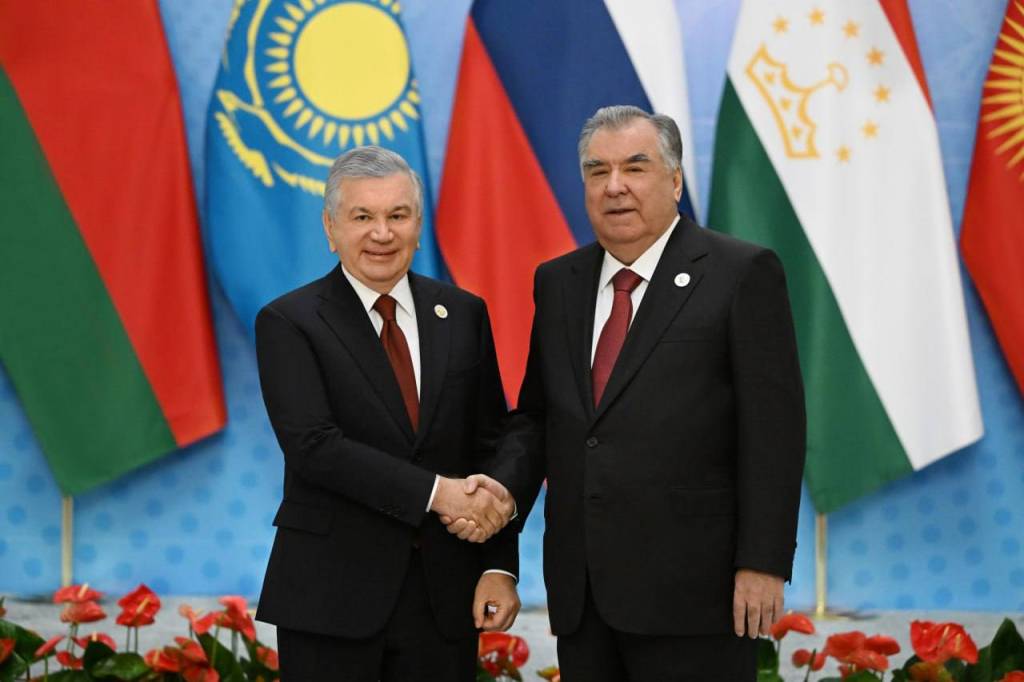
The agenda focused on pressing issues related to strengthening and expanding practical cooperation within the Commonwealth.
At the beginning of his address, the President of Uzbekistan noted that despite the unpredictable developments in global politics and the economy, as well as the declining role of international institutions, the CIS continues to demonstrate resilience, efficiency, and relevance.
Thanks to mechanisms and partnerships established over decades, the Commonwealth maintains close cooperation across a wide range of economic, social, and humanitarian areas.
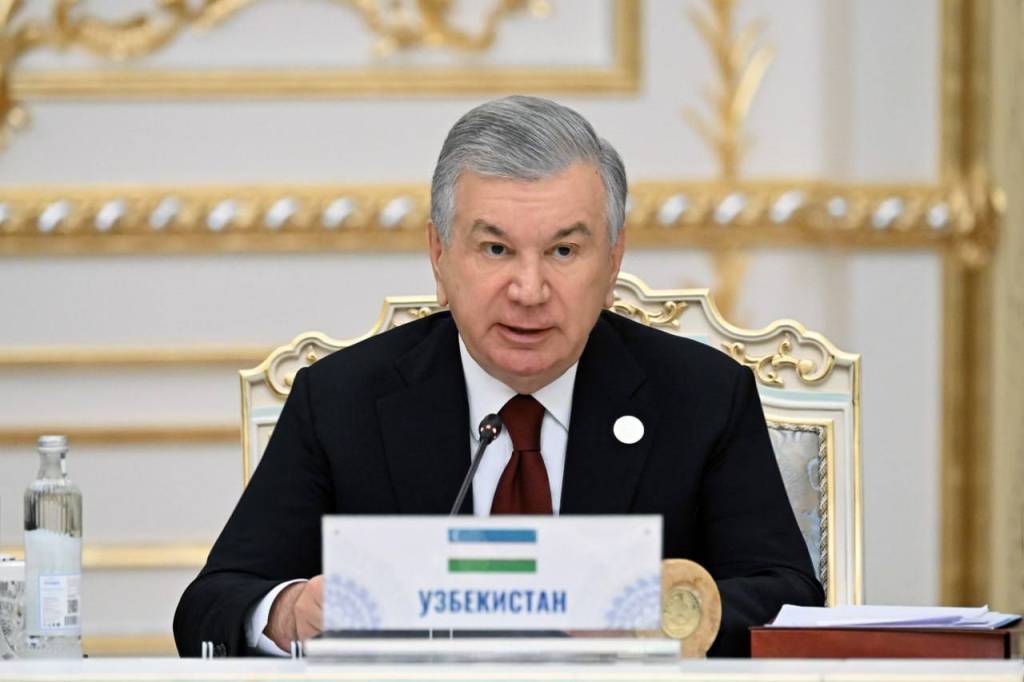
“We are interested in further strengthening cooperation within the CIS and enhancing the effectiveness of practical interaction with countries that are our natural partners”, the President of Uzbekistan said.
The Head of State then put forward several proposals and initiatives aimed at expanding practical cooperation within the Commonwealth of Independent States.
The unconditional priority of the Organization was defined as the expansion of economic partnership, given the deteriorating situation in the global economy, the rise of protectionism, and emerging challenges to sustainable development.
It was noted with satisfaction that Uzbekistan’s trade turnover with CIS partners increased by 11 percent last year and continues to grow this year. Such results are attributed to the deepening of intersectoral cooperation and the growth of mutual investment flows.
To make fuller use of existing resources and maintain the achieved pace and dynamics of cooperation, the President of Uzbekistan proposed focusing joint efforts on the following priority areas.
First, the further creation of favorable conditions for expanding trade turnover.
The need to simplify procedures and requirements for the supply of certain goods, particularly agricultural products, and for access to national markets, including public procurement, was emphasized.
Attention was also drawn to the importance of launching rapid-response mechanisms within the CIS Economic Council to adapt to changes in external market conditions and redirect trade flows. The President underscored the need to accelerate the coordination of draft agreements on technical barriers to trade and mutual recognition of conformity assessment documents.
Second, the deepening of cooperation in the field of transport was identified as a key priority.
It was noted that bottlenecks persist in the CIS transport network, reducing the efficiency of existing corridors. In this regard, the establishment of information and logistics centers integrated across all modes of transport was deemed essential.
Considering the importance of attracting private investment for the modernization of freight transport infrastructure, the President proposed to hold a conference in Uzbekistan on expanding public–private partnership in the transport sector.
Third, stimulating mutual investment growth and supporting cooperation projects.
In this regard, it was proposed to develop a roadmap for supporting the development of special economic and industrial zones, as well as establishing a CIS Venture Platform to deepen cooperation and promote innovative startups with private sector participation. It was also suggested to hold an Innovation Industry Forum in Tashkent next year as part of the INNOPROM exhibition.
Fourth, enhancing energy cooperation.
The President of Uzbekistan noted that several major strategic projects are currently being implemented jointly with CIS partners in the field of traditional and alternative energy, including the construction of a nuclear power plant.
He called for the development and implementation of a long-term Program for the Innovative Development of the Energy Sector across CIS countries.
Fifth, cooperation in the field of digitalization.
The President of Uzbekistan noted that the International Forum “Development of Artificial Intelligence Technologies in the CIS”, held in Samarkand this August, demonstrated the growing mutual interest and potential for cooperation among member states. In this regard, he proposed developing a multilateral Action Plan to deepen practical cooperation in this field.
The Head of State also emphasized the importance of expanding joint projects and programs in the fields of science, education, culture, and the arts.
“Considering the dynamic development of the education sector and labor markets in our countries, we propose drafting a new Interstate Agreement on the Mutual Recognition of Diplomas, Qualifications, and Academic Programs, as well as introducing a Mechanism for the Harmonization of Professional Standards and Qualification Requirements”, the President said.
Uzbekistan also expressed its readiness to host the CIS Youth Forum in Khiva next year, with the agenda to include the establishment of a Youth Innovation Lab aimed at fostering an innovative ecosystem and supporting the creative and intellectual potential of the younger generation.
Addressing issues of regional security, the President of Uzbekistan emphasized the importance of maintaining systematic and close contacts between the foreign ministries and special services. The situation in Afghanistan requires particular attention.
“Uzbekistan remains firmly committed to ensuring long-term peace, stability, and sustainable development in Afghanistan. In this regard, we propose exploring opportunities for joint participation in major investment and infrastructure projects in this country”, the President stated.
In conclusion, Shavkat Mirziyoyev expressed his support for the reappointment of Sergey Lebedev as Secretary-General of the CIS and extended best wishes to the President of Turkmenistan Serdar Berdimuhamedov on assuming the chairmanship of the Organization.
During the meeting, heads of delegations from other CIS member states also delivered their remarks.
The summit concluded with the signing of a package of agreements and decisions aimed at strengthening cooperation across the priority areas within the Commonwealth of Independent States.
UzA