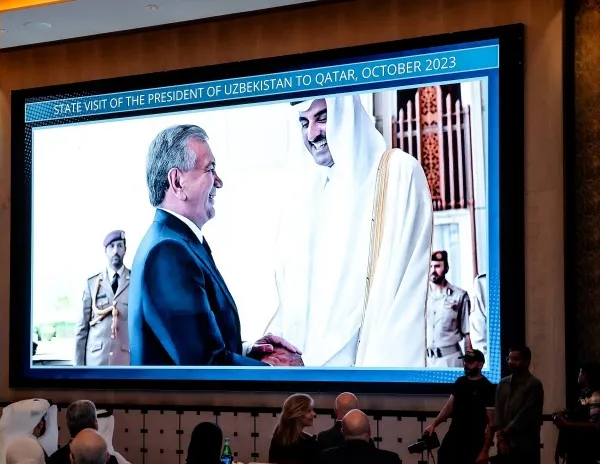
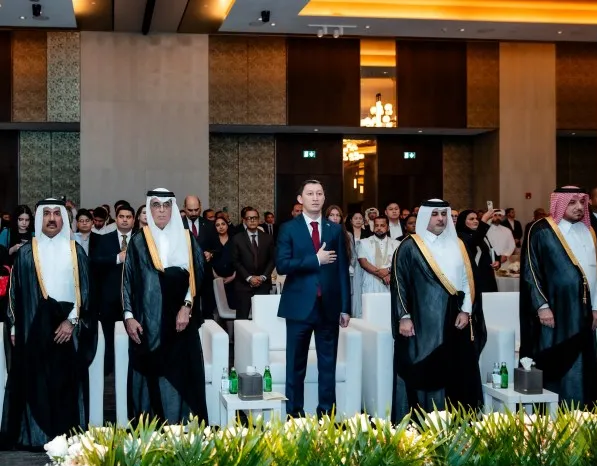
A solemn reception dedicated to the 34th anniversary of the Independence of Uzbekistan was held in the capital of the State of Qatar, reports Dunyo IA correspondent.
The event was attended by representatives of Qatari government institutions, heads of diplomatic missions accredited in Doha, officials from international organizations, members of the public and business community, as well as representatives of the Uzbek diaspora residing in Qatar.
Among the distinguished guests were Abdullah Al-Subaie, Minister of Environment and Climate Change of the State of Qatar, Hamad Al-Kawari, Minister of State and President of the Qatar National Library, Ahmed Al-Hammadi, Secretary-General of the Ministry of Foreign Affairs and Ibrahim Fakhro, Director of the Department of State Protocol of the Ministry of Foreign Affairs.
During the reception, a video presentation was screened highlighting the dynamic development of friendly relations between Uzbekistan and Qatar, as well as the expanding areas of bilateral strategic partnership. Attendees were also briefed on the history of Uzbek-Qatari relations, ongoing investment projects, trade and economic cooperation, and efforts to strengthen cultural and humanitarian ties.
Following the official proceedings, a concert program was held featuring performances of traditional Uzbek maqom music.
Uzbek entrepreneurs operating in Qatar also showcased traditional Uzbek national costumes during the event.
Sheikh Khalid Al-Sulaiti, Director of the "Katara" Cultural Village Foundation:
– It is a great honor for us to participate in this highly organized reception. The economic opportunities, investment projects, and rich cultural program showcased during the event vividly demonstrated the modern image and potential of Uzbekistan. Qatar is committed to further developing its political, economic, and cultural relations with Uzbekistan.
Muhammad Ali, Representative of the Ministry of Internal Affairs of Qatar:
– I once again experienced the genuine warmth and hospitality inherent to the Uzbek people through their national music, traditional cuisine, and various cultural events. Such occasions serve to further strengthen the mutual respect and friendship between our peoples.
Source



 Iman
Iman  Prayer
  Fasting
  Zakat
Zakat  Haj
Haj  Qur`an
  Lessons of Islam
  Contact