The site is working in test mode!
31 August, 2026   |   18 Rabī‘ al-awwal, 1448

Tashkent city
Fajr
04:25
Sunrise
05:48
Dhuhr
12:23
Asr
17:03
Maghrib
19:02
Isha
20:21
Bismillah
31 August, 2026, 18 Rabī‘ al-awwal, 1448

A unique “instrument of intellect” created in Samarkand in the 18th century at the Center for Islamic Civilization!

03.10.2025   35675   2 min.
A unique “instrument of intellect” created in Samarkand in the 18th century at the Center for Islamic Civilization!

Uzbekistan’s first auction house — Art Vernissage — donates a unique artifact to the Center for Islamic Civilization

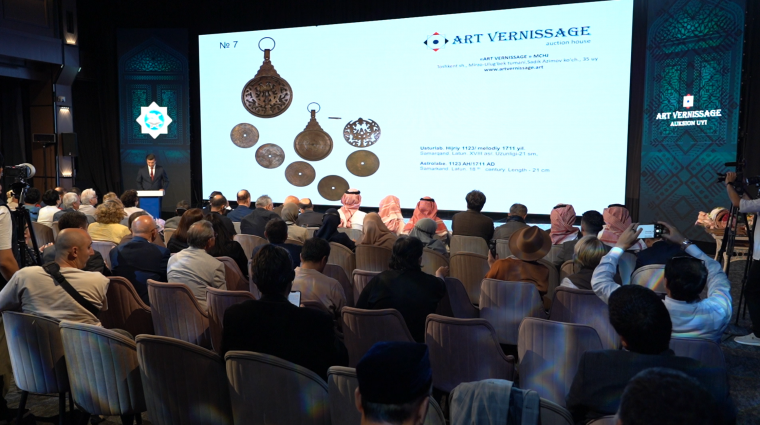
During the international expert forum “The Legacy of the Great Past — the Basis of an Enlightened Future” held in Tashkent, the country’s first auction house, Art Vernissage, presented the Center for Islamic Civilization in Uzbekistan with a rare 18th-century artifact a brass astrolabe created in Samarkand in 1711.

This 21-cm scientific instrument is equipped with interchangeable plates, allowing its use across different geographical latitudes. Thanks to this feature, the astrolabe was considered a multifunctional scientific device of its time.

For reference: in the Islamic world, the astrolabe was not merely an astronomical tool but a symbol that combined scientific progress, practical application, religious devotion, and artistic mastery. It served as a reliable guide not only for astronomers but also for travelers, sailors, and merchants.

Great scholars such as Al-Khwarizmi, Al-Fargani, and Al-Biruni described in detail the structure and use of the astrolabe in their works, further highlighting its prominent role in Islamic civilization.

“This perfect instrument, especially between the 15th and 18th centuries, was recognized as one of the most advanced devices in the world. We hope this astrolabe, now part of the Center’s exhibition, will reflect the profound knowledge and craftsmanship of Islamic scholars and leave a lasting impression on all visitors”, said Shavkat Sultanov, Director of the Art Vernissage auction house.

This donation has further enriched the Center’s exhibition and strengthened the country’s intellectual environment and cultural dialogue.

As a reminder: at the international forum held at the Center on September 26–27 this year, more than 100 experts scholars and researchers, heads of museums and libraries, and heritage specialists from over 20 countries took part. Representatives of prestigious institutions such as IRCICA, ICESCO, TURKSOY, the World Islamic League, Oxford University, the Russian Academy of Sciences, and Christie’s contributed with lectures and analyses.

The international community highly praised President Shavkat Mirziyoyev’s initiatives to preserve the humanistic essence of Islam and to foster intercultural dialogue.


Other posts

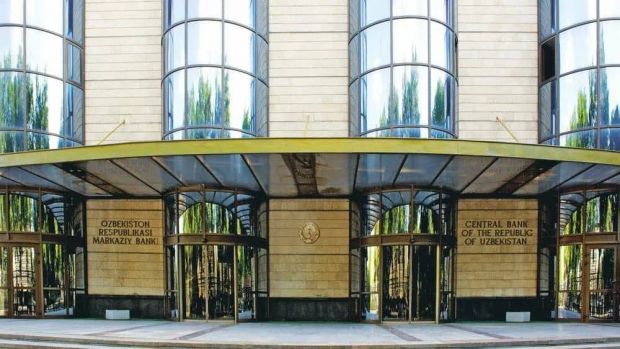
The Central Bank forecasts the emergence of at least 10 Islamic banks by 2030

28.10.2025   114681   4 min.
The Central Bank forecasts the emergence of at least 10 Islamic banks by 2030

The Central Bank expects to establish at least 10 full-fledged Islamic banks by 2030. Also, “Islamic windows” — branches providing Sharia financial services — will appear in three state banks. The Central Bank considers Islamic finance as a tool for withdrawing funds from the shadow economy.

Why is this important

According to a UNDP survey, 68% of Uzbekistan’s population does not want to use traditional banking services due to religious beliefs. Launching Islamic banks will expand financial inclusion, increase bank assets, and reduce the share of the shadow economy. This is the largest transformation of the financial system since independence.

What happened

  • The Central Bank forecasts the emergence of at least 10 Islamic banks by 2030;
  • Three state banks (not yet defined) will create “Islamic windows”;
  • CB Deputy Chairman Abrorhuja Turdaliyev called Islamic finance a tool for bringing funds out of the shadows;
  • In September, the Legislative Chamber approved the law on Islamic banking activities in the first reading;
  • UNDP Survey: 68% of the population and 60% of businesses do not use traditional banks due to their religious beliefs.

Draft law

The document introduces the concepts of “Islamic banking activity”, “Islamic financial operations”, “investment deposit”, and others. A separate license is provided for Islamic banks. Classical banks will be able to organize “Islamic windows” if they have a license.

Islamic products: Murabaha (deferred trade financing), Mudaraba (investment partnership), Mushoraka (joint venture), Wakala (agency financing), Salam (prepayment of goods).

Features of regulation

  • Islamic banks will be able to conduct direct trade activities, establish legal entities, and acquire shares in the authorized capital without restrictions;
  • Islamic Finance Councils (Sharia Councils) will be established under the Central Bank and banks;
  • Notarial acts of Islamic banks are exempt from state duty;
  • A separate tax regime may be introduced, taking into account the specifics of Islamic finance.

Assessment of demand

The Deputy Chairman of the Central Bank clarified: when we talk about 50-60% of the population preferring Islamic finance, we are talking about those who prefer it. Those who categorically refuse traditional services are significantly fewer.

Context

Islamic finance prohibits the collection of interest (riba) and speculative operations. Instead, partnership models are used, where the bank and the client share profits and risks. Uzbekistan is a predominantly Muslim country (90%+ of the population), where a significant portion of citizens avoid traditional banks for religious reasons.

Creating 10 Islamic banks by 2030 is an ambitious task, given that there are currently around 35 commercial banks operating in the country. “Islamic windows” in state banks will allow large players (Uzpromstroybank, Halyk Bank, Asaka Bank) to enter a new segment of clients without creating separate structures.

The Central Bank sees Islamic finance as a tool for combating the shadow economy: religiously motivated citizens who do not trust traditional banks will be able to legalize funds through Sharia products.

A separate tax regime may include benefits for Murabaha-type operations, where the bank formally purchases goods and resells them to the client with a markup — to avoid double taxation.