The site is working in test mode!
01 September, 2026   |   19 Rabī‘ al-awwal, 1448

Tashkent city
Fajr
04:26
Sunrise
05:49
Dhuhr
12:23
Asr
17:01
Maghrib
19:00
Isha
20:19
Bismillah
01 September, 2026, 19 Rabī‘ al-awwal, 1448

A unique “instrument of intellect” created in Samarkand in the 18th century at the Center for Islamic Civilization!

03.10.2025   35751   2 min.
A unique “instrument of intellect” created in Samarkand in the 18th century at the Center for Islamic Civilization!

Uzbekistan’s first auction house — Art Vernissage — donates a unique artifact to the Center for Islamic Civilization

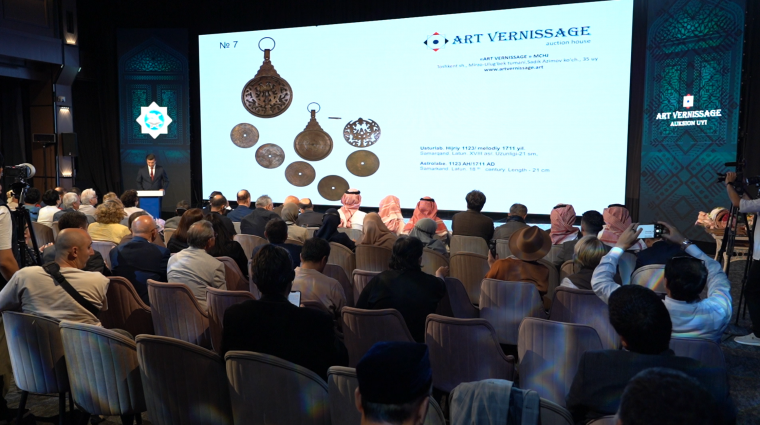
During the international expert forum “The Legacy of the Great Past — the Basis of an Enlightened Future” held in Tashkent, the country’s first auction house, Art Vernissage, presented the Center for Islamic Civilization in Uzbekistan with a rare 18th-century artifact a brass astrolabe created in Samarkand in 1711.

This 21-cm scientific instrument is equipped with interchangeable plates, allowing its use across different geographical latitudes. Thanks to this feature, the astrolabe was considered a multifunctional scientific device of its time.

For reference: in the Islamic world, the astrolabe was not merely an astronomical tool but a symbol that combined scientific progress, practical application, religious devotion, and artistic mastery. It served as a reliable guide not only for astronomers but also for travelers, sailors, and merchants.

Great scholars such as Al-Khwarizmi, Al-Fargani, and Al-Biruni described in detail the structure and use of the astrolabe in their works, further highlighting its prominent role in Islamic civilization.

“This perfect instrument, especially between the 15th and 18th centuries, was recognized as one of the most advanced devices in the world. We hope this astrolabe, now part of the Center’s exhibition, will reflect the profound knowledge and craftsmanship of Islamic scholars and leave a lasting impression on all visitors”, said Shavkat Sultanov, Director of the Art Vernissage auction house.

This donation has further enriched the Center’s exhibition and strengthened the country’s intellectual environment and cultural dialogue.

As a reminder: at the international forum held at the Center on September 26–27 this year, more than 100 experts scholars and researchers, heads of museums and libraries, and heritage specialists from over 20 countries took part. Representatives of prestigious institutions such as IRCICA, ICESCO, TURKSOY, the World Islamic League, Oxford University, the Russian Academy of Sciences, and Christie’s contributed with lectures and analyses.

The international community highly praised President Shavkat Mirziyoyev’s initiatives to preserve the humanistic essence of Islam and to foster intercultural dialogue.


Other posts

Pakistan and Uzbekistan have great potential for developing mutual trade

14.10.2025   45931   3 min.
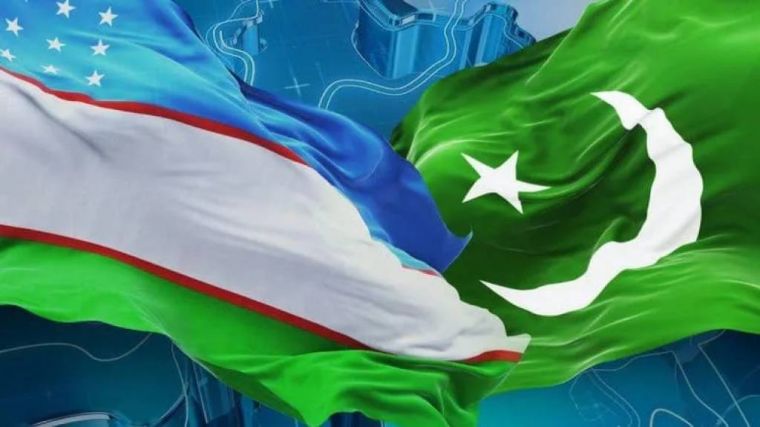
Pakistan and Uzbekistan have great potential for developing mutual trade

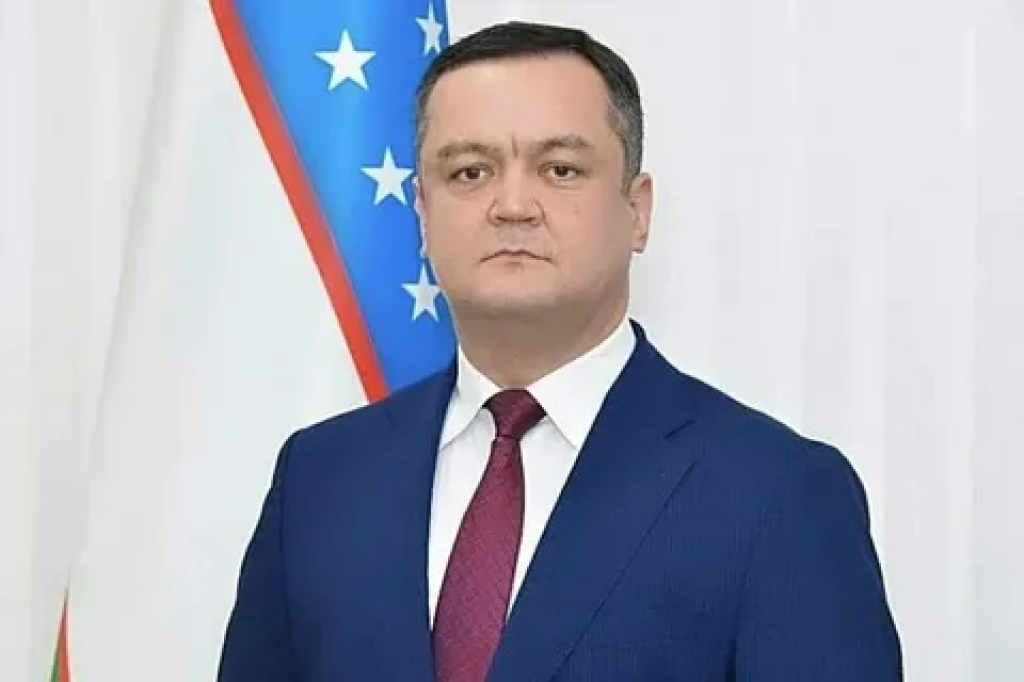
According to the Associated Press of Pakistan, Ambassador Extraordinary and Plenipotentiary of Uzbekistan to Pakistan Alisher Tukhtayev noted that there is great potential for increasing trade and investment between the two countries through the creation of joint ventures, in particular for the development of the textile industry.

During his visit to the All Pakistan Textile Mills Association (APTMA), Uzbekistan’s Ambassador invited representatives of the country’s textile companies to study the demand for high-quality products in Uzbekistan. He noted that Uzbekistan’s cheap energy and rich cotton reserves create attractive opportunities for Pakistani investors to develop trade and investment in the Uzbekistan market.

The Ambassador recalled that the two countries have signed several memoranda of understanding and agreements aimed at facilitating market access. Thanks to direct flights, the flight time was reduced by 90 minutes. Negotiations on a trilateral transit trade agreement involving Pakistan, Afghanistan, and Uzbekistan have entered a crucial phase. After reaching an agreement, trade flows will accelerate even more. Uzbekistan’s shopping malls have been opened in Karachi and Lahore. The next such center will be opened in Islamabad.

As A. Tukhtayev noted, Pakistan and Uzbekistan are “fraternal countries, not competitors”, so it is necessary to share resources, knowledge, and experience for mutual benefit. He invited the APTMA delegation to visit Uzbekistan, take part in exhibitions and conferences, and added that other trade delegations will visit this fraternal country in the coming months.

APTMA Chairman Kamran Arshad highlighted several existing problems in mutual trade, including the lack of official banking channels, delays in signing the free trade agreement, language barriers in labeling, issues with the Afghan transit route, and the slow construction pace of the Trans-Afghan Railway. He emphasized the importance of strengthening banking relations, concluding a free trade agreement as soon as possible, and establishing a regular exchange of trade delegations to realize the existing potential fully.

Another participant of the meeting, Asad Shafi, informed the delegation about the possibilities of Pakistan’s textile industry, noting that, despite centuries-old ties, the current volume of bilateral trade is only $125 million. He emphasized that his country aims to boost textile exports to $50 billion under the Sewing Revolution project and urged Uzbekistan to cooperate actively in this endeavor.

Muharrama Pirmatova, UzA