A unique “instrument of intellect” created in Samarkand in the 18th century at the Center for Islamic Civilization!
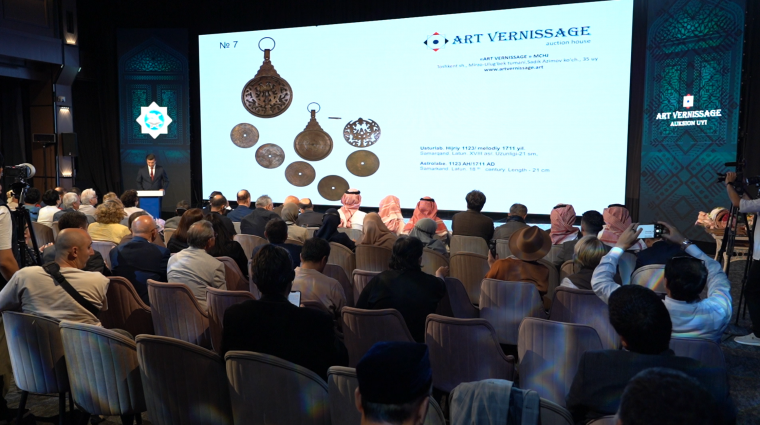
Uzbekistan’s first auction house — Art Vernissage — donates a unique artifact to the Center for Islamic Civilization
During the international expert forum “The Legacy of the Great Past — the Basis of an Enlightened Future” held in Tashkent, the country’s first auction house, Art Vernissage, presented the Center for Islamic Civilization in Uzbekistan with a rare 18th-century artifact a brass astrolabe created in Samarkand in 1711.
This 21-cm scientific instrument is equipped with interchangeable plates, allowing its use across different geographical latitudes. Thanks to this feature, the astrolabe was considered a multifunctional scientific device of its time.
For reference: in the Islamic world, the astrolabe was not merely an astronomical tool but a symbol that combined scientific progress, practical application, religious devotion, and artistic mastery. It served as a reliable guide not only for astronomers but also for travelers, sailors, and merchants.
Great scholars such as Al-Khwarizmi, Al-Fargani, and Al-Biruni described in detail the structure and use of the astrolabe in their works, further highlighting its prominent role in Islamic civilization.
“This perfect instrument, especially between the 15th and 18th centuries, was recognized as one of the most advanced devices in the world. We hope this astrolabe, now part of the Center’s exhibition, will reflect the profound knowledge and craftsmanship of Islamic scholars and leave a lasting impression on all visitors”, said Shavkat Sultanov, Director of the Art Vernissage auction house.
This donation has further enriched the Center’s exhibition and strengthened the country’s intellectual environment and cultural dialogue.
As a reminder: at the international forum held at the Center on September 26–27 this year, more than 100 experts scholars and researchers, heads of museums and libraries, and heritage specialists from over 20 countries took part. Representatives of prestigious institutions such as IRCICA, ICESCO, TURKSOY, the World Islamic League, Oxford University, the Russian Academy of Sciences, and Christie’s contributed with lectures and analyses.
The international community highly praised President Shavkat Mirziyoyev’s initiatives to preserve the humanistic essence of Islam and to foster intercultural dialogue.
Sheikh Bashir bin Ahmed Siddiq at Masjid an-Nabawi Passes Away After 60 Years of Service
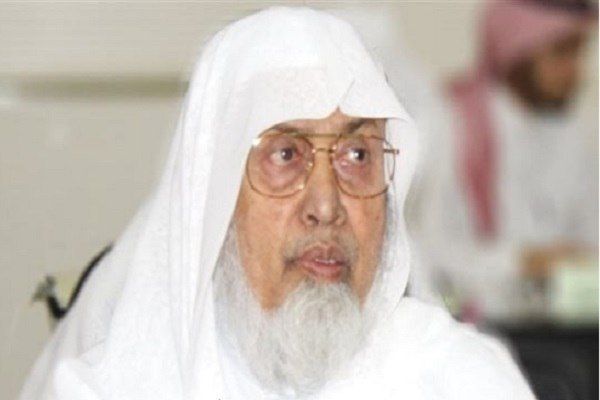
Sheikh Bashir bin Ahmed Siddiq, the senior Quran recitation teacher at Al-Masjid An-Nabawi, passed away on October 1, 2025, after dedicating sixty years to teaching at the Prophet’s Mosque. His students include some of the most prominent reciters and Islamic scholars of recent generations, forming a legacy that extends across the Muslim world.
Among his notable students are former Holy Mosques Imams Sheikh Muhammad Ayyoub and Sheikh Ali Jaber, current An-Nabawi Imams Sheikh Abdul Muhsin Al-Qasim and Sheikh Salah Al-Budair, and Sheikh Muhammad Al-Mukhtar Al-Shanqiti of the Senior Scholars Council. These figures represent just a portion of the thousands who studied under Sheikh Bashir’s guidance at the Medina mosque.
Sheikh Bashir established himself as a pillar of Quranic education within the sacred premises of the Prophet’s Mosque. His teaching career spanned six decades, during which he maintained a consistent presence in the mosque’s educational circles.
Students traveled from various countries specifically to learn Quran recitation from him, drawn by his reputation for precision and deep knowledge of tajweed rules.
The Sheikh’s methodology combined traditional teaching techniques with deep scholarly insight, creating a learning environment that produced some of the most recognized voices in Islamic recitation.
His students now lead prayers at Islam’s holiest sites and hold positions on scholarly councils, continuing the traditions he preserved and taught.