The site is working in test mode!
27 November, 2026   |   17 Jumādá al-ākhirah, 1448

Tashkent city
Fajr
06:01
Sunrise
07:20
Dhuhr
12:16
Asr
15:15
Maghrib
16:59
Isha
18:16
Bismillah
27 November, 2026, 17 Jumādá al-ākhirah, 1448

A unique “instrument of intellect” created in Samarkand in the 18th century at the Center for Islamic Civilization!

03.10.2025   44500   2 min.
A unique “instrument of intellect” created in Samarkand in the 18th century at the Center for Islamic Civilization!

Uzbekistan’s first auction house — Art Vernissage — donates a unique artifact to the Center for Islamic Civilization

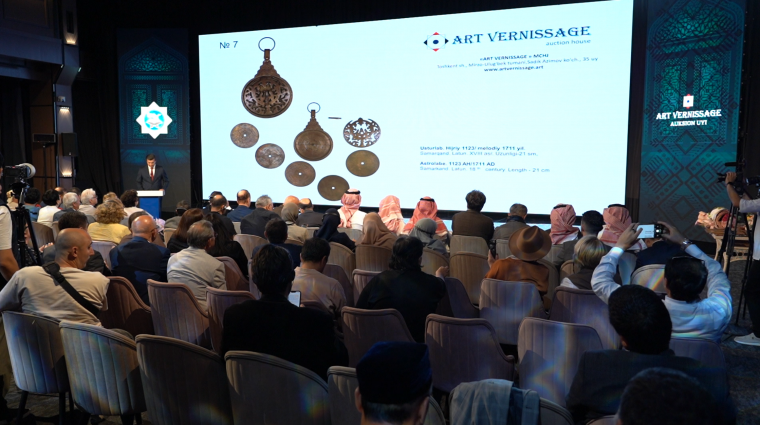
During the international expert forum “The Legacy of the Great Past — the Basis of an Enlightened Future” held in Tashkent, the country’s first auction house, Art Vernissage, presented the Center for Islamic Civilization in Uzbekistan with a rare 18th-century artifact a brass astrolabe created in Samarkand in 1711.

This 21-cm scientific instrument is equipped with interchangeable plates, allowing its use across different geographical latitudes. Thanks to this feature, the astrolabe was considered a multifunctional scientific device of its time.

For reference: in the Islamic world, the astrolabe was not merely an astronomical tool but a symbol that combined scientific progress, practical application, religious devotion, and artistic mastery. It served as a reliable guide not only for astronomers but also for travelers, sailors, and merchants.

Great scholars such as Al-Khwarizmi, Al-Fargani, and Al-Biruni described in detail the structure and use of the astrolabe in their works, further highlighting its prominent role in Islamic civilization.

“This perfect instrument, especially between the 15th and 18th centuries, was recognized as one of the most advanced devices in the world. We hope this astrolabe, now part of the Center’s exhibition, will reflect the profound knowledge and craftsmanship of Islamic scholars and leave a lasting impression on all visitors”, said Shavkat Sultanov, Director of the Art Vernissage auction house.

This donation has further enriched the Center’s exhibition and strengthened the country’s intellectual environment and cultural dialogue.

As a reminder: at the international forum held at the Center on September 26–27 this year, more than 100 experts scholars and researchers, heads of museums and libraries, and heritage specialists from over 20 countries took part. Representatives of prestigious institutions such as IRCICA, ICESCO, TURKSOY, the World Islamic League, Oxford University, the Russian Academy of Sciences, and Christie’s contributed with lectures and analyses.

The international community highly praised President Shavkat Mirziyoyev’s initiatives to preserve the humanistic essence of Islam and to foster intercultural dialogue.


Other posts

Rich Historical and Spiritual Heritage of the Namangan Region attracts great interest in Pakistan

16.11.2026   145863   3 min.
Rich Historical and Spiritual Heritage of the Namangan Region attracts great interest in Pakistan

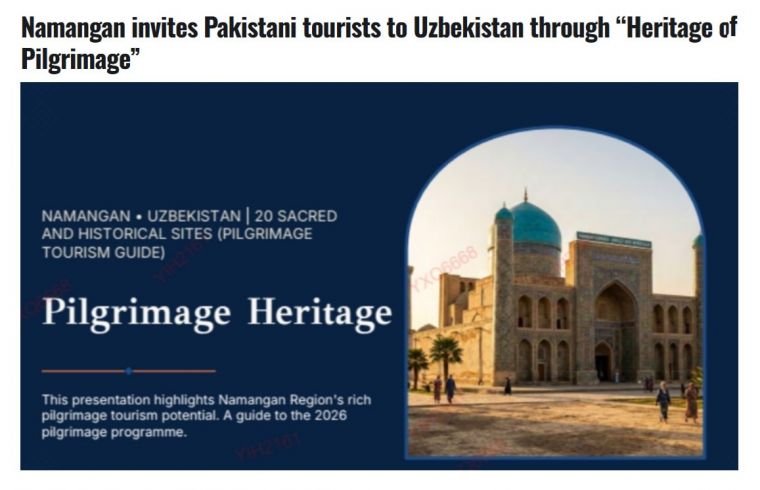
Pakistani media outlets have published a series of articles highlighting Uzbekistan’s tourism potential, particularly that of Namangan Region and the “Heritage of Pilgrimage” program featuring pilgrimage tourism routes, reports Dunyo IA.

Articles entitled “Namangan Invites Pakistani Tourists to Uzbekistan through the “Heritage of Pilgrimage” Tourism Routes Program” have appeared on the websites of the “Associated Press of Pakistan” and “Global News Pakistan”, in the newspapers “The Nation”, “World Tribune Pakistan” and “Pakistan Observer”, as well as on the online platforms “Media Online Today”, “Newz Todays”, “The World News”, “Margalla Tribune”, “Pakistani News” and “Daily The Patriot”. Articles have also been shared on social media, including Facebook page of “The Nation”, Facebook and Instagram page of “Global News Pakistan”.

Publications note that Uzbekistan’s rich historical and spiritual heritage, its sacred sites and culture are attracting considerable interest among foreign tourists. To attract more pilgrims from Muslim countries, a programme of tourism routes entitled “Heritage of Pilgrimage” has been developed in Namangan Region. “Program, developed at the initiative of the Namangan Regional Administration, is designed to introduce foreign tourists to the region’s rich religious, historical and cultural heritage. Visitors will not only have the opportunity to visit sacred pilgrimage sites, but also to gain a deeper insight into the centuries-old history of the Fergana Valley, its national traditions and spiritual values”, publications state.

Routes cover historical monuments and pilgrimage sites across various districts and cities of the region. Key destinations include the “Aksikent” Archaeological Park in Turakurgan District; “Bibiona Mazar” in Chust District; the “Sultan Uvays Qaraniy” and “Bibi Naima Ona” pilgrimage sites in Chortoq District; the “Mothers’ Tears” Complex in Pop District; the “Eleven Ahmad” pilgrimage site in Davlatabad District and the “Mulla Kyrgyz Okhund” Complex in Namangan city. “Program also encompasses more than 20 other major pilgrimage sites and cultural heritage attractions across the region”, Pakistani media outlets note.

For Pakistan, where the majority of the population is Muslim, Namangan’s pilgrimage sites may hold particular appeal. Uzbekistan and Pakistan share common religious values, a rich historical heritage, deep respect for great scholars and longstanding spiritual traditions. “From this perspective, the programme will serve as an important guide to taking tourism and cultural cooperation between the two countries to a new level”, Pakistani media outlets write.