News
Pakistani Media: First International Forum on Islamic Civilization in Tashkent defines Global Agenda
15.07.2026
59301
1 min.
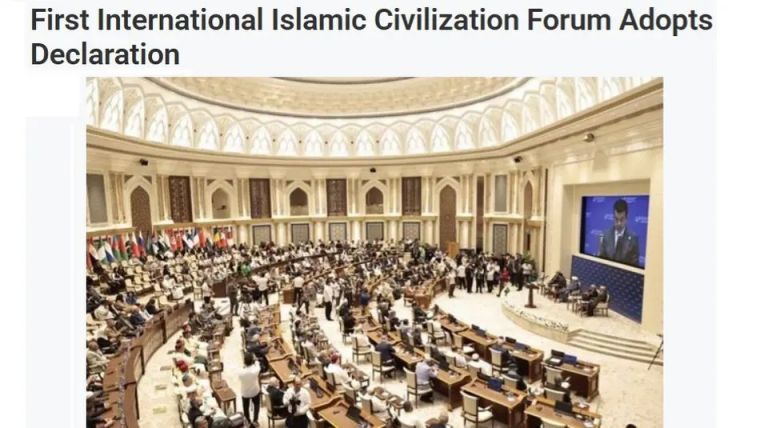
Pakistani media outlets, including “Diplomatic News Agency”, “Islamabad Post”, “News Network Pakistan”, “The World News” and “Infora News”, have published the final Declaration adopted by the participants of the First International Forum of Islamic Civilization held in Tashkent, reports Dunyo IA.
Publications note that the forum participants reaffirmed their commitment to the principles of peace, tolerance, enlightenment, intercultural, and interreligious dialogue and recognized the historical contribution of Uzbekistan to the development of Islamic and global civilization. The declaration expresses gratitude to the President of Uzbekistan Shavkat Mirziyoyev, for the initiative put forward at the 72nd session of the UN General Assembly, aimed at studying, preserving, and popularizing the heritage of Islamic civilization.
Particular attention is paid to the creation of the Center of Islamic Civilization in Uzbekistan and the holding of the forum as a practical embodiment of this initiative. In addition, the document outlines a number of international projects, as well as the development of a joint roadmap until 2030 to implement the adopted decisions.
SHARE INFORMATION ON SOCIAL NETWORKS



 Iman
Iman  Prayer
  Fasting
  Zakat
Zakat  Haj
Haj  Qur`an
  Lessons of Islam
  Contact