Sheikh Bashir bin Ahmed Siddiq at Masjid an-Nabawi Passes Away After 60 Years of Service
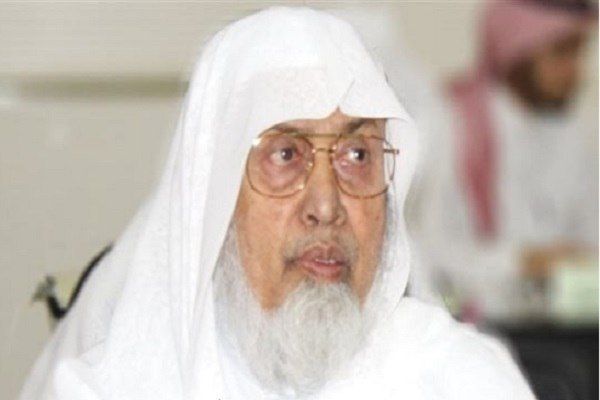
Sheikh Bashir bin Ahmed Siddiq, the senior Quran recitation teacher at Al-Masjid An-Nabawi, passed away on October 1, 2025, after dedicating sixty years to teaching at the Prophet’s Mosque. His students include some of the most prominent reciters and Islamic scholars of recent generations, forming a legacy that extends across the Muslim world.
Among his notable students are former Holy Mosques Imams Sheikh Muhammad Ayyoub and Sheikh Ali Jaber, current An-Nabawi Imams Sheikh Abdul Muhsin Al-Qasim and Sheikh Salah Al-Budair, and Sheikh Muhammad Al-Mukhtar Al-Shanqiti of the Senior Scholars Council. These figures represent just a portion of the thousands who studied under Sheikh Bashir’s guidance at the Medina mosque.
Sheikh Bashir established himself as a pillar of Quranic education within the sacred premises of the Prophet’s Mosque. His teaching career spanned six decades, during which he maintained a consistent presence in the mosque’s educational circles.
Students traveled from various countries specifically to learn Quran recitation from him, drawn by his reputation for precision and deep knowledge of tajweed rules.
The Sheikh’s methodology combined traditional teaching techniques with deep scholarly insight, creating a learning environment that produced some of the most recognized voices in Islamic recitation.
His students now lead prayers at Islam’s holiest sites and hold positions on scholarly councils, continuing the traditions he preserved and taught.
Uzbek scholars research the heritage of Babur and the Baburids in Pakistan
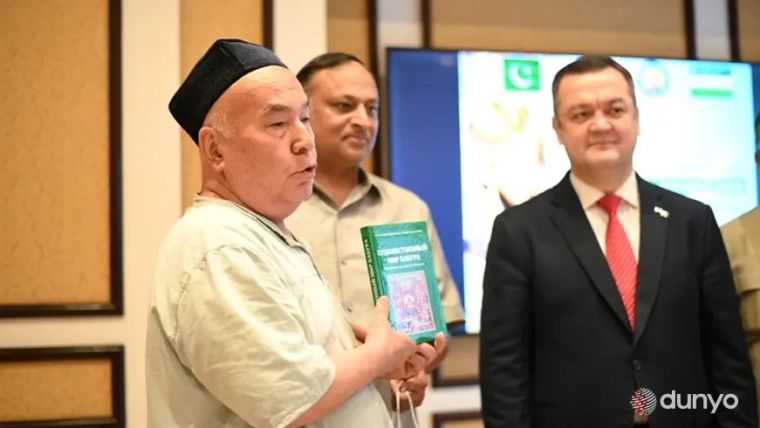
On the initiative of the Embassy of Uzbekistan in Pakistan, jointly with the Babur International Public Foundation, a visit of a delegation of Uzbek historians and Babur scholars took place, reports Dunyo IA.
Purpose of the trip is to study the historical and cultural heritage of Babur and the Baburids, historical sources, manuscripts, exhibits and artifacts preserved in Pakistan, as well as to develop scientific and cultural cooperation between the institutions of the two countries.
In Lahore, the delegation visited the Lahore Museum, Islamic Gallery, research institutions and historical monuments of the Baburid era. Issues of scientific and academic cooperation were discussed with the leadership of the University of the Punjab. Jointly with the Baburid Heritage Center at the university, a scientific and practical conference dedicated to the 500th anniversary of the Baburid dynasty was held.
In Islamabad, the Uzbek scholars visited the National Language Promotion Department of Pakistan, Quaid-i-Azam University, Allama Iqbal Open University, National Library of Pakistan and a number of scientific institutions, where they familiarized themselves with manuscripts, exhibits of the Baburid era, and other historical sources.
Delegation was also received by the Coordinator General of the OIC Standing Committee on Scientific and Technological Cooperation (COMSTECH), Muhammad Iqbal Choudhary.
The sides discussed deepening the study and preservation of the Baburid heritage, as well as its popularization within scientific circles and among the general public. An agreement was reached to hold a representative international scientific and practical conference.
The main event of the visit was the conference titled “Zahiriddin Muhammad Babur: Shared Civilizational Heritage and a Bridge of Uzbek-Pakistani Relations”.
Conference was attended by Farah Naz Akbar, Parliamentary Secretary for the Ministry of National Heritage and Culture of Pakistan; Alisher Tukhtaev, Ambassador of Uzbekistan; Ramzan Mughal, Head of the Babur Forum in Pakistan; as well as historians, Babur scholars and young researchers.
Participants emphasized the importance of the joint study of the historical and cultural heritage of Babur and the Baburids and the development of scientific ties between Uzbekistan and Pakistan.
As part of the further program of the delegation, research on a number of historical monuments of the Baburid era in the Punjab province is scheduled.