Andijan to host a seminar for imam-khatibs
06.10.2025
36609
1 min.
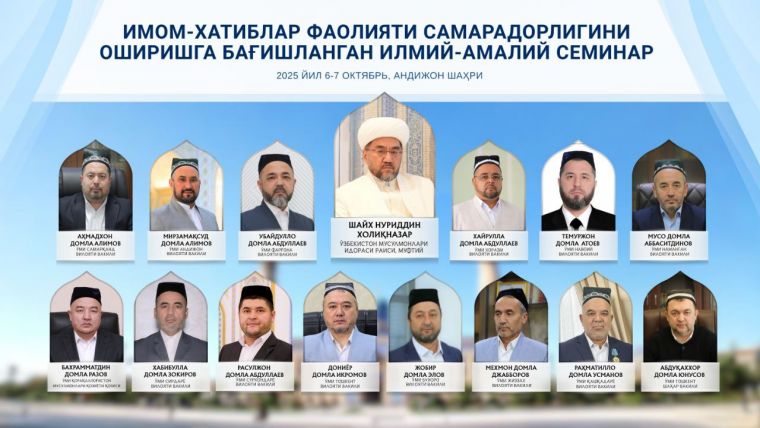
On October 6–7, a scientific and practical seminar dedicated to improving the efficiency of imams-khatibs’ services will be held in Andijan region. The event will be attended by the Chairman of the Muslim Board of Uzbekistan, Mufti Sheikh Nuriddin Kholiqnazar, as well as the chief of Qaziyat of the Muslims of Karakalpakstan, chief imam-khatibs of Tashkent city and other regions.
The seminar will focus on exchanging experiences, conducting outreach activities, improving the professional skills of imams-khatibs, communicating with the public, addressing the needs of believers, and sharing modern methods and approaches for implementing charitable initiatives.
Participants will also be presented with the activities of the Andijan regional office of the Muslim Board of Uzbekistan, new working procedures, effective preaching methods, digital finance and management practices, quality media content production, and advanced approaches in handling citizens’ appeals.
Press Service of the Muslim Board of Uzbekistan
SHARE INFORMATION ON SOCIAL NETWORKS



 Iman
Iman  Prayer
  Fasting
  Zakat
Zakat  Haj
Haj  Qur`an
  Lessons of Islam
  Contact