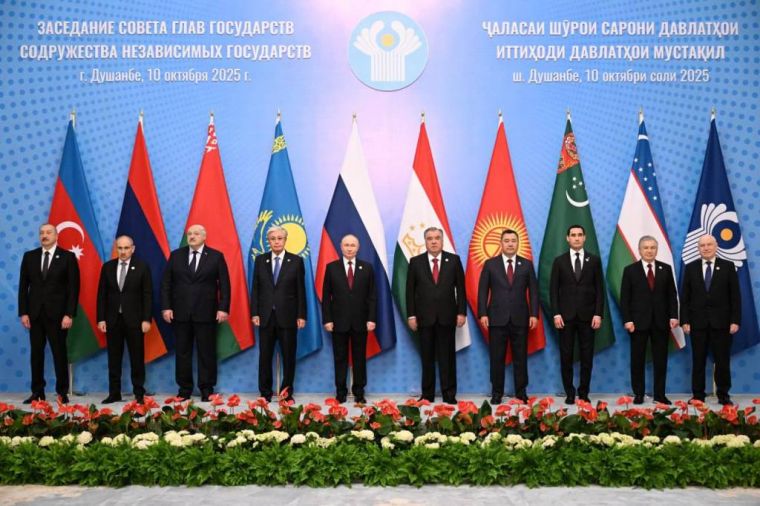
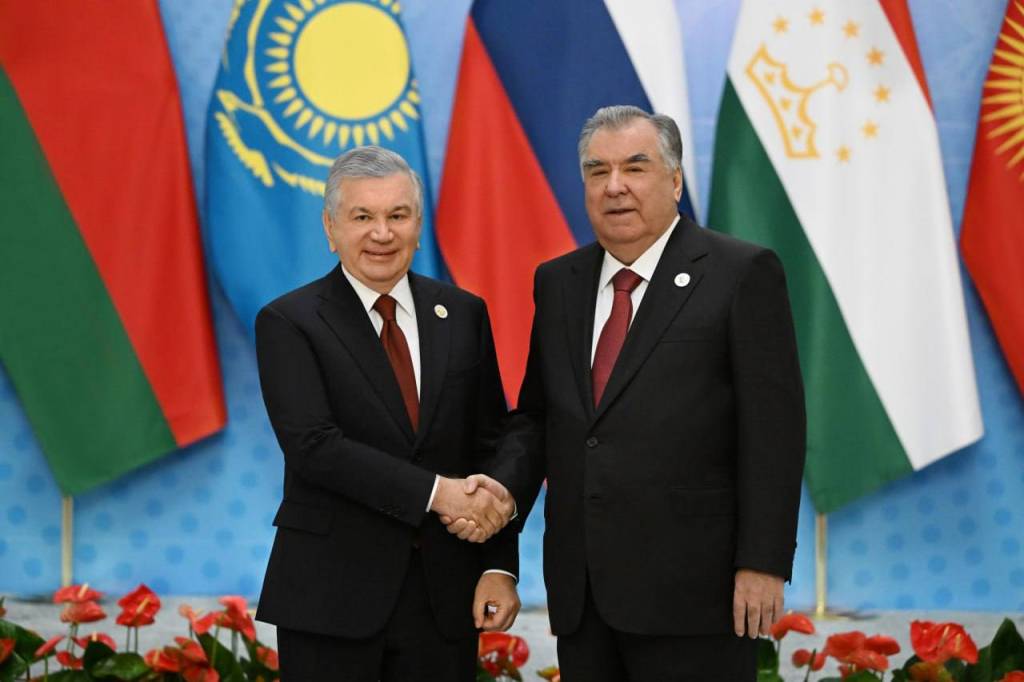
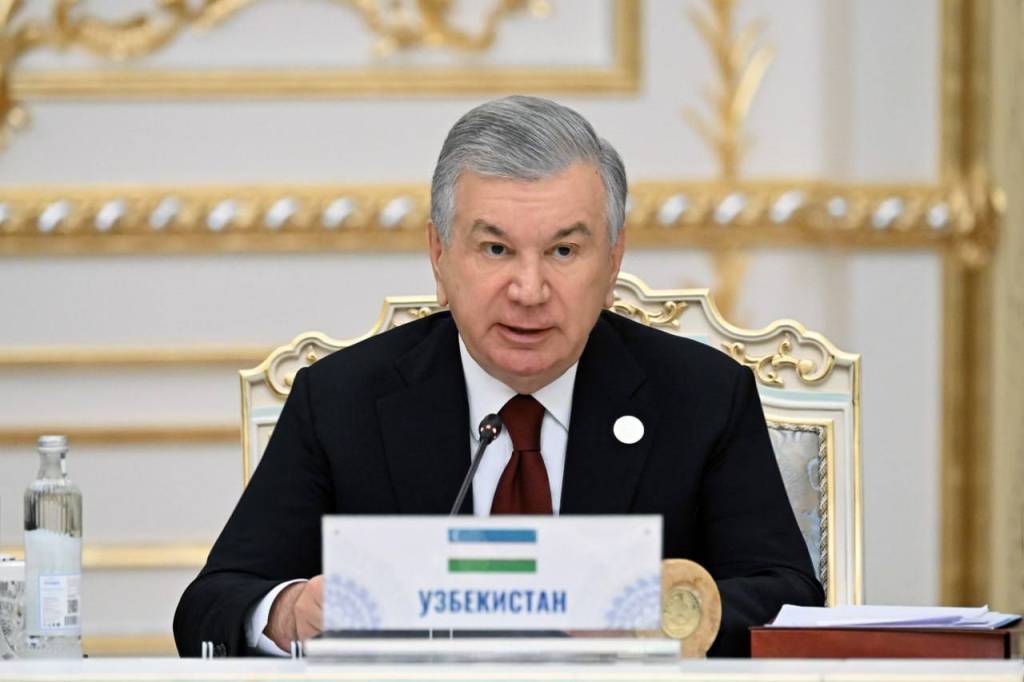
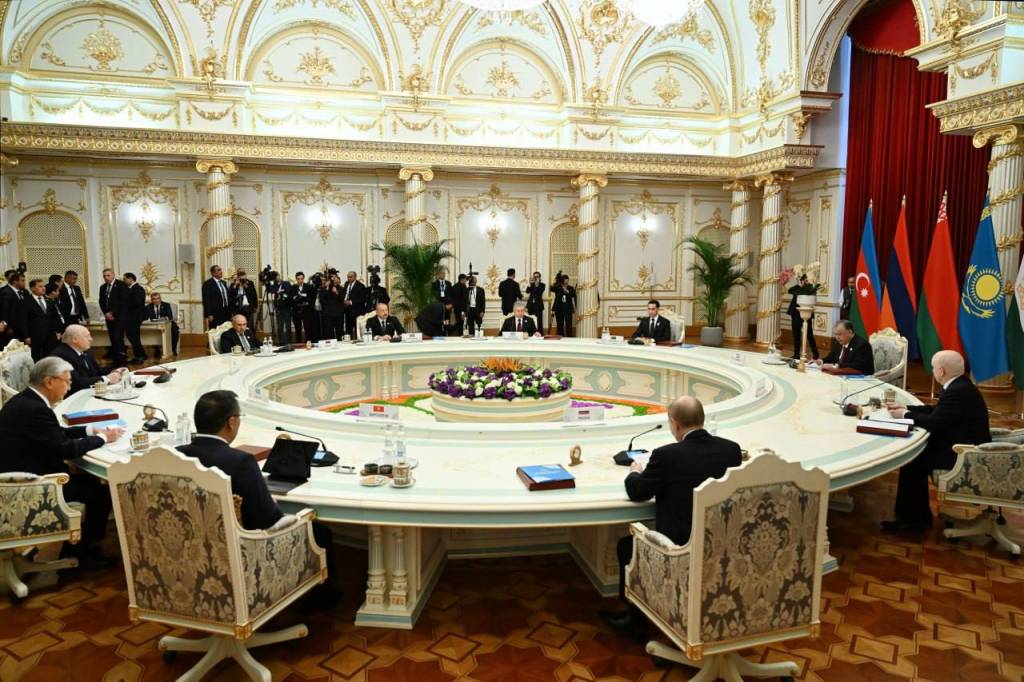
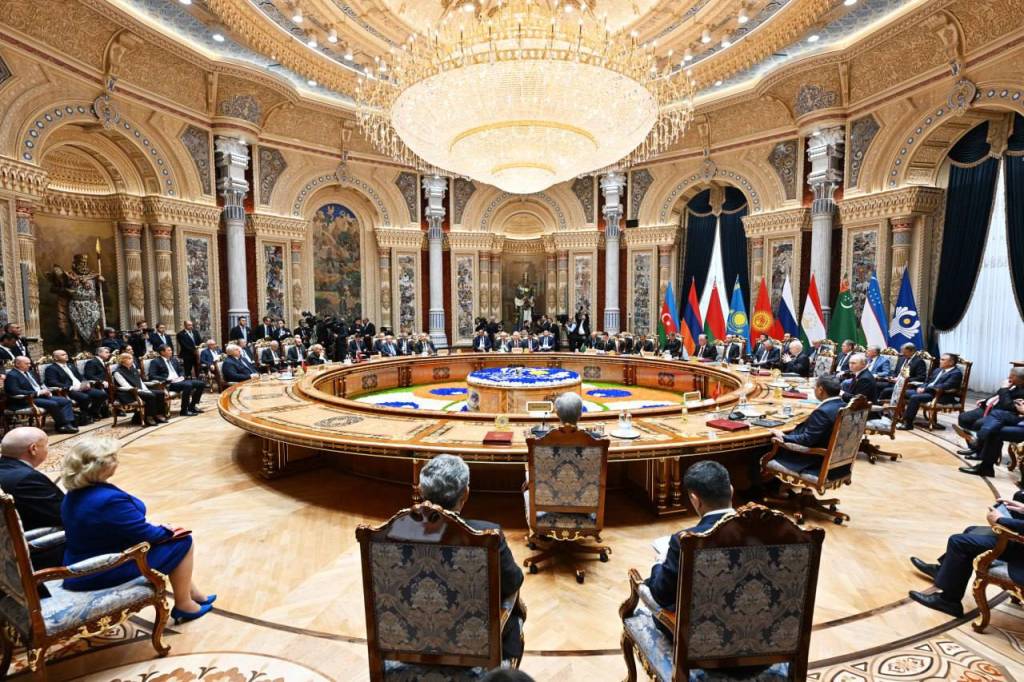
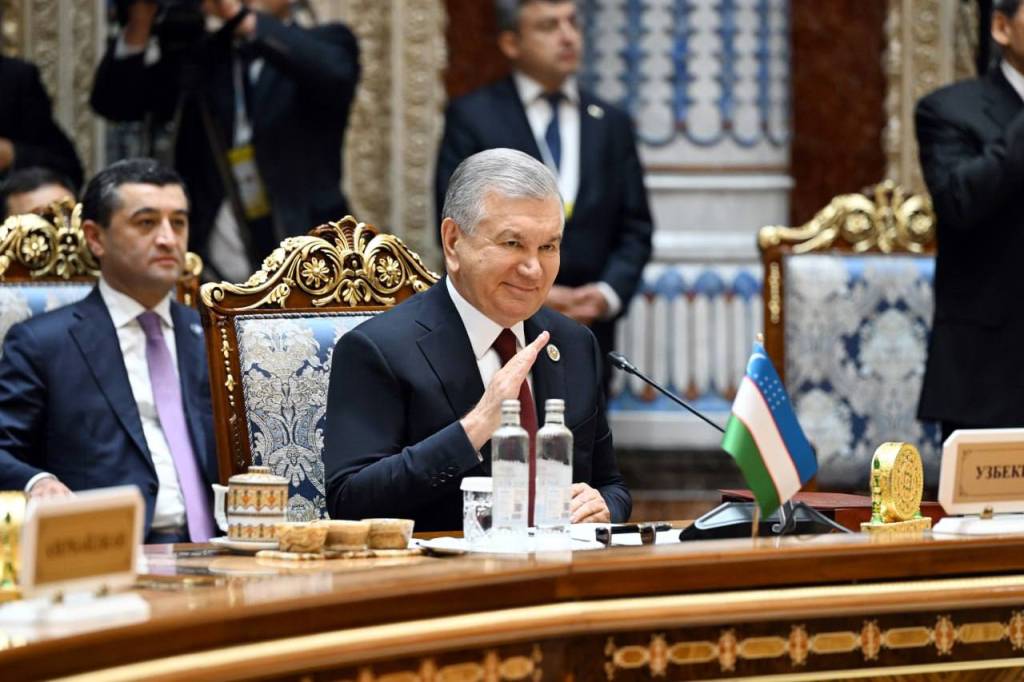
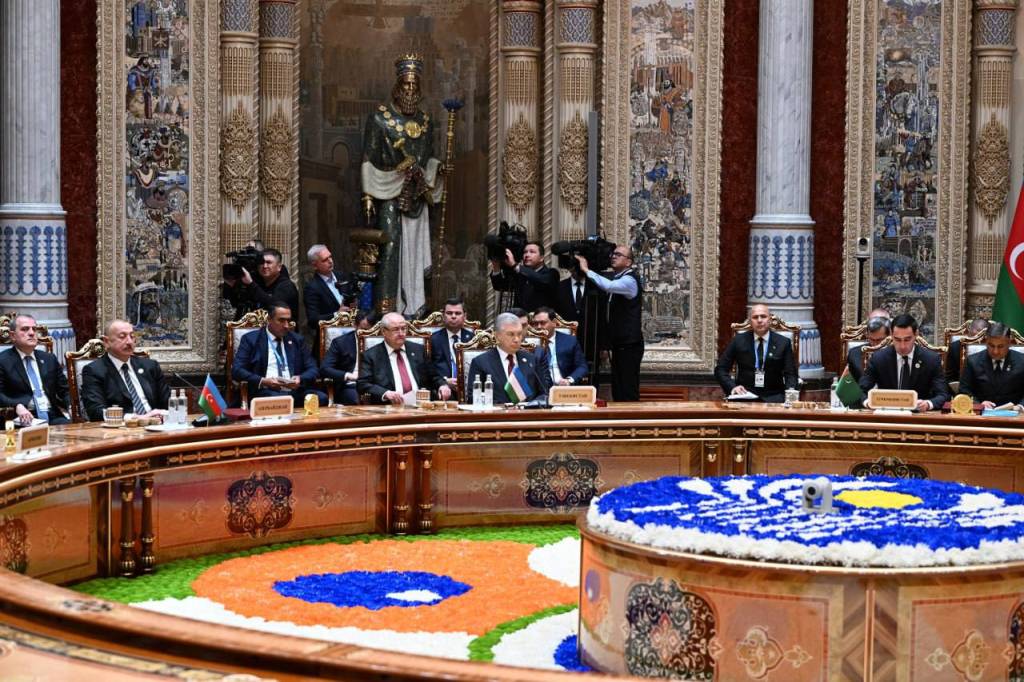
President of Uzbekistan Shavkat Mirziyoyev today participated in the meeting of the Council of Heads of State of the Organization of Turkic States (OTS), held in the city of Gabala, reports Dunyo IA correspondent.
According to the press service of the Head of our state, The event, chaired by the President of the Republic of Azerbaijan Ilham Aliyev, was also attended by the President of the Republic of Kazakhstan Kassym-Jomart Tokayev, the President of the Kyrgyz Republic Sadyr Japarov, the President of the Republic of Türkiye Recep Tayyip Erdoğan, the National Leader of the Turkmen People, Chairman of the Halk Maslakhaty of Turkmenistan Gurbanguly Berdimuhamedov, Prime Minister of Hungary Viktor Orbán, Secretary General of the Organization of Turkic States Kubanychbek Omuraliev, and other high-ranking officials.
In line with the agenda, participants exchanged views on the current state and prospects of multifaceted cooperation within the Organization and discussed pressing issues of practical interaction among member countries.
At the beginning of his speech, the President of Uzbekistan expressed sincere gratitude to the President of Azerbaijan for the excellent organization of the summit in Gabala. This city has long been a key trade and cultural center along the Great Silk Road.
"In recent years, thanks to your personal initiative, we have visited many regions of modern Azerbaijan. We have witnessed the gradual improvement of the beautiful Karabakh, and we see the tremendous creative work taking place in the cities of Shusha, Khankendi, and Aghdam. As your close friends, we are, of course, very pleased with these positive developments", the Head of State emphasized.
It was particularly noted that the Declaration of Peace signed between Azerbaijan and Armenia opens up broad opportunities for the member states of the Organization to strengthen cooperation in the fields of trade, economy, transport, and humanitarian exchange.
The President of Uzbekistan also expressed gratitude to the President of the Kyrgyz Republic Sadyr Japarov for his effective chairmanship of the Organization of Turkic States and for his valuable contribution to elevating cooperation within the Organization to a new level.
Turning to the agenda of the summit, the Leader of Uzbekistan provided a brief assessment of the current international situation, emphasizing that the present meeting is taking place amid complex geopolitical transformations and growing security challenges both globally and regionally.
"At the recent jubilee session of the United Nations General Assembly in New York, the speeches and approaches of world leaders once again demonstrated the absence of a unified position regarding the architecture of modern global politics and security", the Head of State stated.
In this context, the President of Uzbekistan once again emphasized the need for deep reform and improvement of the global governance system, strengthening the role of the United Nations and its Security Council, and amplifying the voice of developing countries in international affairs.
It was noted that the escalating conflicts and wars across the Eurasian continent, with no clear end in sight, are having a negative impact on the member states of the Organization of Turkic States. The President expressed serious concern over the tragedy in the Gaza Strip, the situation surrounding Ukraine, issues related to the Iranian nuclear program, and the stability of Afghanistan.
The Head of State welcomed the efforts and new initiatives of leading world powers aimed at building a just global order based on mutual trust and security.
To enable a comprehensive analysis of the global situation and the adoption of necessary coordinated measures, the President of Uzbekistan proposed holding joint meetings of the foreign ministers and heads of security services of the OTS member states, with the first session in this format scheduled for next year in the city of Samarkand.
The Leader of Uzbekistan also highlighted the growing role and significance of the Organization of Turkic States, which in a short period has become one of the rapidly developing and influential international structures. This is evidenced by the expansion of high-level political dialogue, strengthening mutual trust, and the active implementation of joint projects and humanitarian programs.
Currently, the OTS framework encompasses practical cooperation in more than 35 areas. The volume of mutual trade continues to grow steadily and is expected to double by 2030.
In the main part of his speech, the President of Uzbekistan focused on specific issues related to the expansion of practical cooperation.
It was emphasized that the top priority is to enhance the authority and capacity of the Organization of Turkic States (OTS) and to strengthen its role in the near future as a platform for practical cooperation.
"In this regard, we support the early coordination and adoption of the Treaty on Strategic Partnership, Eternal Friendship, and Brotherhood among Turkic States. Undoubtedly, as the key political document guiding the development of our cooperation, this important treaty will serve as a solid foundation for further rapprochement among our brotherly nations and for elevating practical cooperation to a new level", the Head of State stated.
To broaden and accelerate the dynamics of multifaceted partnership, the President of Uzbekistan proposed the development of the OTS Development Strategy until 2030, along with a separate roadmap for its implementation. He emphasized the need for these documents to include specific areas and measures of cooperation.
First, he highlighted the development of trade and economic relations, as well as the deepening of industrial cooperation.
The President of Uzbekistan once again advocated for the creation, in the near future, of a Space of New Economic Opportunities within the OTS framework, aimed at establishing the most favorable conditions, as well as the legal and infrastructural foundations for trade, business, and mutual investment.
To ensure the consistent development of practical cooperation and the formulation of concrete projects, particularly in aligning plans within the framework of the Turkic Investment Fund, the President of Uzbekistan emphasized the importance of establishing a Permanent Council of Turkic States for Economic Partnership. This permanent body, he suggested, could be headed by the Deputy Prime Ministers of the member countries. It was proposed that the Council’s Project Office be located in Tashkent.
The Head of State noted that the Council’s ongoing focus should include the following key issues:
– the creation of a Turkic States Industrial Alliance, aimed at promoting cooperative projects among leading companies in the fields of mechanical engineering, mining, electrical engineering, petrochemistry, pharmaceuticals, light and food industries, and the production of construction materials;
– the implementation of the electronic system "Turkic Green Corridors" to increase mutual trade volumes and harmonize technical regulations;
– the establishment of a Green Transformation consortium for the joint implementation of projects in green energy, green hydrogen, and ammonia production, aimed at attracting advanced technologies, standards, and expertise, as well as promoting the wide use of public-private partnership mechanisms;
– the development of a strategic mineral and raw materials base with a focus on producing value-added products.
At the same time, the President of Uzbekistan emphasized the importance of adopting a practical Cooperation Program based on the principle of "raw materials – processing – science and technology – finished products".
Second, ensuring food security. Given their collective potential, the member states of the Organization of Turkic States (OTS) can become global leaders in the production and supply of organic agricultural products.
According to FAO analysis, the global organic food market today exceeds $225 billion and is expected to grow by around 10 percent annually in the coming years.
To produce high-quality and competitive organic products, the President of Uzbekistan emphasized the need to strengthen scientific research and crop breeding, as well as industrial cooperation and logistical connectivity.
"In the future, our organic products could enter the global market under a single unified brand. In this regard, we propose establishing an Expert Working Group under the supervision of the agriculture ministers of our countries, selecting the first pilot projects, and moving forward with their implementation", the President of Uzbekistan noted.
Third, strengthening transport connectivity and coordinating policy on the development of international transit corridors.
Supporting the plans for the consistent development of the Middle Corridor, the President of Uzbekistan emphasized the importance of ensuring the route’s competitiveness and creating the most favorable conditions for the business community.
In this context, he emphasized the importance of applying optimal transit tariffs, developing modern transport infrastructure, and implementing digital customs procedures.
If the Middle Corridor is connected with the China – Kyrgyzstan – Uzbekistan railway, currently under construction, and the prospective Trans-Afghan Corridor, a multi-sectoral strategic network of main transit routes will be established across a vast region.
All these transport-related initiatives are planned to be comprehensively discussed during the International Forum on Multimodal Transport, which will take place in Tashkent on November 12.
Fourth, introducing effective financial instruments for implementing large-scale industrial and infrastructure projects.
The President of Uzbekistan advocated for the expansion of the Turkic Investment Fund’s activities and the adoption of a Strategic Cooperation Program with the Islamic Development Bank (IsDB), the European Bank for Reconstruction and Development (EBRD), and other international and national financial institutions.
Fifth, the development of artificial intelligence, digitalization, and the creative economy, which are becoming a key driver of sustainable development.
To consolidate efforts in these areas, the President of Uzbekistan proposed adopting a roadmap for implementing projects in artificial intelligence and the creative economy.
The Head of State also proposed the initiative to host an International Exhibition of the Turkic World in Uzbekistan.
Sixth, elevating cooperation in science and education to a new level, based on the principle of "Enlightenment Against Ignorance".
It was noted that in 2025-2026, Uzbekistan will chair the Turkic Universities Union, which unites over 100 higher education institutions. The General Assembly of the Union is scheduled to take place next week in Tashkent.
During its chairmanship, Uzbekistan intends to organize the Days of Turkic Science and Innovation.
The President of Uzbekistan also announced that, to strengthen cooperation in the scientific and educational spheres and encourage research by talented scholars, the International University of Turkic States is being established in Uzbekistan. The Head of State proposed developing a Joint Research Support Program based on this institution.
Seventh, preventing the spread of alien and destructive ideologies among youth.
In this regard, it was proposed to adopt an Action Plan to Combat Extremist and Radical Ideologies within the Turkic States.
Uzbekistan will also continue an active and constructive dialogue aimed at combating all forms of Islamophobia.
Additionally, it was noted that an essential step within the Organization would be the development of joint measures for environmental education among young people.
The President of Uzbekistan also drew attention to another significant initiative.
"Next year, we will widely celebrate the 585th anniversary of the great poet and thinker Alisher Navoi and the 885th anniversary of the great Azerbaijani poet Nizami Ganjavi. To further promote their ideas of humanism, friendship, and brotherhood, as well as their invaluable literary heritage, we propose holding an international scientific conference on the legacy of Nizami Ganjavi and Alisher Navoi in the spiritual life of the Turkic World", the Head of State stated.
At the meeting, heads of delegations from foreign countries also delivered their remarks.
Following the summit, a package of joint decisions and documents was adopted, aimed at expanding mutually beneficial cooperation among the member states of the Organization of Turkic States.



 Iman
Iman  Prayer
  Fasting
  Zakat
Zakat  Haj
Haj  Qur`an
  Lessons of Islam
  Contact