Uzbekistan participates in "Riyadh International Book Fair 2025" as a key participant
08.10.2025
42236
2 min.
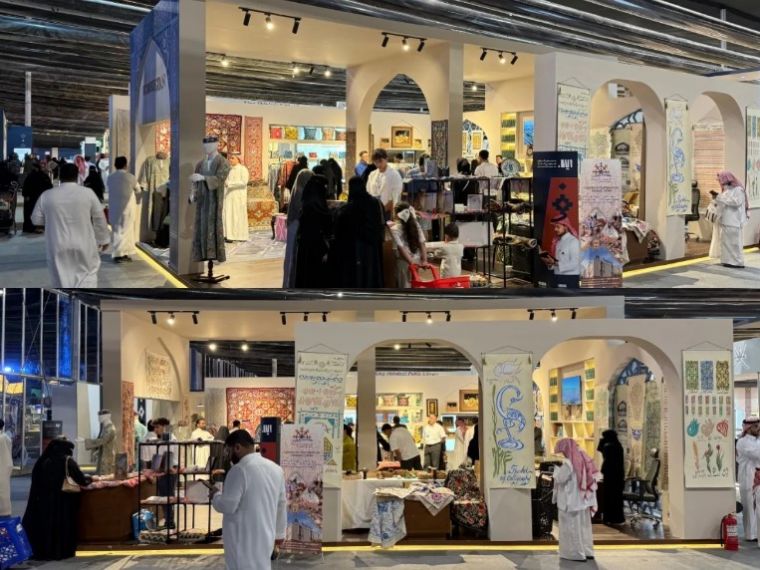
The Republic of Uzbekistan is proudly represented by its national pavilion at the "Riyadh International Book Fair 2025", taking place in the capital of the Kingdom of Saudi Arabia, reports Dunyo IA correspondent.
The event is organized with the support of the Ministry of Culture of the Republic of Uzbekistan, the Embassy of the Republic of Uzbekistan in Riyadh, Alisher Navoi National Library, the Center of Islamic Civilization, Tashkent State University of Oriental Studies, and leading publishing houses of the country.
The pavilion showcases both contemporary and classical publications, scholarly works, and illustrated albums dedicated to the history, culture, and spiritual heritage of the Republic of Uzbekistan. Of particular interest to visitors is a replica of the renowned Ottoman Quran preserved in Tashkent, as well as rare facsimiles of ancient manuscripts and archival documents.
In addition to the book exhibition, visitors have the opportunity to experience the richness of Uzbek culture and folk art: traditional suzani embroidery and national jewelry are on display, alongside works by miniature artists and artisans, ceramics, and traditional clothing. The pavilion also features calligraphy art, offers tastings of Uzbek dried fruits and natural sweets, and hosts an exhibition of folk crafts and decorative-applied arts.
Uzbekistan pavilion attracts significant attention from visitors. It is frequented not only by general attendees of the fair but also by entrepreneurs who take the opportunity to explore the country’s cultural exhibits while simultaneously engaging in business negotiations aimed at enhancing trade, economic, and investment cooperation between Uzbekistan and the Kingdom of Saudi Arabia.
SHARE INFORMATION ON SOCIAL NETWORKS



 Iman
Iman  Prayer
  Fasting
  Zakat
Zakat  Haj
Haj  Qur`an
  Lessons of Islam
  Contact