The first steps of diplomacy: The correspondence between Timur and Charles VI
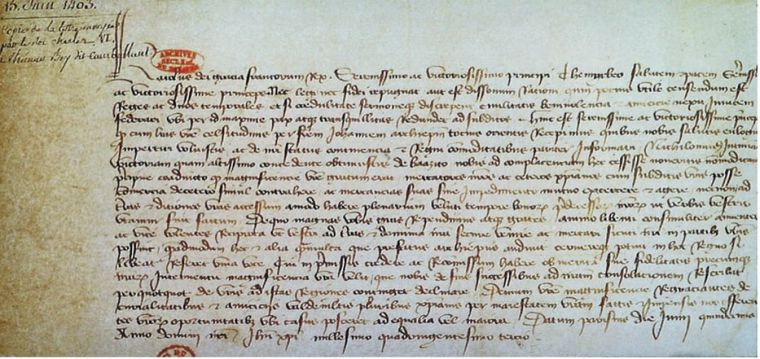
At the end of the 14th century, the correspondence between the great commander Amir Timur and King Charles VI of France, along with the memoirs of the Vatican envoy Ivan Grinlon about Timur’s court, are presented at the Center for Islamic Civilization in Uzbekistan. These documents represent not only a unique chapter in the history of diplomacy but also invaluable sources that introduce our nation’s scientific and cultural heritage to the world.
In the “Second Renaissance” section of the Center’s museum, early Islamic sources, medieval scholars’ manuscripts, and rare documents from the Timurid era are brought together in one space.
In the exhibition dedicated to the era of Amir Timur, every aspect of the sovereign’s activity state administration, domestic policy, and international relations is presented on a scholarly basis. Among the displayed materials are decrees, letters, and royal correspondences written in the Arabic script. One of them is a decree granted by Amir Timur to the descendants of the sayyids of Khwarazm, reflecting the great ruler’s profound respect for scholars.
“Each era has its own laws: over time, the number of artifacts decreases. Yet the survival of original sources from the period of Amir Timur is a great fortune for history”, says Sanjar G‘ulomov, Senior Research Fellow at the Institute of Oriental Studies, Academy of Sciences of Uzbekistan.
The most captivating part of the exhibition features the correspondence between Amir Timur, King Charles VI of France, and the Vatican. Written in 1402, these letters are among the earliest examples in the history of world diplomacy. Accompanying them is the Vatican envoy Ivan Grinlon’s work “Memoirs on the Court of Amir Timur”, which provides detailed information about court life, state governance, and international relations.
These documents show that Amir Timur was not only a great military leader but also a statesman with exceptional diplomatic skill. He established active political relations with France, the Vatican, China, India, and several other nations.
It should be noted that many of the exhibits displayed in the museum are original, centuries-old artifacts that have been carefully preserved. As previously reported, the correspondence between Amir Timur and King Charles VI of France was expected to arrive in Uzbekistan, and now these historic documents have rightfully taken their place in the museum’s collection. Moreover, with the help of modern technology, visitors can view the manuscripts digitally or explore them interactively.
Saudi Press: Uzbekistan plays an important role in the revival of Islamic Science and Cultural Heritage
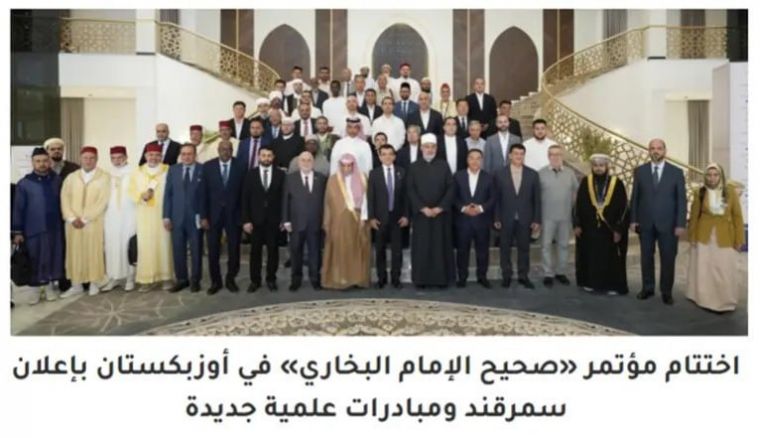
Analytical materials dedicated to the 1st International Forum of Islamic Civilization held in Uzbekistan, as well as the initiatives put forward within its framework, have been published in the authoritative media of Saudi Arabia, reports Dunyo IA.
In particular, “Al-Watan” newspaper presented the First International Forum of Islamic Civilization not merely as a traditional academic meeting, but as a large-scale historical project aimed at the revival of Islamic culture. In the publication, Uzbekistan is recognized as one of the most important historical cradles of the Islamic world.
“UNA” Information Agency paid special attention to the reforms in the religious and educational sphere implemented at the initiative of the President of Uzbekistan Shavkat Mirziyoyev.
It is emphasized that the restoration and study of the rich spiritual and cultural heritage in the country has been elevated to the rank of state policy. It is noted that the Samarkand Declaration, adopted following the forum, as well as the new scientific initiatives proposed on its basis, will be of great importance for the preservation of the traditions of Hadith studies and Islamic heritage.
Saudi media also detailed the Center for Islamic Civilization of Uzbekistan. It is noted that the Center is a modern scientific and educational institution designed to study, preserve and popularize the Islamic culture, scientific heritage, and spiritual values of the country.
Center's exposition includes materials on the lives and scientific heritage of great scholars born on the territory of modern Uzbekistan, rare manuscripts, ancient copies of the Quran, archaeological finds, historical documents, works of art, as well as modern interactive multimedia exhibitions.
